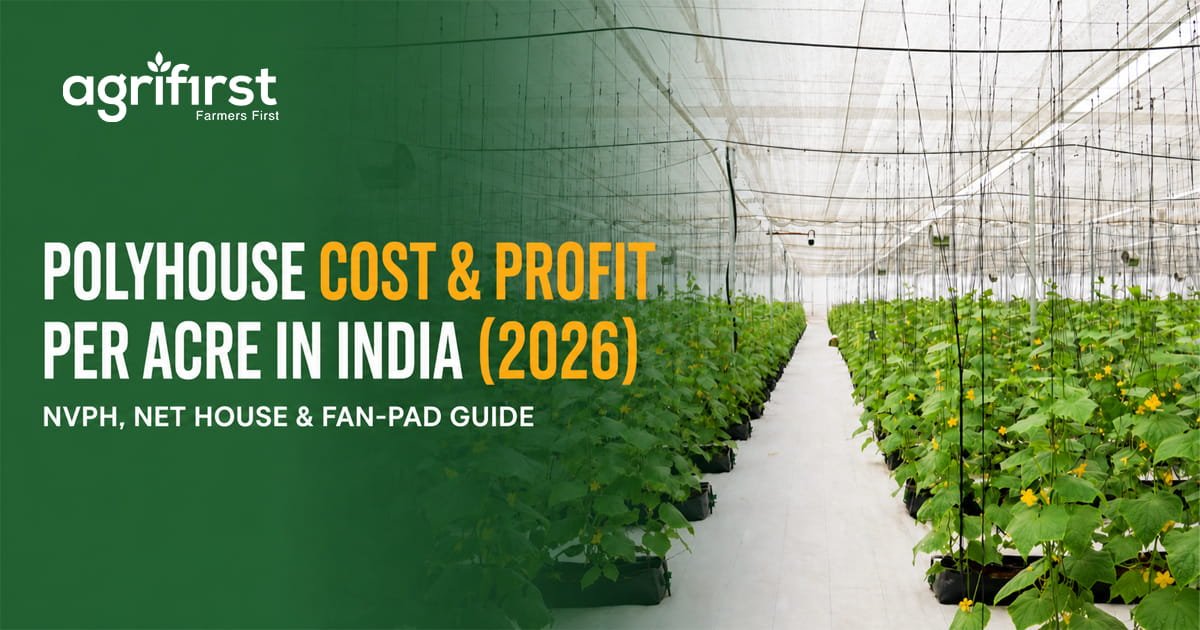
The single biggest question every farmer asks before building a polyhouse is simple: how much will it cost, and how much will I actually earn? This guide gives you real, India-specific numbers for 2026 — structure costs per acre, government subsidy, and crop-wise profit — so you can plan with confidence instead of guesswork.
For an instant, personalised estimate based on your exact area, crop and state, use the free Polyhouse Investment Calculator — it does all the maths below in under two minutes.
What determines the cost of a polyhouse?
Polyhouse cost in India is driven by four things:
- Structure type — a naturally ventilated polyhouse costs a fraction of a fully climate-controlled one.
- Area — cost scales with size; India's subsidy schemes work on a per-square-metre basis (1 acre ≈ 4,000 sq m).
- Specification — GI steel grade, film quality (e.g. Ginegar greenhouse films), automation and irrigation add or reduce cost.
- Crop — the crop you grow decides the internal systems (drip, fertigation, trellising, hydroponics) you need.
Polyhouse cost per acre in India (2026)
Here are indicative all-in project costs on a 1-acre (4,000 sq m) basis. Your actual figure depends on site, spec and state — the calculator gives you an exact number.
| Structure | Best for | Approx. cost / sq m | Approx. cost / acre |
|---|---|---|---|
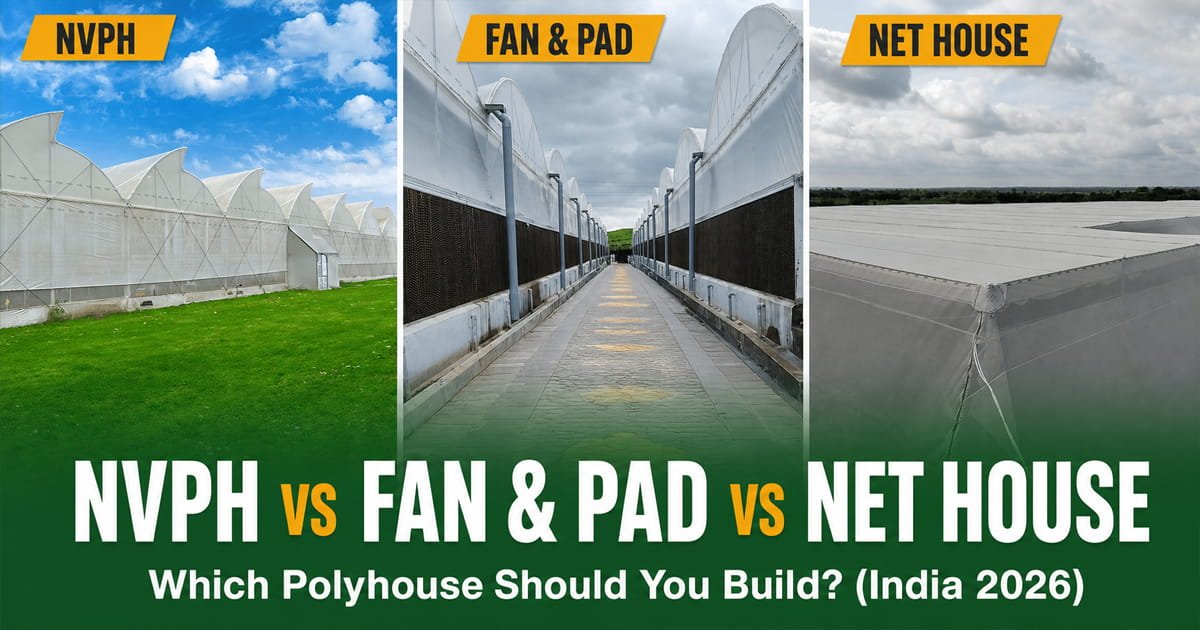
| Net House (Shade Net) | Green capsicum, tomato — entry-level protected farming | ₹600 | ~₹24 lakh |
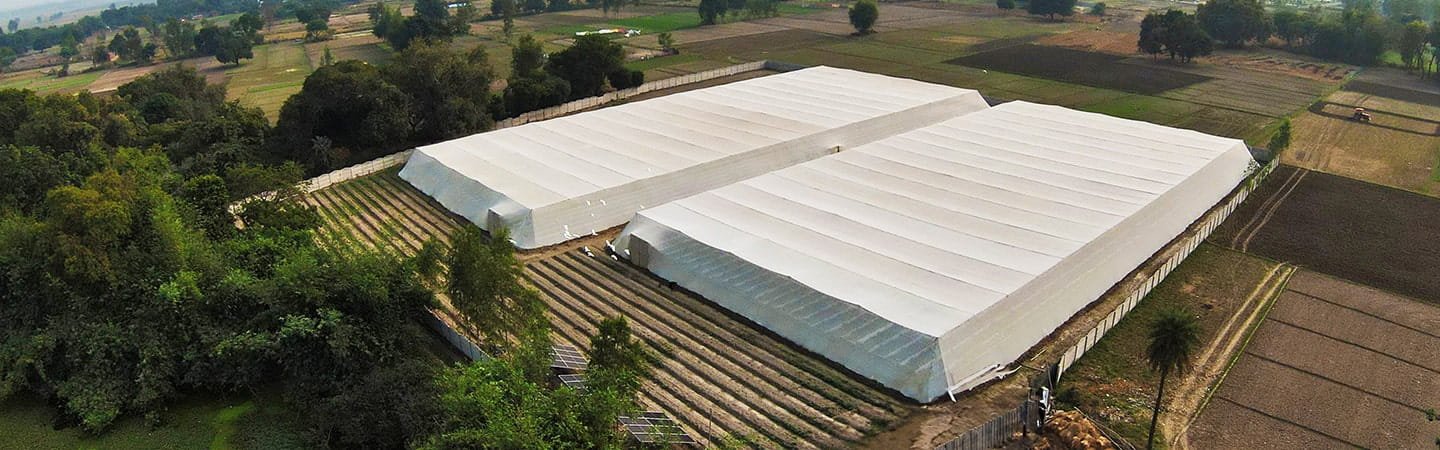
| Naturally Ventilated Polyhouse (NVPH) | Coloured capsicum, cucumber, gerbera, roses — the most popular commercial choice | ₹1,360 | ~₹54.4 lakh |
| Fan & Pad + NFT Hydroponics | Lettuce & leafy greens — fully climate-controlled, year-round | ₹4,600 | ~₹1.84 crore |
For most first-time commercial growers, the Naturally Ventilated Polyhouse hits the sweet spot of cost, yield and reliability.
Government subsidy: what you actually pay
Protected cultivation is heavily supported in India. Under the National Horticulture Board (NHB) and state horticulture missions, a significant share of your capital cost can be covered by subsidy — under NHB up to ₹1 crore per project, subject to eligibility and approved cost norms.
In practice, subsidy can bring your out-of-pocket cost down substantially. Because eligibility, caps and percentages vary by state and scheme, the calculator estimates your subsidy and net cost for your state — and Agrifirst's team helps with the full paperwork.
Polyhouse profit per acre — crop by crop
This is where protected cultivation earns its reputation. Below is indicative gross annual revenue per acre in an NVPH (before operating costs), based on typical yields and realisations:
| Crop | Typical yield / acre / year | Price | Indicative gross revenue / acre / year |
|---|---|---|---|
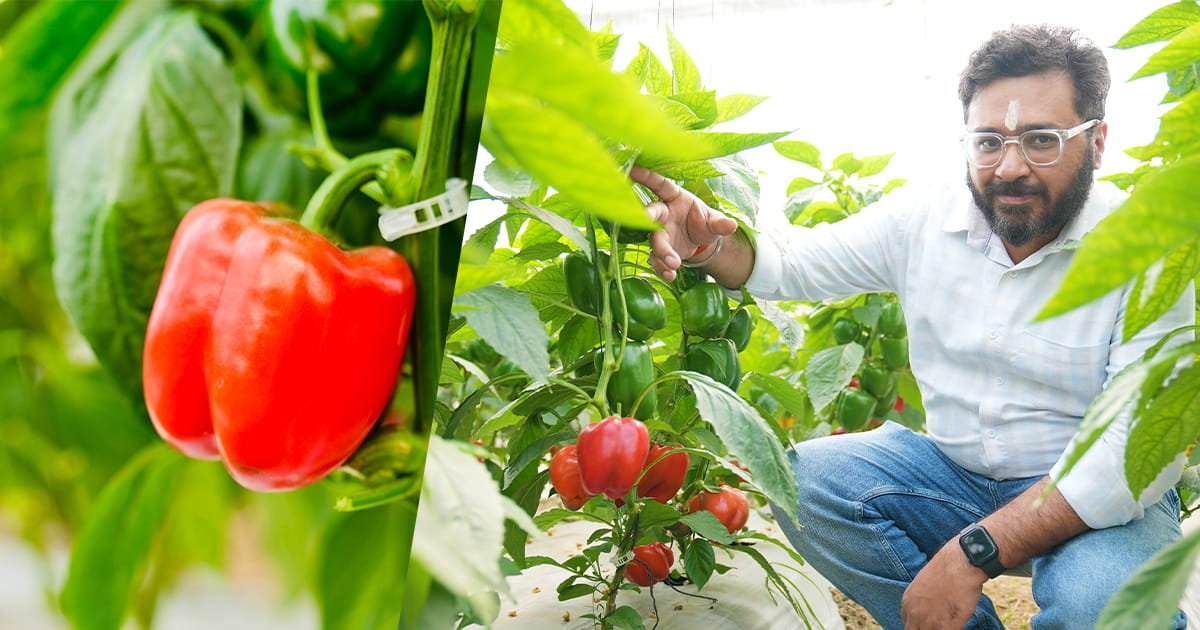
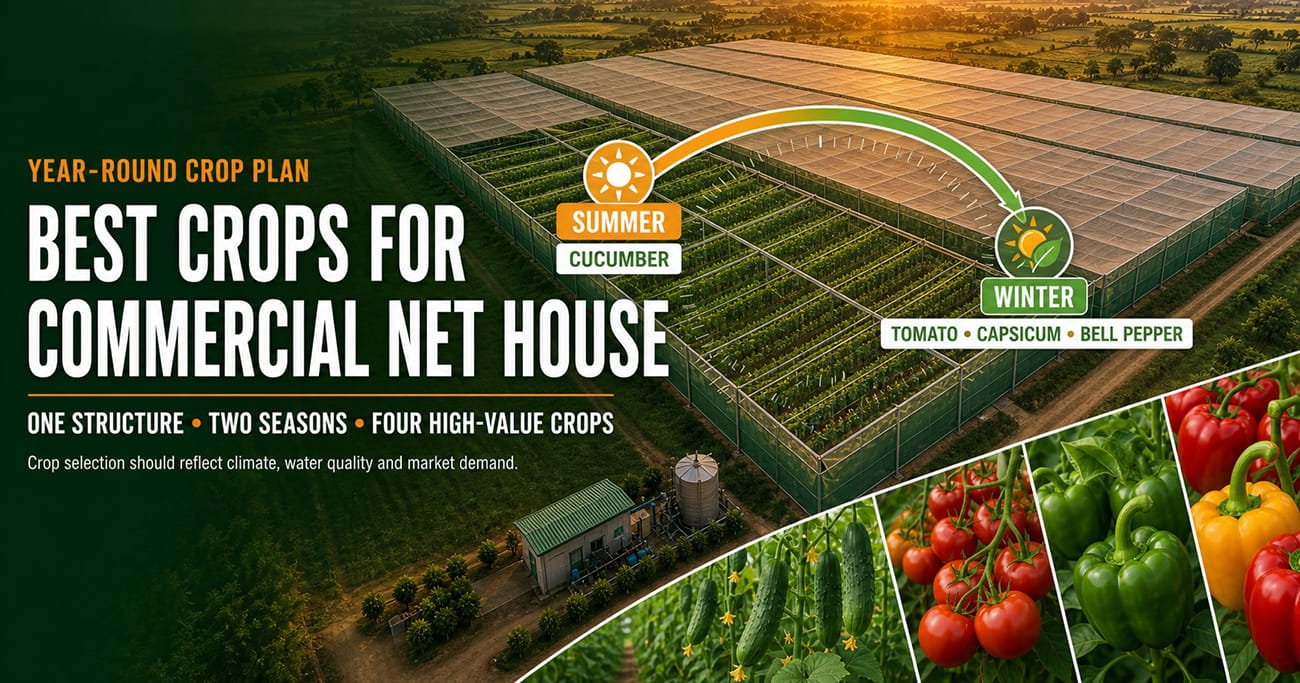
| Coloured Capsicum | 24,000 kg | ₹100 / kg | ~₹24 lakh |
| Cucumber (seedless) | 96,000 kg | ₹25 / kg | ~₹24 lakh |
| Gerbera (cut flower) | 7.36 lakh stems | ₹3.5 / stem | ~₹25.8 lakh |
| Dutch Rose (cut flower) | 5.70 lakh stems | ₹5.5 / stem | ~₹31.4 lakh |
After operating costs (planting material, nutrients, labour, energy), well-run 1-acre polyhouses commonly deliver a net income in the ₹15–30 lakh per acre per year range — with the structure paying back its post-subsidy cost within a few years. See how real farmers did it in our success stories.
Worked example: a 1-acre coloured-capsicum NVPH
- Structure cost: ~₹54.4 lakh (before subsidy)
- After subsidy: substantially lower — your net cost depends on state & scheme
- Gross revenue: ~₹24 lakh/year from coloured capsicum at 24,000 kg × ₹100/kg
- Net income: typically ₹15–25 lakh/year after operating costs
Plug in your own area, crop and state in the Polyhouse Investment Calculator for your exact cost, subsidy, payback and yearly profit — and download a detailed report.
How to choose the right polyhouse (and avoid costly mistakes)
- Match structure to crop & climate — don't over-build. NVPH suits most Indian conditions; go climate-controlled only for high-value leafy greens.
- Insist on quality — hot-dip galvanised steel to IS standards and proven greenhouse films (like Ginegar) last far longer and protect your yield.
- Get agronomy support — the structure is half the story; crop guidance is what turns it into profit.
- Plan the subsidy paperwork early — approvals take time; a partner who handles it end-to-end saves months.
Talk to Agrifirst
Agrifirst designs, builds and supports polyhouse and greenhouse projects across India — end to end, from structure to subsidy paperwork to agronomy. Explore commercial polyhouse farming, run the investment calculator, or talk to our team for a free, no-obligation project estimate.