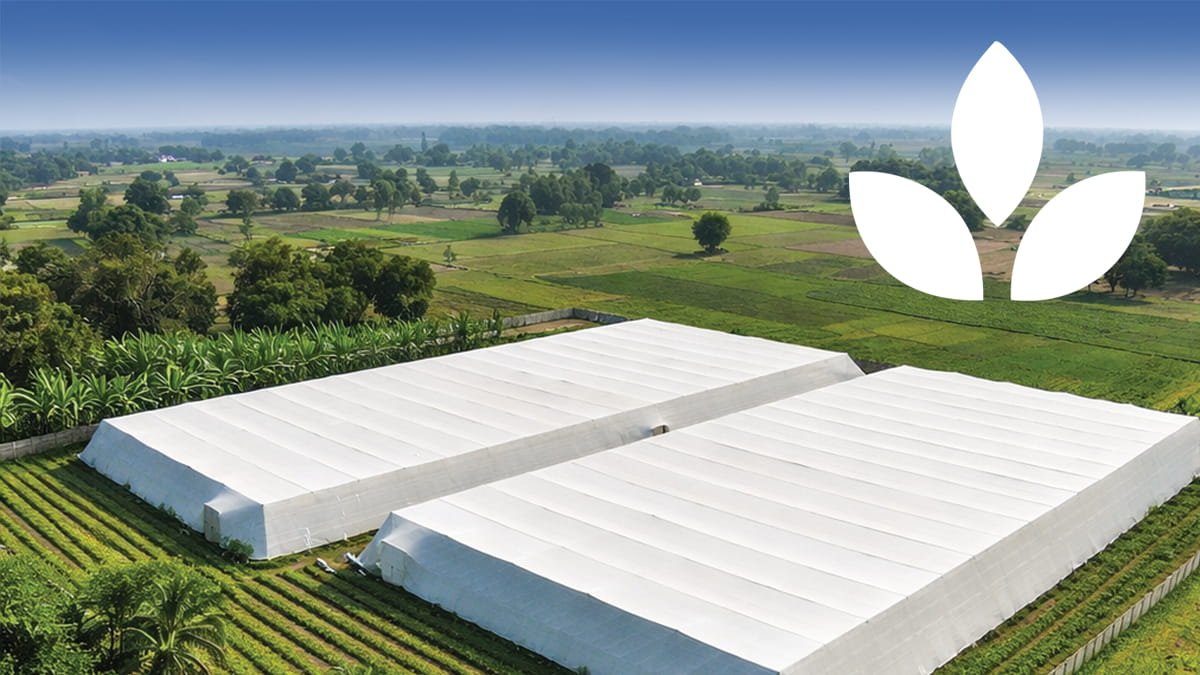
More farmers are asking the same question: "I have 1–3 acres and a water source. How do I actually start net house farming?" The idea is simple — grow vegetables under shade net instead of open sky — but the first project raises practical questions about land, money, construction, crops and selling.
This guide walks you through the whole journey in seven steps, from the first site visit to selling your first harvest, with the real cost and return figures for a 1, 2 or 3-acre project. If you want the numbers first, see our page on net house farming for farmers.
Before You Start: Is Your Land Ready?
A net house does not need perfect land, but a few basics decide whether a project will succeed. Check these before you ask for a quotation:
| What to check | What you need |
|---|---|
| Land area | About 1 acre or more of reasonably level land. Our estimates use 4,000 sq m of growing area per acre. |
| Water | A reliable borewell, canal or pond with reasonably good water quality. Drip irrigation uses 40–60% less water than flood irrigation. |
| Electricity | Power for the pump and the drip and fertigation system. |
| Road access | Access for material delivery during construction and for vehicles to collect the harvest. |
| Market | A mandi, trader or buyer within practical distance — vegetables like cucumber are picked and sold almost daily in season. |
| Your time | Someone (you or a trusted family member or supervisor) who can manage labour and daily farm work. |
If you tick most of these boxes, you are ready for the first step.
Step 1: Book a Free Site Visit
Every project starts on your land, not on paper. During a free site visit, Agrifirst's team checks your soil, water source, land level, drainage and access, and talks to you about the crops you want to grow and where you will sell them.
After the visit you get a clear quotation for the size you want — 1 acre or more — along with a suggested layout. This is also the right time to ask about structure height, shade percentage and how the drip system will be laid out.
Step 2: Choose Your Size and Structure
Most first-time farmers start with 1 acre, learn the crop cycle for a season, and then add a second or third acre on the same design. Here is what each size looks like on a full-cost basis:
| Net House Size | Project Cost | Revenue / Year | Profit / Year | Payback |
|---|---|---|---|---|
| 1 Acre (4,000 sq m) | ₹24.9 lakh | ₹17.3 lakh | ₹10.8 lakh | ~2.3 years |
| 2 Acres (8,000 sq m) | ₹49.8 lakh | ₹34.5 lakh | ₹21.6 lakh | ~2.3 years |
| 3 Acres (12,000 sq m) | ₹74.7 lakh | ₹51.8 lakh | ₹32.4 lakh | ~2.3 years |
Illustrative figures for a cucumber → tomato + green capsicum plan, on the full project cost. Profit is yearly, after running costs and before loan repayment. Actual results vary and are not guaranteed.
The project cost covers the shade-net GI structure with drip (about ₹450 per sq m) plus civil work, accessories, weed mat and miscellaneous items — roughly ₹622 per sq m in all. See the full net house cost per acre breakdown for details.
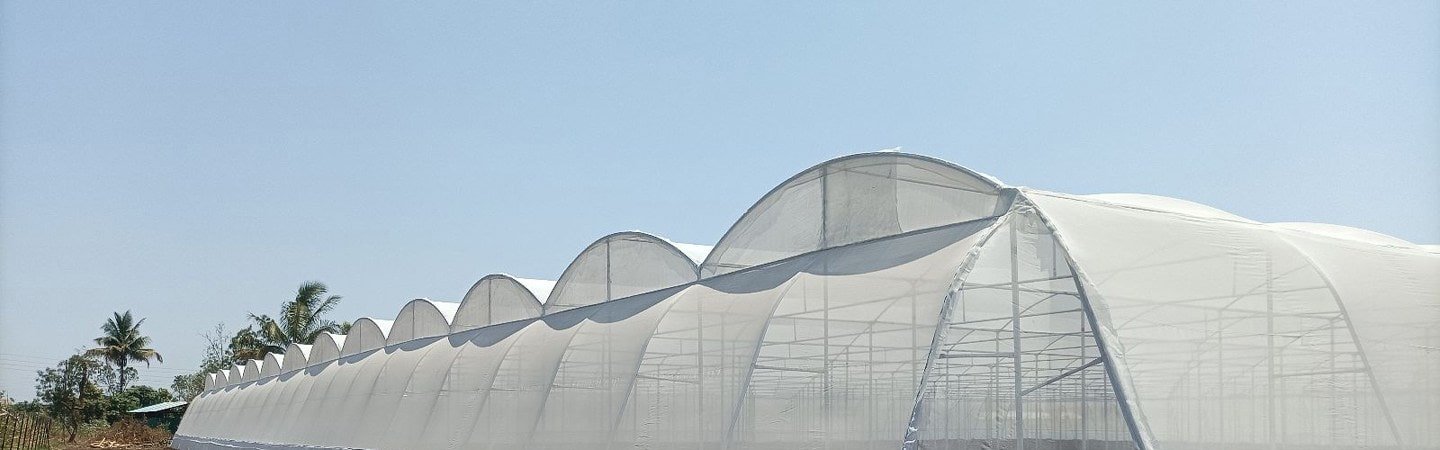
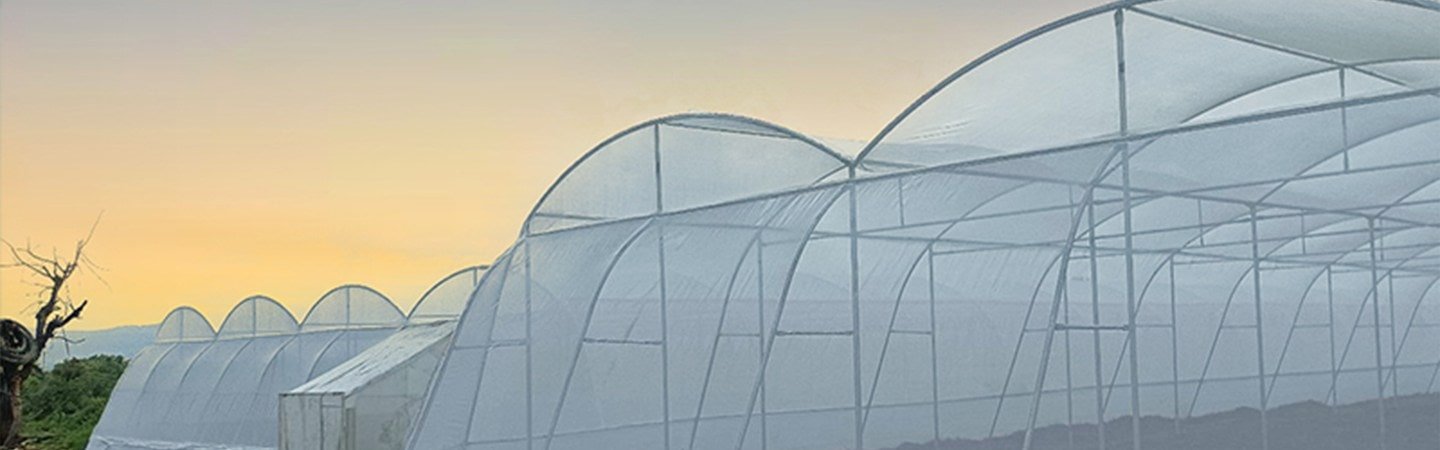
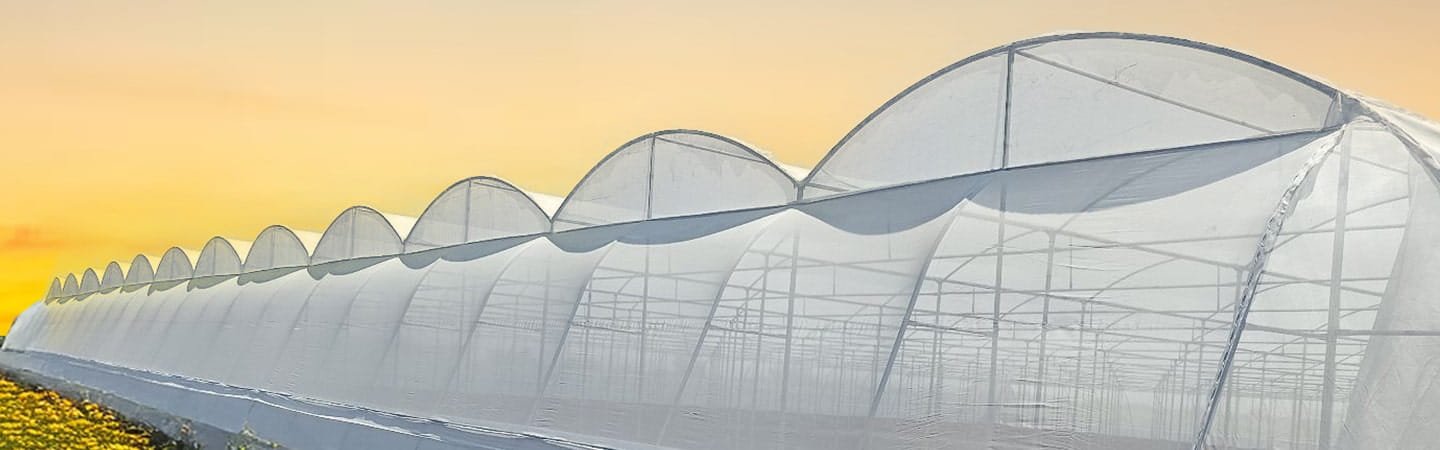
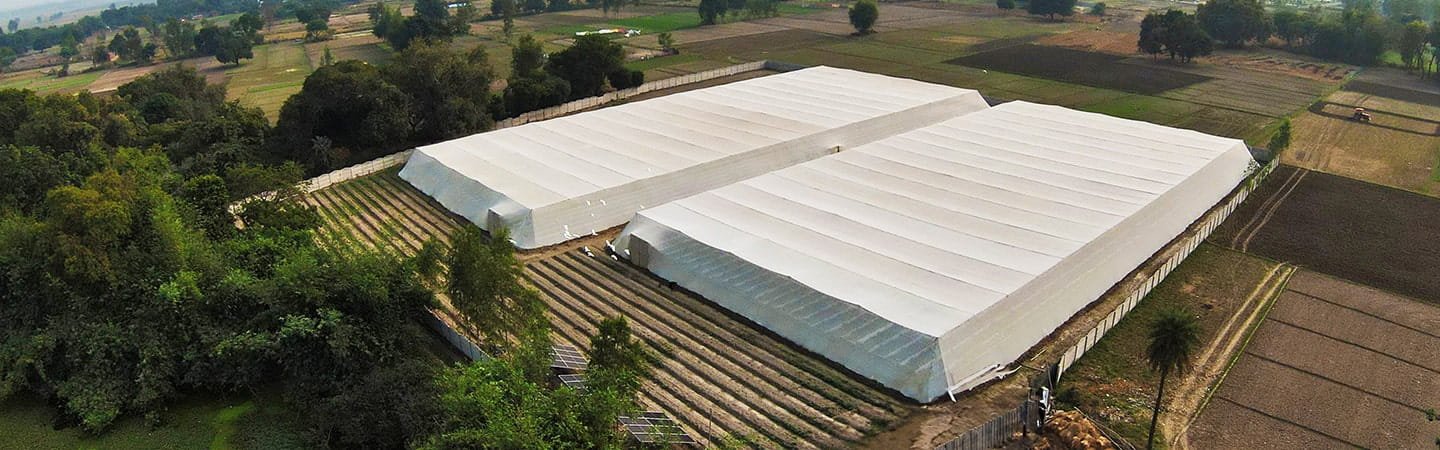
A standard Agrifirst net house uses:
- Hot-dip galvanised (GI) steel frame — designed for about 10–15 years of structural life and wind up to about 80 km/h
- UV-stabilised shade net on the roof — usually 35%, 50% or 75% shade, chosen for your crop and climate
- 40/50-mesh insect net on the sides — keeps out most whiteflies, aphids and other pests
- Drip irrigation with fertigation — water and nutrients delivered straight to the roots
Step 3: Arrange the Funds
There are two common ways to fund a net house:
- Self-funded: you pay for the project from your own funds.
- Bank loan: many farmers fund part of the project through an agricultural term loan. Agrifirst gives you the detailed quotation and project report your bank needs and helps with the paperwork.
For a bank loan, keep your land records, identity and address proof, and recent bank statements ready; your bank will tell you exactly what it needs.
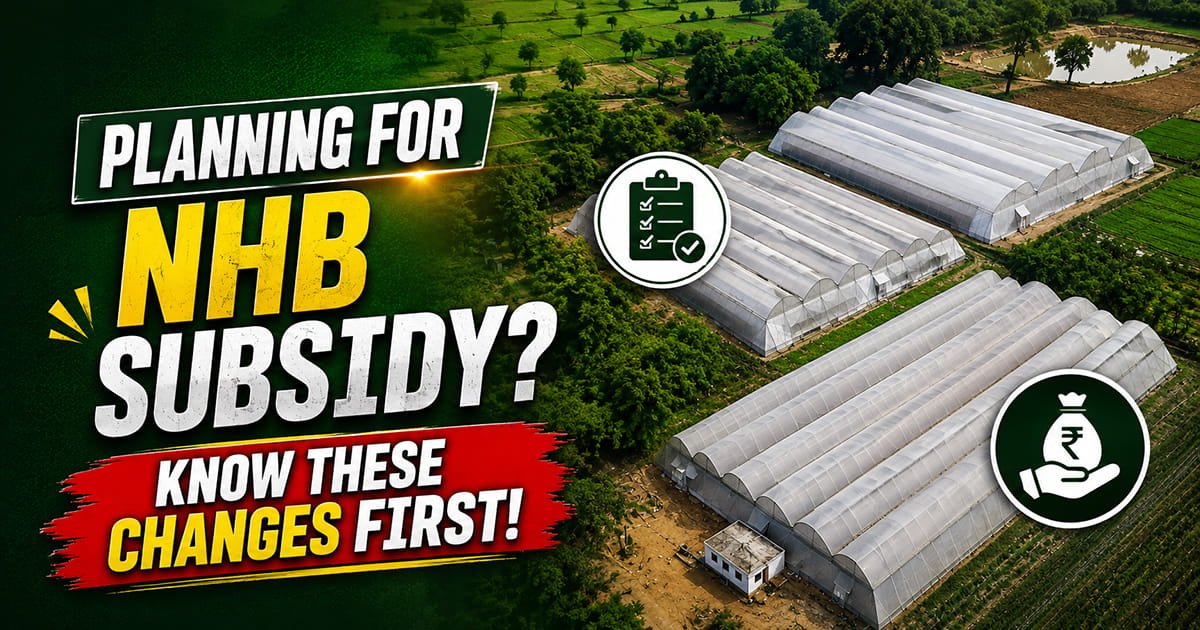
Government subsidy schemes for protected cultivation also exist, but approvals depend on state rules and can take many months. If you don't want your season to wait on a sanction, a Cash & Carry project — self-funded or bank-funded — lets you start building as soon as you confirm.
Step 4: Construction
Once the order and funds are confirmed, the build follows a fixed sequence:
- Site preparation — levelling, marking the layout and civil work for the foundations.
- GI frame — columns, trusses and wires are installed and tensioned.
- Netting — shade net on the roof and insect net on the sides, with entry doors.
- Drip and fertigation — laterals, filters and the fertigation unit are laid and tested.
- Bed preparation — raised beds, mulching and weed mat, ready for planting.
Your project team gives you the schedule at the start, so you can plan seedlings and labour around the handover date.
Step 5: Plan Your Crops
The most reliable plan for a new net house is two crops a year from the same structure:
| Season | Crop | Period | Why it works |
|---|---|---|---|
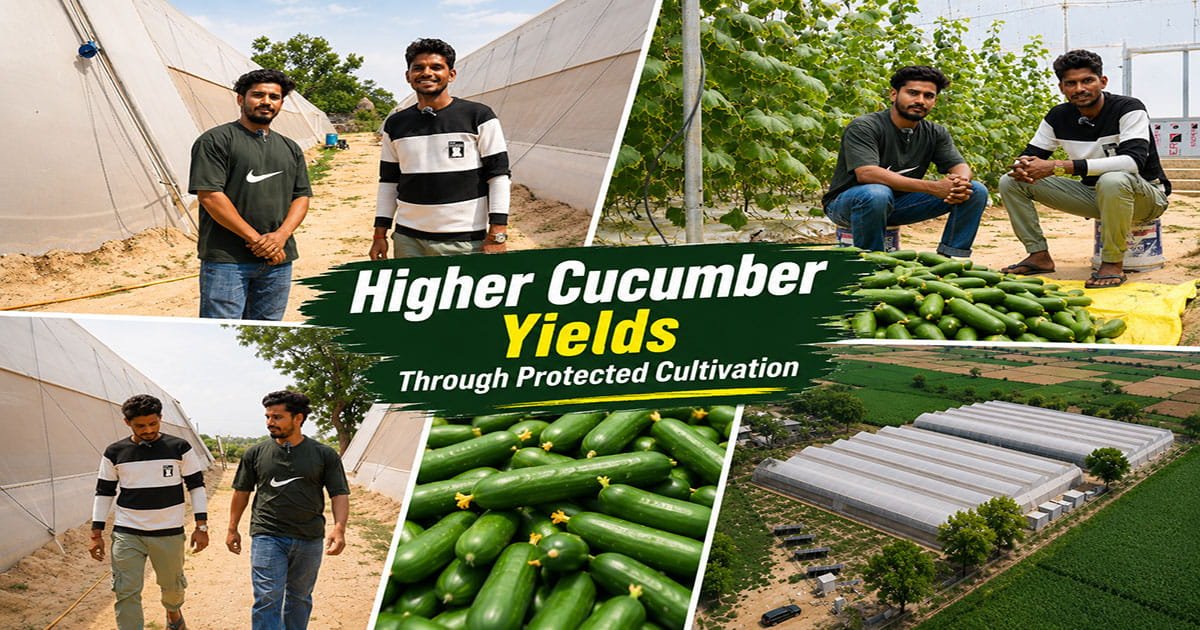
| Summer | Cucumber (full area) | Apr – Jul (~90 days) | Fast crop with steady daily demand — money comes in early in the year. |
| Winter | Tomato + green capsicum (or coloured bell pepper) | Aug – Feb (6–7 months) | Longer harvest and higher value; two winter crops spread your price risk. |
On 1 acre, this plan gives about ₹17.25 lakh revenue against about ₹6.46 lakh running costs (seedlings, fertiliser, labour) — roughly ₹10.8 lakh a year before loan repayment. You can try other sizes and crop mixes on our net house cost and profit calculator. For a deeper look at crop choices, read best crops for net house farming, and for more crop rotations with production data, see our 1-acre net house ROI and crop plan guide.
Step 6: Grow With an Agronomist
A net house protects the crop, but results still come from good management. In the first seasons, an agronomist makes the biggest difference by guiding you on:
- What to plant and when — variety choice and planting dates for your area and market
- Fertigation schedules — what to feed the crop at each stage through the drip
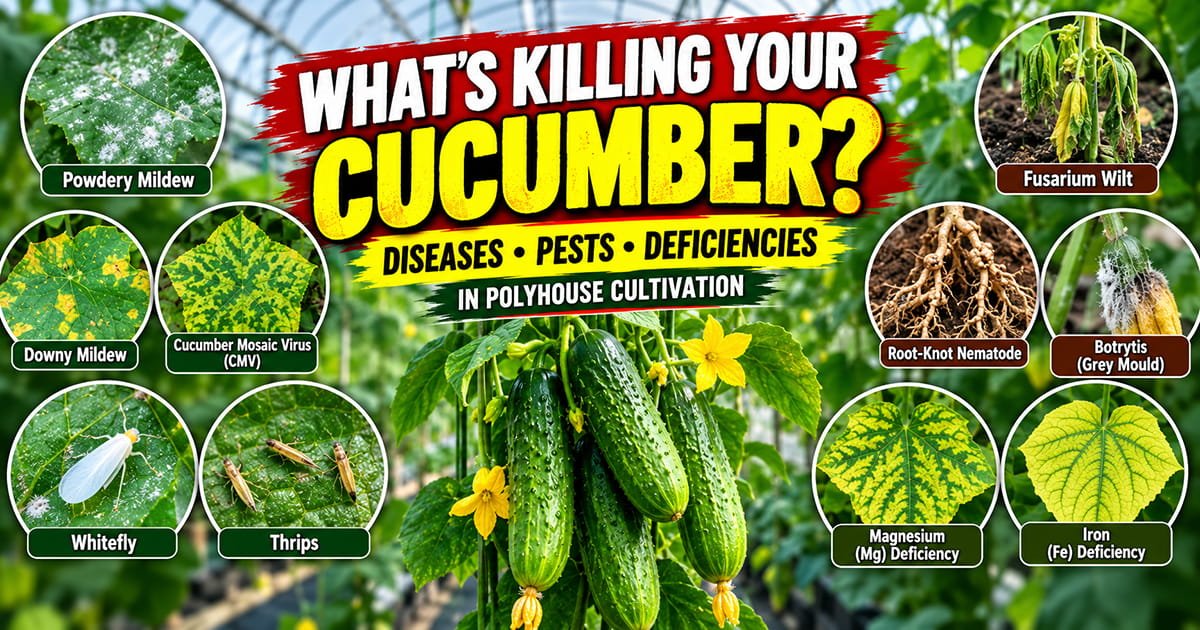
- Pest and disease scouting — spotting problems early, so you spray less and lose less
- Training and pruning — trellising cucumber, tomato and capsicum for higher yield
Agrifirst farmers also get regular farmer workshops, where growers learn from each other's seasons.
Step 7: Sell Your Harvest
Income depends as much on selling well as on growing well. Plan your buyers before the first harvest:
- Local mandis — the simplest outlet, especially for cucumber picked almost daily
- Traders and aggregators — regular pickups from the farm gate for steady volumes
- Retail chains and processors — better prices for graded, consistent produce
Harvest timing and grading matter: clean, uniform produce picked at the right stage fetches a better rate. Agrifirst helps connect farmers to buyers and guides harvest timing and grading.
Common Mistakes to Avoid
- Starting too big — begin with 1 acre, learn the cycle, then expand.
- Ignoring water quality — poor water can block drippers and hurt the crop; test it before you build.
- No buyer plan — decide where your first harvest will go before you plant.
- Skipping expert guidance — most first-season losses come from fertigation and pest mistakes that an agronomist would catch early.
For larger projects, also read why commercial net house projects fail.
Ready to Start Your Net House?
Book a free site visit. We'll check your land and water and give you a clear quotation for 1, 2 or 3 acres.
Book a Free Site Visit⚠️ Disclaimer: All costs, yields, prices and returns in this article are illustrative estimates for planning purposes. Actual figures vary with location, site conditions, crop, market prices and management, and are not guaranteed. Contact Agrifirst for a quotation and crop plan for your land.