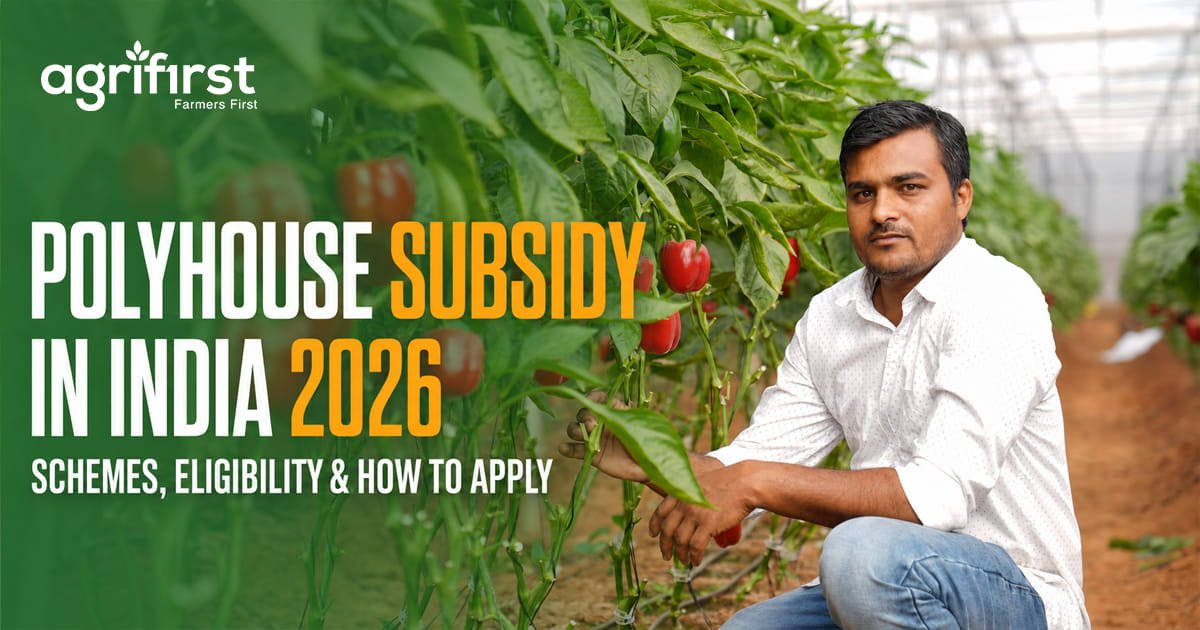
Government subsidy is what makes a polyhouse affordable for most Indian farmers — it can cover a large share of your project cost. But the schemes, rates and paperwork confuse a lot of people. This guide explains, in plain language, which subsidies exist, how much you can get, who's eligible, and how to apply in 2026.
Want an instant estimate of your subsidy and net cost for your state? Use the free Polyhouse Investment Calculator.
The main polyhouse subsidy schemes
- MIDH / National Horticulture Mission (state horticulture missions): the primary route for most farmers. Delivered through your State Horticulture Department for protected cultivation (polyhouses, shade nets, etc.).
- NHB (National Horticulture Board): a credit-linked, back-ended subsidy for commercial horticulture projects — with a project cap of up to ₹1 crore.
- State-specific schemes: many states run their own top-up schemes with higher support for certain categories of farmers.
How much subsidy can you get?
For protected cultivation, government support is typically around 50% of the approved project cost, and often higher for small & marginal farmers and for North-Eastern / hilly states. Support is calculated on approved cost norms (not your actual bill) and is subject to per-beneficiary area limits (commonly up to 4,000 sq m / 1 acre in many states).
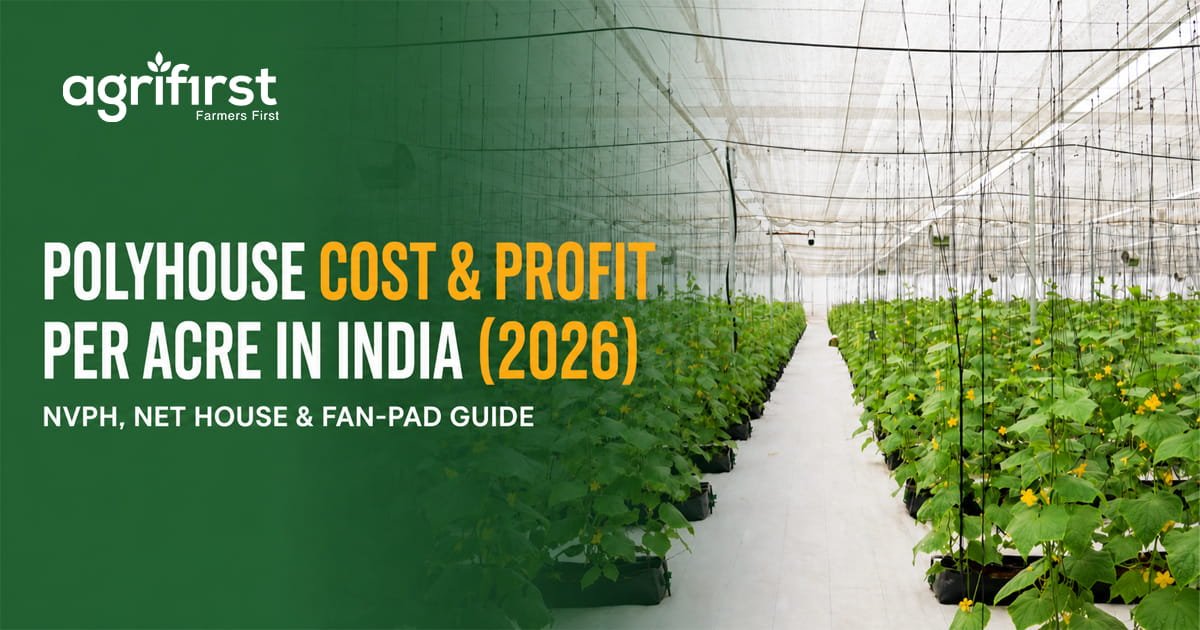
So on a ~₹54 lakh/acre NVPH, subsidy can bring your out-of-pocket cost down substantially. For your exact eligibility and net cost, run the calculator — and see the full cost break-up in our Polyhouse Cost & Profit guide.
Who is eligible?
- Individual farmers (with owned or long-lease land)
- Farmer Producer Organisations (FPOs) and groups
- Agri-entrepreneurs and companies (mainly via NHB for larger projects)
You'll generally need land documents, identity/bank details, and — importantly — project approval before you start construction.
How the process works (step by step)
- Plan the project — structure, area, crop and a detailed project report (DPR).
- Apply & get approval FIRST — most schemes require sanction before construction. Building first can make you ineligible.
- Arrange finance — subsidy is usually credit-linked and back-ended: you (or a bank loan) fund the build, then the subsidy is released after inspection.
- Build to specification — using approved materials and standards.
- Inspection & release — officials verify the structure, then the subsidy is credited.
Common mistakes that cost farmers their subsidy
- Starting construction before approval — the single most common disqualifier.
- Using non-approved specifications or materials.
- Incomplete or inconsistent documentation.
- Missing scheme deadlines / budget windows.
How Agrifirst helps
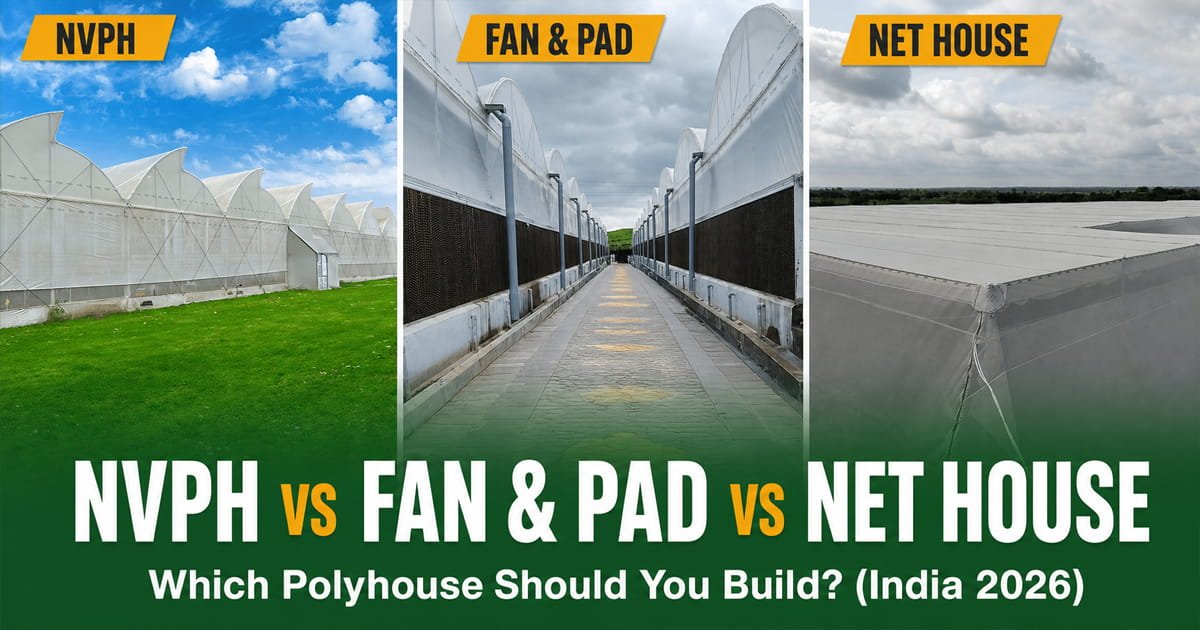
Agrifirst supports farmers through the entire subsidy journey — DPR preparation, application, approved-spec construction, and inspection — so you don't lose your subsidy on a technicality. Not sure which structure to build first? See NVPH vs Fan & Pad vs Net House or explore commercial polyhouse farming.
Estimate your subsidy in two minutes with the Polyhouse Investment Calculator, or talk to our team for hands-on guidance with the paperwork.