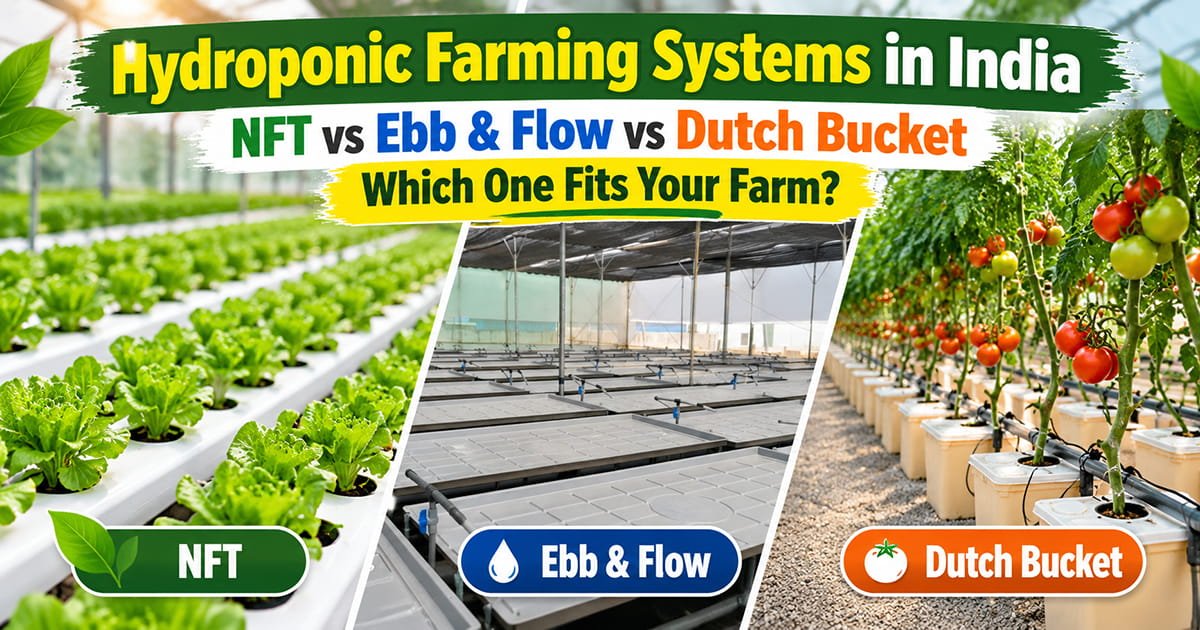
The main types of hydroponic farming systems in India for commercial protected cultivation include Nutrient Film Technique (NFT), Ebb & Flow, and Dutch Bucket systems. They are not interchangeable. NFT is particularly suited to leafy greens and herbs, Ebb & Flow works well for nurseries, propagation and tray or container-based production, while Dutch Bucket systems are designed around larger fruiting and vine crops such as tomato, capsicum and cucumber.
Choosing between them should therefore start with the crop, not with the equipment. A lettuce root system moving through an NFT channel behaves very differently from a mature tomato plant supported on a trellis. The irrigation pattern, root-zone volume, growing media, drainage and fertigation strategy all change with it.
For an Indian commercial grower, there is another layer to the decision: climate management. High temperatures, humidity, water quality and the protected structure surrounding the hydroponic system can influence how consistently the root zone performs. A good hydroponic design is therefore a complete crop-production system, not simply a collection of channels, buckets and pumps. Growers comparing complete hydroponics systems and soilless farming solutions should evaluate the crop, root zone, fertigation and growing environment together.
What Is a Hydroponic Farming System?
Hydroponics is a method of growing plants without relying on field soil as the root-zone environment. Water containing dissolved plant nutrients is delivered to the roots, while the system provides the moisture, oxygen, physical support and drainage needed for crop growth.
That basic definition covers several very different systems. In NFT, roots develop inside a channel and interact with a continuously moving nutrient solution. In Ebb & Flow, a bench or tray is flooded and then allowed to drain. In a Dutch Bucket system, individual plants grow in buckets containing growing media and receive nutrient solution through drip irrigation.
This distinction matters because hydroponics does not remove the need for root-zone management. It makes root-zone management more deliberate. Pump operation, drainage, nutrient concentration, pH, EC, oxygen availability and irrigation timing become visible management decisions rather than processes partly buffered by a large volume of field soil.
Three Major Types of Hydroponic Farming Systems
| System | How It Works | Typical Crop Fit | Root-Zone Approach | Best Fit |
|---|---|---|---|---|
| NFT | Thin, continuously recirculating nutrient solution flows through growing channels | Lettuce, spinach, kale, basil, mint, coriander, pak choi and other suitable crops | Roots interact directly with nutrient solution and air inside the channel | Commercial leafy-green and herb production |
| Ebb & Flow | Growing area is periodically flooded with nutrient solution and then drained | Seedlings, lettuce, herbs, ornamentals and strawberry | Intermittent flood-and-drain irrigation around containers or growing media | Nurseries, propagation and bench-based production |
| Dutch Bucket | Individual media-filled buckets receive nutrient solution through drip irrigation | Tomato, capsicum, cucumber, brinjal, strawberry and melon | Larger media-supported root zone for individual plants | Vine and fruiting crops |
1. NFT Hydroponic System: Best Suited to Leafy Greens
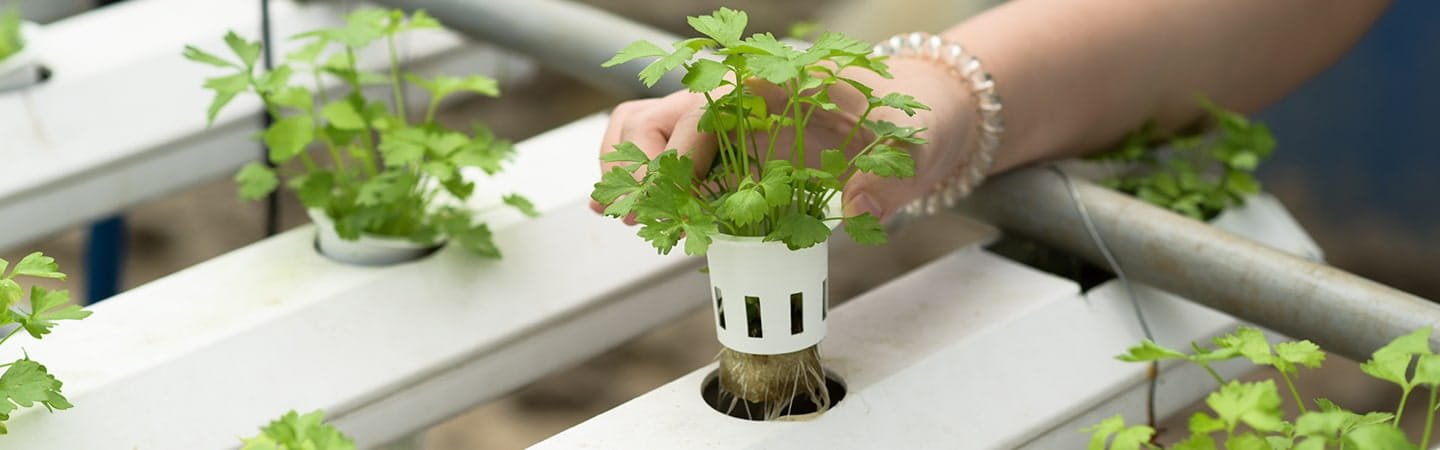
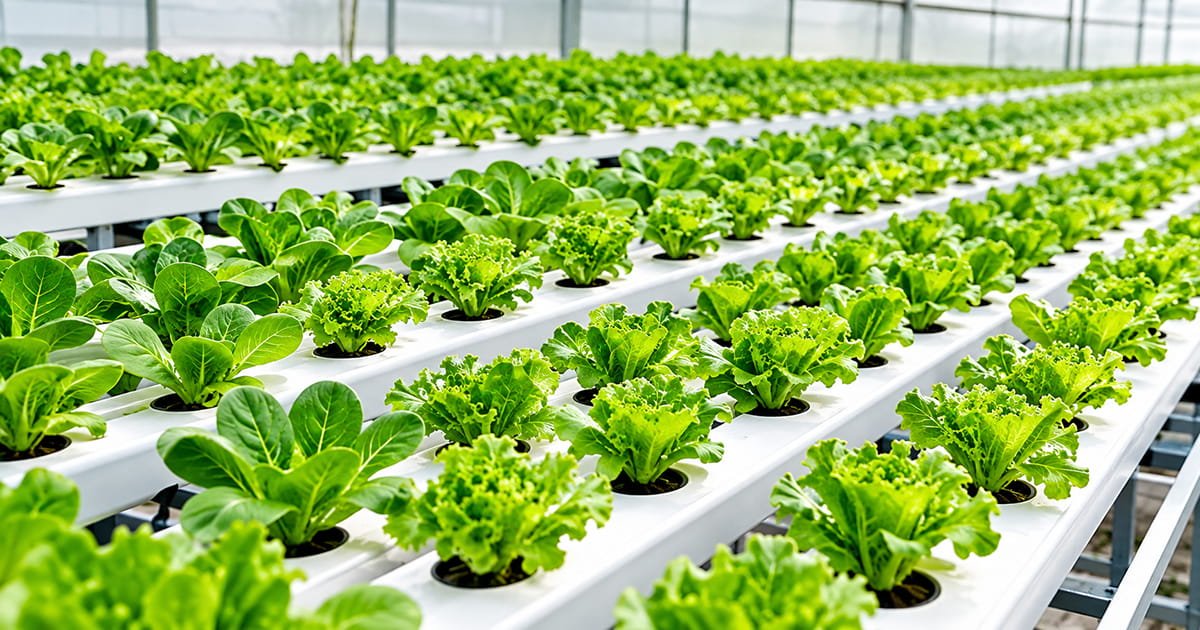
An NFT hydroponic system works by continuously circulating a shallow film of nutrient solution through growing channels so that plant roots can access water and dissolved nutrients while also remaining exposed to air. The solution travels through the channel and returns to a reservoir for recirculation.
Walk beside an operating NFT line and the system looks deceptively simple. There are rows of channels, plants sitting above them and a pump moving solution from the reservoir. Underneath the canopy, however, roots spread along the bottom of the channel. As the crop matures, those roots can develop into substantial root mats. Uniform flow through every line therefore matters.
Which Crops Suit NFT?
NFT is strongly associated with crops that have relatively compact root systems and can be grown at close spacing. Lettuce is the obvious commercial example, but spinach, kale, basil, mint, coriander and pak choi can also fit this production approach.
This is why NFT is frequently considered when a protected-cultivation business is built around consistent batches of leafy greens and herbs. Growers evaluating this method can review the Nutrient Film Technique hydroponics system to understand how a commercial channel-based setup is configured for continuous nutrient circulation. The channel layout makes organised crop handling possible, while recirculation allows the nutrient solution to be reused rather than applied once and lost from the production area.
What Requires Attention in NFT?
Flow is the heartbeat of NFT. If a pump stops, a line becomes blocked or roots interfere with drainage, the crop has much less root-zone buffering than a plant sitting in a large volume of moist growing media. Channel alignment and an appropriate slope help nutrient solution move consistently from inlet to outlet without creating unwanted stagnant areas.
Nutrient management is equally important. Because the same solution circulates through the system, growers need disciplined EC and pH monitoring. BlueLab-type monitoring and automation tools can support this process by helping the operator observe and manage nutrient-solution conditions rather than depending only on manual checks.
2. Ebb & Flow: Flood, Drain and Repeat
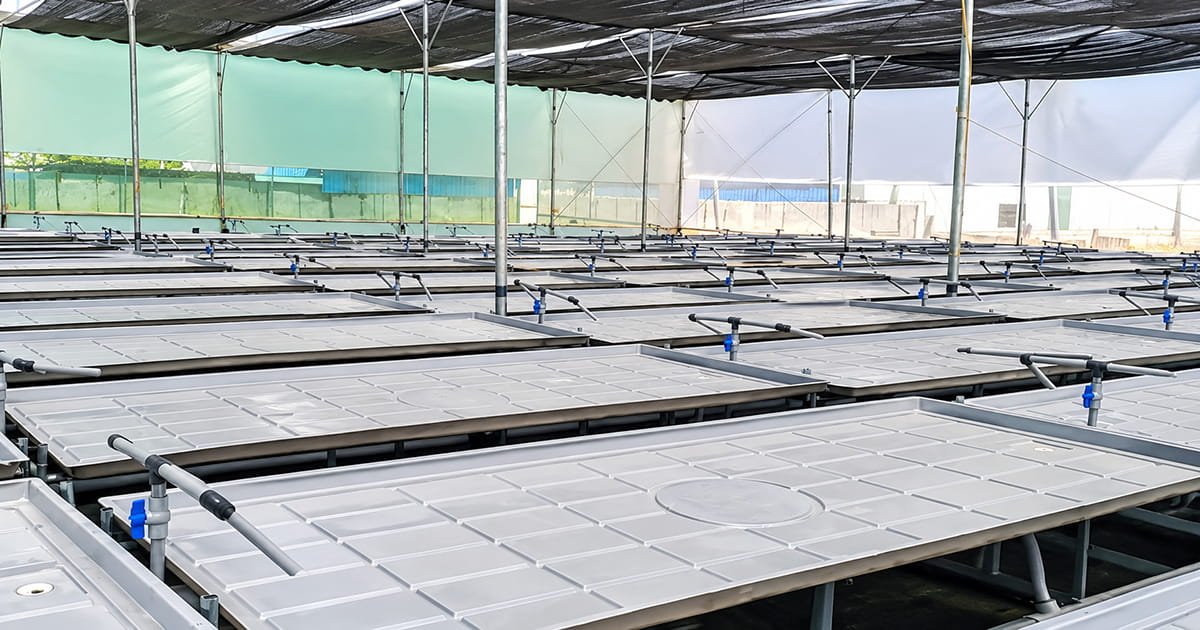
An Ebb & Flow hydroponic system works by periodically flooding a growing bench or tray with nutrient solution and then draining that solution back to a reservoir. Instead of maintaining continuous flow around the roots, irrigation happens in controlled cycles.
The physical action is easy to understand when you watch a cycle. The pump starts. Nutrient solution rises across the bench and reaches the containers from below. After the irrigation period, the pump stops and the bench drains. The root zone moves from a wet phase back toward an aerated phase before the next scheduled cycle.
Where Does Ebb & Flow Fit?
This arrangement is especially useful for commercial nurseries, propagation facilities and crops handled in pots, trays or growing-media containers. Seedlings, lettuce, herbs, ornamental plants and strawberry are among the crop applications associated with the Ebb & Flow system.
One practical advantage is irrigation uniformity across a properly designed bench. Instead of a worker watering individual containers by hand, a complete group of plants can be irrigated during the same flood cycle. That is particularly relevant in propagation, where consistency between plants is often as important as the performance of an individual plant.
Irrigation Timing Matters
Flood frequency should not be treated as a fixed setting for every farm. Crop stage, growing medium, root development, temperature and plant water demand all influence irrigation management. Rockwool, cocopeat, perlite and clay pebbles do not hold and release water in exactly the same way. A commercial operator therefore manages the cycle around the crop and root zone rather than simply running a timer unchanged throughout production.
3. Dutch Bucket: Built Around Larger Fruiting Crops
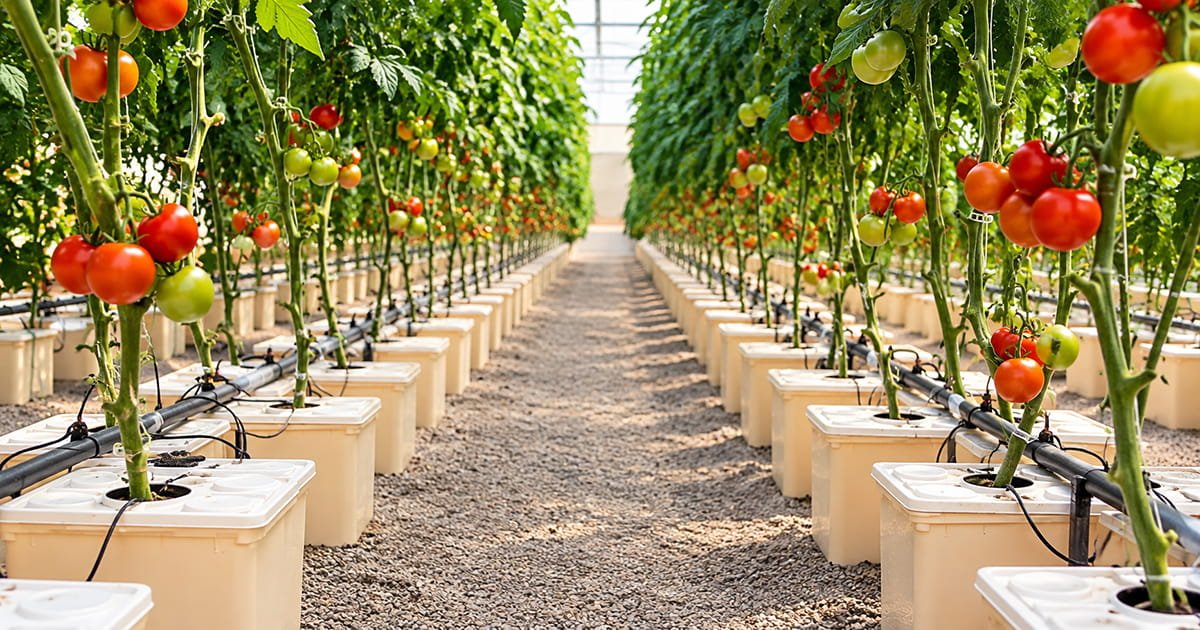
A Dutch Bucket hydroponic system grows individual plants in media-filled buckets and supplies each plant with nutrient solution through drip irrigation. Drainage from the buckets is collected through a drainage arrangement and may be managed as part of a recirculating or drain-to-waste design.
This changes the physical root environment considerably compared with NFT. A tomato or cucumber plant develops a large canopy, significant root mass and a long production cycle. It also needs physical crop support above the root zone. Dutch Bucket production accommodates that growth by giving individual plants their own media-supported root space while trellising carries the vine vertically.
Which Crops Suit Dutch Buckets?
Tomato, capsicum and cucumber are natural candidates. Brinjal, strawberry and melon can also be considered according to crop and system design. For Indian protected cultivation, the distinction is useful: when the crop is a large fruiting or vining plant rather than a compact leafy crop, a media-based drip-fed root zone such as a Dutch Bucket grow system is often a more logical starting point than an NFT channel.
Cocopeat and perlite are among the growing-media options used in this type of production. The medium supports the roots and provides moisture-holding and aeration characteristics, while fertigation delivers water and nutrients according to crop demand.
Drip Uniformity and Drainage Cannot Be Ignored
A row of healthy vines can hide an irrigation problem until differences become visible in plant growth. Emitters, pressure, nutrient delivery and drainage all need attention. The objective is not merely to make every bucket wet; it is to maintain a root-zone environment that stays appropriately supplied without becoming poorly aerated. This is where fertigation design, growing-media selection and irrigation scheduling have to work together.
Which Hydroponic System Is Best for Which Crop in India?
There is no single "best hydroponic system" for every crop. Crop architecture and root behaviour provide a much better basis for selection.
| Crop | System to Consider | Why It Fits |
|---|---|---|
| Lettuce | NFT / Ebb & Flow | Compact crop suitable for channel or bench-based production |
| Basil and herbs | NFT / Ebb & Flow | Well suited to organised intensive production |
| Tomato | Dutch Bucket | Large vine crop requiring media-supported roots and trellising |
| Capsicum | Dutch Bucket | Fruiting crop suited to individual drip-fed root zones |
| Cucumber | Dutch Bucket | Vining habit and larger root system suit media-based production |
| Strawberry | System-dependent | Can be grown using different soilless approaches depending on production design |
Hydroponics in Indian Heat and Humidity
A hydroponic design that works mechanically can still struggle agronomically if the growing environment is poorly managed. This is particularly relevant under Indian protected-cultivation conditions, where high solar radiation, summer heat and periods of high humidity can substantially change plant water demand and the root-zone environment.
In NFT, there is relatively little growing media to buffer root-zone conditions. Consistent circulation therefore deserves close attention during hot periods. With Ebb & Flow, irrigation cycles may need to respond to changing crop demand rather than remaining identical through different weather conditions and growth stages. Dutch Bucket crops have a larger media volume, but that does not remove the need to manage irrigation frequency, drainage and root-zone aeration.
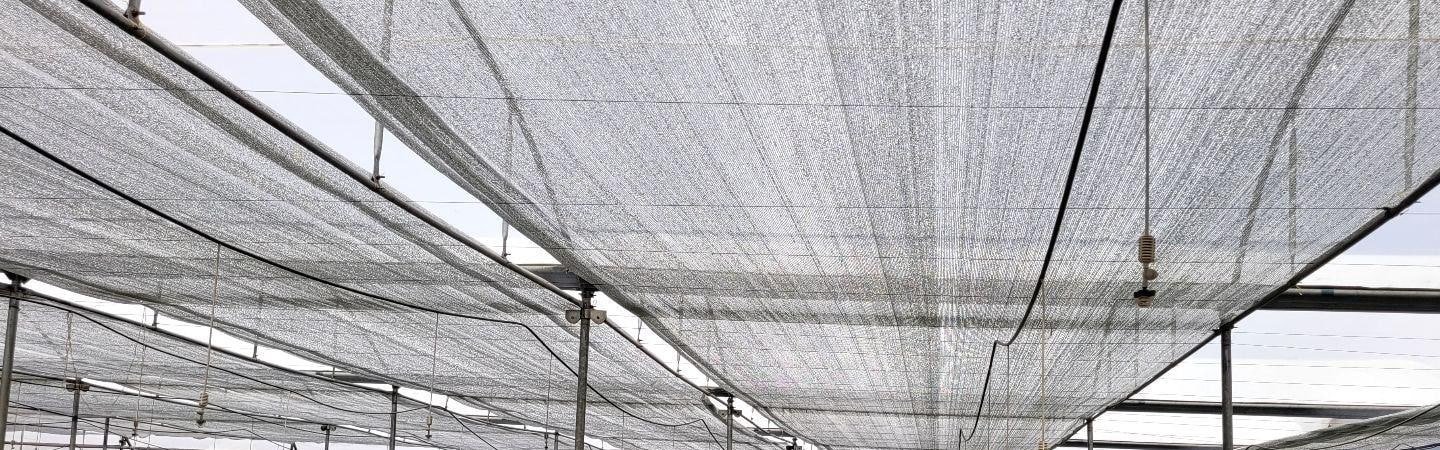
Humidity matters above the root zone as well. Hydroponics controls how water and nutrients reach the roots; it does not independently control the air surrounding the crop. That is why the relationship between the hydroponic system and the protected structure matters. Ventilation, cooling, crop spacing and overall climate management remain part of commercial crop production.
Why EC and pH Monitoring Matter in Hydroponics
Fertigation in hydroponics is not simply the act of adding fertilizer to a tank. The nutrient solution is the crop's direct nutritional environment, so its condition needs to be monitored.
EC is used as an indicator of the concentration of dissolved salts in the nutrient solution, while pH influences nutrient availability in the root zone. The target values themselves depend on the crop, growth stage, water quality and production strategy; they should not be reduced to one universal setting for every hydroponic farm.
Monitoring tools and automation become increasingly useful as a farm scales. BlueLab-type pH and EC monitoring can form part of this management approach, helping growers observe nutrient-solution conditions consistently. Automation does not replace crop observation, though. Roots, leaves, drainage, flow and plant uniformity still tell the operator whether the system is actually performing as intended.
Growing Media: Why System Choice Changes the Root Zone
Growing media are another major difference between hydroponic methods. NFT can operate with roots extending directly into the channel, whereas Ebb & Flow and Dutch Bucket production can involve media such as rockwool, cocopeat, perlite or clay pebbles.
Media selection affects how water and air are held around the roots. This becomes particularly important in drip-fed fruiting crops. A grower cannot design irrigation frequency independently of the medium because a root zone that retains water for longer behaves differently from one that drains rapidly. Commercial soilless infrastructure should therefore be considered as part of the complete root-zone strategy rather than as isolated hardware.
Polyhouse vs Open-Field Hydroponics
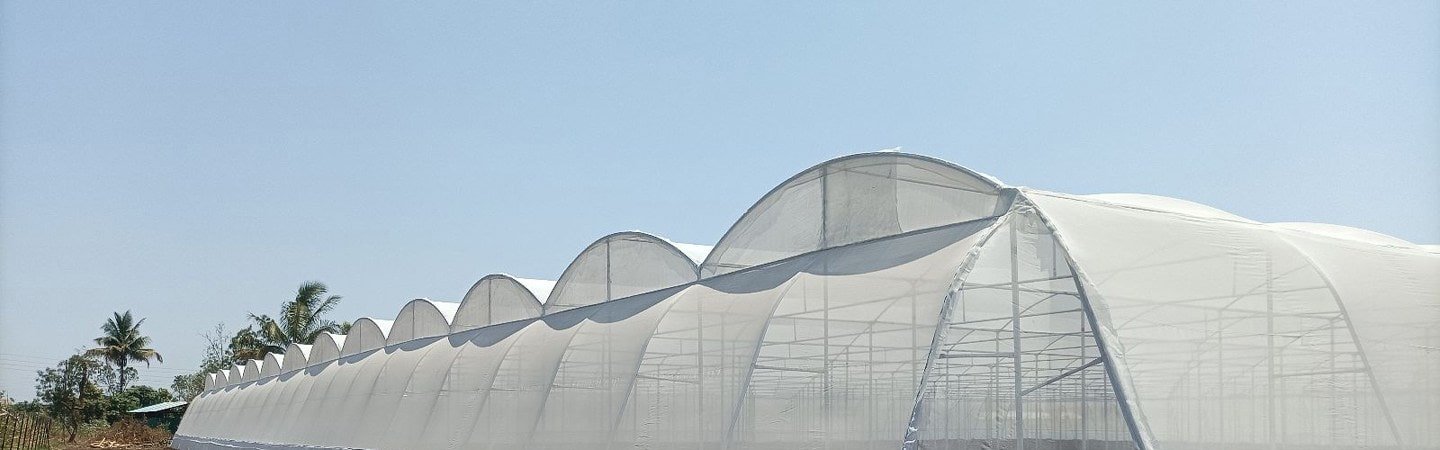
A hydroponic system determines how the crop receives water and nutrition. A protected structure determines how much control the grower has over the environment surrounding that crop. The two functions should not be confused.
Exposed hydroponic equipment has to deal directly with rainfall, dust, wind and changing environmental conditions. Protected cultivation gives the grower a more manageable production environment and protects sensitive system components and crop areas from direct exposure.
For commercial planning, the question is therefore broader than "Which hydroponic system should I buy?" It is: what combination of crop, root-zone system, fertigation, monitoring and protected environment will give the farm the level of control it actually needs?
How to Choose a Hydroponic Farming System
Before selecting equipment, work through these practical questions:
- What crop will be grown? Leafy greens, nursery plants and long-duration vine crops need different root-zone designs.
- How large will the mature root system become? Do not size the production concept around the seedling you transplant on day one.
- Does the crop need growing media? A media-supported fruiting crop behaves differently from roots growing inside an NFT channel.
- How will nutrient solution be delivered? Continuous circulation, flood-and-drain cycles and drip fertigation create different management requirements.
- How will drainage be handled? Water delivery without planned drainage is not proper root-zone management.
- How will EC and pH be monitored? Nutrient management should be designed into the farm rather than added after crop problems appear.
- What happens if a pump stops? Consider system dependence on continuous circulation and the operating procedures needed to respond to failures.
- What protected environment does the crop require? Root-zone precision cannot compensate for unsuitable crop temperatures or poor humidity management.
- Can the system expand logically? Commercial farms should consider how channels, benches, buckets, reservoirs, pumps and fertigation will scale together.
These questions also prevent a common planning mistake: choosing a hydroponic technology first and then trying to force a crop into it. Crop selection, market plan and production environment should lead. Hardware follows.
NFT vs Ebb & Flow vs Dutch Bucket: Which One Should You Choose?
Choose NFT when the production model centres on suitable leafy greens and herbs and you want a recirculating channel-based system. Be prepared to pay close attention to continuous flow, roots, nutrient solution and pump operation.
Choose Ebb & Flow when production is better organised around benches, trays or containers that benefit from repeated flood-and-drain irrigation. It is particularly relevant to nursery and propagation applications.
Choose Dutch Bucket when the crop is a larger fruiting or vine plant such as tomato, capsicum or cucumber and needs a substantial media-supported root zone, individual drip delivery and trellising. The correct choice is the system that matches crop biology and farm management — not the system with the longest list of features.
Planning a Commercial Hydroponic Farm?
The right system starts with the crop, root zone, water source, protected environment and operating plan. AgriFirst works with commercial hydroponic projects using NFT, Ebb & Flow and Dutch Bucket systems, along with fertigation, monitoring and protected-cultivation infrastructure.