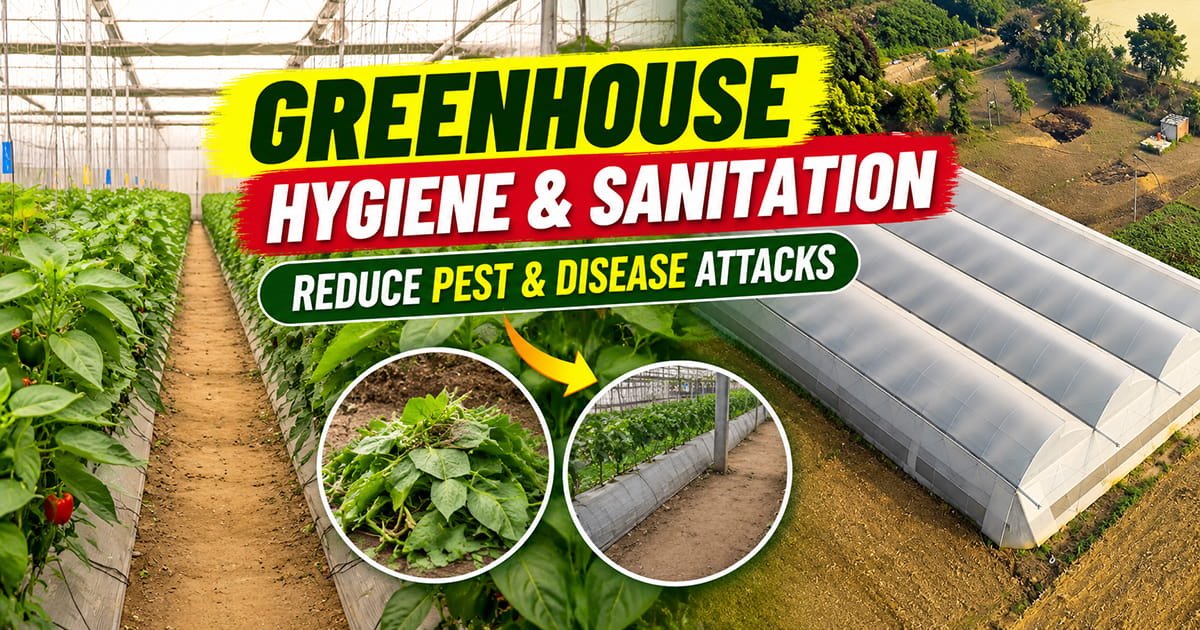
Keeping a greenhouse clean is just as important as maintaining the crop growing inside it. During routine activities such as cutting and pruning, fallen leaves and discarded plant material can collect on the ground and between crop rows. When this waste is not removed regularly, it can create conditions that favour certain pests and diseases.
Greenhouse hygiene and sanitation help farmers maintain a cleaner growing environment and reduce avoidable pest and disease risks. Simple practices, such as removing pruning waste on the same day and keeping the polyhouse surroundings clean, can make a difference in everyday crop management.
The important thing is to maintain cleanliness throughout the growing period rather than waiting for plant waste to accumulate.
Why Greenhouse Hygiene and Sanitation Matter
Greenhouse cultivation involves regular plant maintenance, including cutting, pruning, and removing unwanted leaves. These activities are necessary for crop management, but they also leave behind plant debris that needs to be cleared.
Discarded leaves and other plant material can provide favourable conditions for certain pests and disease-causing organisms, particularly when the debris is already infected. Allowing such waste to remain inside the polyhouse can increase avoidable sanitation-related risks.
Maintaining a clean growing area also makes routine crop inspection and management easier. When fallen leaves and pruning waste are cleared regularly, farmers can pay greater attention to the condition of their plants without accumulated debris getting in the way.
Remove Fallen Leaves and Pruning Waste on the Same Day
One of the most important greenhouse sanitation practices is removing fallen leaves and pruning waste immediately after crop maintenance activities.
During pruning, leaves and other removed plant parts often fall between crop rows or collect around the plants. Instead of leaving this material inside the polyhouse overnight, clear the waste on the same day the pruning is completed.
For example, if pruning is carried out in one section of the greenhouse, the discarded material should be collected and removed before the day's work ends. This prevents waste from accumulating as maintenance continues in other sections.
Making waste removal part of the pruning routine is more practical than treating cleaning as a separate job to be completed later. It also helps farmers maintain a tidy growing area throughout the crop cycle.
Maintain Cleanliness Inside and Outside the Polyhouse
Greenhouse cleanliness should not stop at the crop rows. The areas surrounding the polyhouse also need regular attention.
While farmers may focus primarily on maintaining plants inside the structure, discarded leaves and other waste should not be allowed to accumulate around the greenhouse. Keeping these spaces clean is an important part of overall polyhouse maintenance.
Include both the interior and surrounding areas in routine cleaning activities. This ensures that sanitation is maintained across the growing environment rather than being limited to the sections where crops are planted.
Keep the Hockey Area Clean
The hockey area of the polyhouse also requires regular cleaning. This section should receive the same attention as the crop-growing areas when maintaining greenhouse hygiene.
Fallen leaves, discarded plant material, and other waste should be cleared rather than allowed to collect in this area. Overlooking individual sections of the structure can leave plant debris behind even when the main growing area appears clean.
Including the hockey area in regular sanitation work helps maintain cleanliness throughout the polyhouse.
How Greenhouse Sanitation Helps Reduce Pest and Disease Attacks
Poor sanitation can contribute to pest and disease problems in greenhouse crops. Some pests may find shelter in plant debris, while infected leaves and discarded crop material can harbour disease-causing organisms.
Regularly removing this material helps eliminate some of these potential sources of pest and disease pressure. It also keeps the growing area easier to inspect, allowing farmers to identify visible crop problems without unnecessary plant waste obstructing their work.
However, greenhouse sanitation alone cannot prevent every pest or disease attack. Its effectiveness depends on the particular pest or pathogen and the overall condition of the crop. Cleanliness is one important part of crop protection, not a replacement for other necessary management practices.
For this reason, sanitation should remain a regular activity throughout cultivation, especially when cutting and pruning produce fresh plant waste.
Conclusion
Greenhouse hygiene and sanitation begin with simple, consistent habits. Removing fallen leaves and pruning waste on the same day, keeping the polyhouse surroundings clean, and maintaining hygiene in the hockey area are practical steps farmers can follow during routine crop management.
A clean greenhouse does not guarantee freedom from pests and diseases, but it helps reduce avoidable risks and makes crop maintenance easier. The best approach is to clear plant waste as part of everyday greenhouse work instead of allowing it to accumulate.
Planning to set up a greenhouse or polyhouse for your farm?
Explore AgriFirst's protected cultivation solutions and contact our team to discuss your greenhouse or polyhouse project requirements.