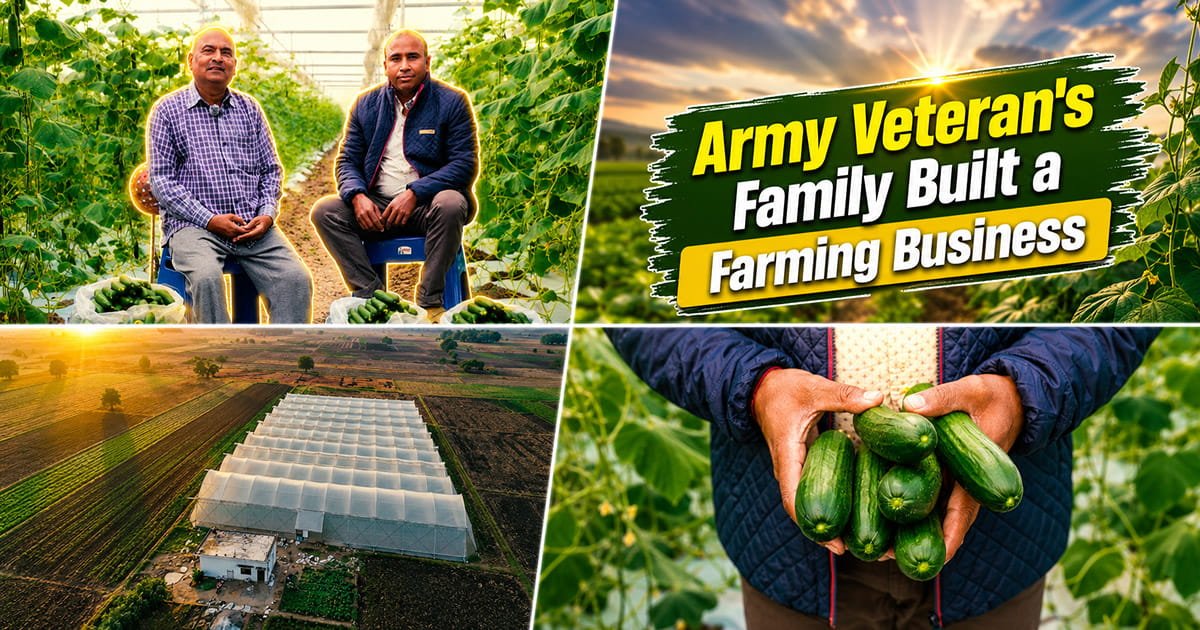
Can retirement become the beginning of an even bigger success story? For most people, retirement marks the end of a professional career. For Mr. Birendra Kumar Rai, it became the beginning of an entirely new mission—building a profitable commercial farming enterprise through protected cultivation. Alongside his son, Mr. Shailendra Kumar Rai, he transformed conventional farming into a modern agricultural business by establishing a commercial cucumber polyhouse with AgriFirst
Today, their farm produces premium-quality seedless cucumbers inside a scientifically managed polyhouse, delivering consistent harvests, reliable daily income, and long-term growth opportunities. Their journey demonstrates that with proper planning, technical knowledge, and expert guidance, polyhouse farming can become a sustainable and profitable business model for progressive farmers, retired professionals, educated youth, and agricultural entrepreneurs across India.
This inspiring Birendra Kumar Rai Polyhouse Farming Success Story is more than a personal achievement. It highlights how commercial polyhouse farming, controlled environment agriculture, and scientific crop management are reshaping Indian agriculture. From bank loan assistance and polyhouse construction to agronomy support, government subsidy documentation, and successful cucumber cultivation, every stage of their journey offers valuable lessons for aspiring farmers.
From Serving the Nation to Building a Modern Farm
After proudly serving in the Indian Army, Mr. Birendra Kumar Rai retired nearly eighteen years ago and returned to his native village in Uttar Pradesh. Like many retired servicemen with agricultural roots, he chose to spend his post-retirement life cultivating the family's farmland through traditional farming practices.
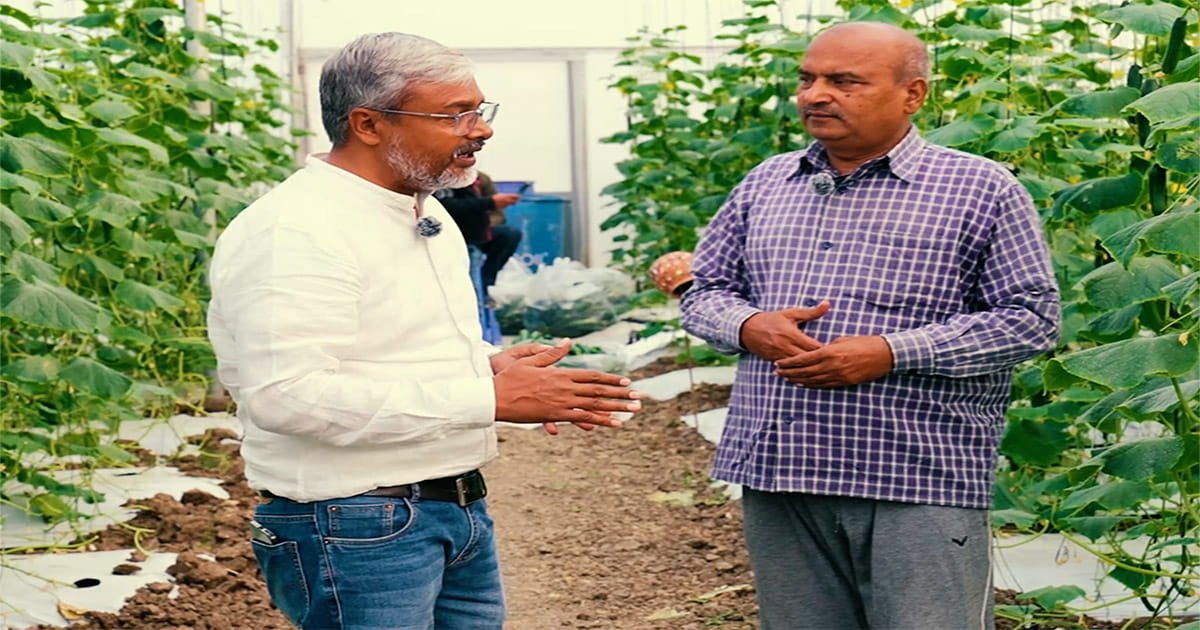
Although agriculture remained close to his heart, conventional farming brought familiar challenges. Crop production largely depended on unpredictable weather, market prices changed frequently, production costs continued increasing, and income remained uncertain from one season to another. Despite years of hard work, achieving stable profitability through open-field cultivation was becoming increasingly difficult.
The family understood that agriculture was changing rapidly. Across India, more farmers were adopting protected cultivation, greenhouse farming , and naturally ventilated polyhouses to improve productivity while reducing climatic risks. These modern farming systems offered better crop quality, higher yields, efficient water utilisation through drip irrigation, and improved profitability.
Around one year before establishing their polyhouse, Mr. Rai came across AgriFirst. As he learned more about modern protected cultivation, he realised that agriculture had evolved far beyond traditional methods. Instead of depending entirely on rainfall and seasonal conditions, farmers could now cultivate high-value crops inside controlled environments using scientific farming practices.
For a disciplined Army veteran accustomed to planning, precision, and long-term thinking, this modern approach to agriculture immediately made sense. It wasn't simply about constructing a polyhouse—it was about building a sustainable business for future generations.
The Son Who Saw Opportunity Where Others Saw Uncertainty
While Mr. Birendra Kumar Rai brought years of discipline and practical farming experience, the vision for protected cultivation was first sparked by his son, Mr. Shailendra Kumar Rai.
After completing his Bachelor of Arts and Bachelor of Education, Shailendra spent several years preparing for government competitive examinations. Like thousands of educated young Indians, he dreamed of securing a stable government job. Since completing his B.Ed. in 2012, he appeared for numerous examinations, hoping that persistence would eventually lead to success.
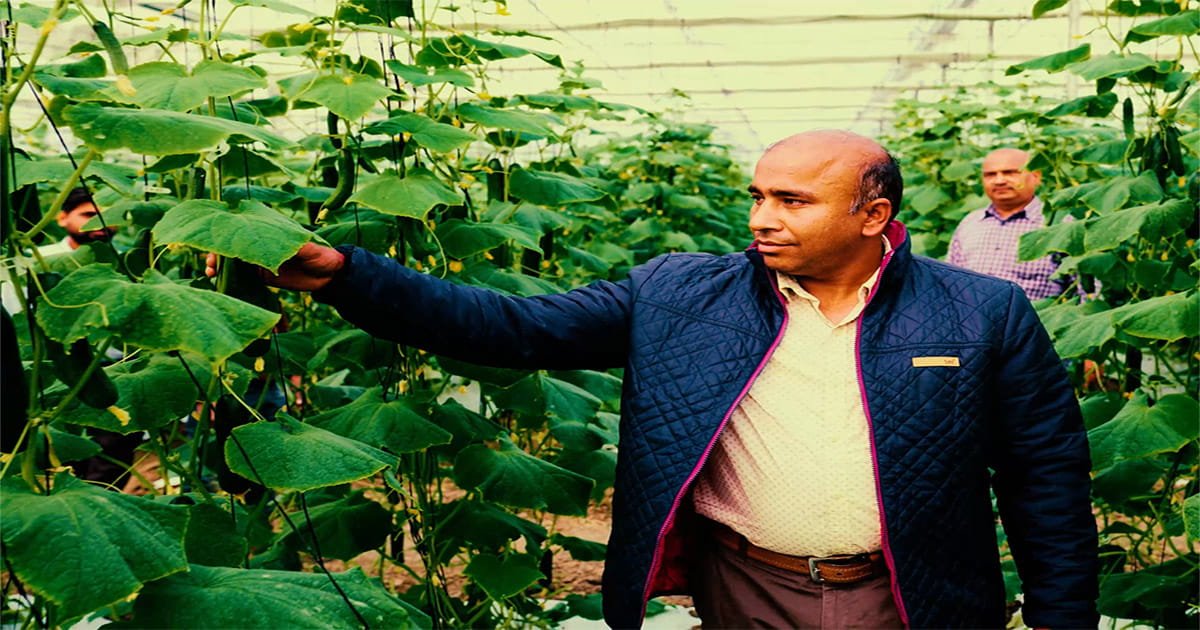
Despite years of preparation, the desired opportunity never arrived.
Instead of accepting a routine private-sector job, he began exploring alternative career paths that offered independence, financial growth, and long-term sustainability. During this search, he spent countless hours watching YouTube videos, reading agricultural news, following successful farmers, and researching modern farming technologies.
One subject repeatedly captured his attention—polyhouse farming.
The more he studied protected cultivation, the more convinced he became that it represented the future of Indian agriculture. Unlike conventional farming, commercial polyhouses offered better climate control, efficient fertigation, precision irrigation, lower weather-related risks, and the ability to produce premium-quality vegetables with higher market value.
Rather than treating agriculture as a fallback option, Shailendra viewed it as an entrepreneurial opportunity capable of generating sustainable income while creating employment in rural India.
Eventually, he approached his father with a bold proposal: instead of waiting indefinitely for a government job, why not build a commercial polyhouse and invest in the future of agriculture?
It was a significant financial decision, but after detailed discussions and careful planning, the family chose to move forward together.
Learning Before Investing: Why Knowledge Became Their Biggest Asset
One reason many agricultural projects struggle is that investments are often made before acquiring sufficient technical knowledge. The Rai family chose a different path. Before spending a single rupee on infrastructure, they focused on understanding protected cultivation from every possible source.
Initially, Shailendra gathered information through YouTube, agricultural newspapers, discussions with progressive farmers, and online resources. While these sources introduced the concept of polyhouse farming, he soon realised that commercial success depends on scientific crop management rather than simply constructing a greenhouse.
Determined to develop practical knowledge, he enrolled in a dedicated three-day training programme on polyhouse farming. The programme covered the complete cultivation cycle, including:
- Commercial polyhouse planning
- Crop selection for protected cultivation
- Drip irrigation and water management
- Fertigation scheduling
- Plant nutrition management
- Pruning and vine training techniques
- Integrated pest and disease management
- Harvest planning and market linkage
- Scientific crop monitoring
- Protected cultivation best practices
The training transformed theory into practical understanding. More importantly, it helped the family appreciate that successful polyhouse farming requires discipline, regular crop monitoring, timely decision-making, and continuous technical support.
Today, after successfully implementing these practices on their own farm, Shailendra actively shares his experiences with neighbouring farmers who are interested in adopting modern protected cultivation technologies.
Choosing AgriFirst: A Partner for the Complete Journey
After gaining confidence in protected cultivation, the next challenge was selecting the right implementation partner. Establishing a commercial polyhouse is a major investment, and the family wanted a company that could support them beyond construction.
Their search led them to the AgriFirst office in Lucknow. The team visited their farm, assessed the site, explained the complete project in detail, and answered every technical and financial question with patience. These interactions gave the family confidence that they were dealing with professionals who understood both the engineering and agronomy aspects of protected cultivation.
What impressed them most was AgriFirst's end-to-end approach. Instead of limiting its role to supplying infrastructure, the company offered complete project assistance—from preparing bank documentation and coordinating with financial institutions to constructing the polyhouse, supplying quality planting material, guiding crop management, and assisting with government subsidy documentation.
For first-time investors in commercial agriculture, this comprehensive support significantly reduced uncertainty. Rather than navigating complex procedures alone, the Rai family had experienced professionals guiding them through every stage of the project.
With confidence in both the technology and their implementation partner, the family was finally ready to transform their vision into reality.
Turning a Vision into Reality: From Bank Loan Approval to Polyhouse Construction
Once the Rai family finalized their decision to establish a commercial cucumber polyhouse, the next challenge was arranging project finance. Like most first-generation investors in protected cultivation, they required financial assistance to convert their vision into reality. Establishing a modern polyhouse involves much more than constructing a structure—it requires engineering, irrigation systems, fertigation infrastructure, crop planning, and technical supervision. Having an experienced implementation partner during this phase can significantly reduce both financial and operational risks.
AgriFirst guided the family through the complete financing process. The team prepared technical documentation, supported the project proposal, coordinated with the bank, and ensured that every required document was completed correctly. This systematic approach simplified what is often considered one of the most challenging stages of starting a commercial polyhouse project.
Their bank loan was officially approved on 17 May. After completing all required banking formalities, the sanctioned amount was transferred directly to AgriFirst through the financing institution, ensuring transparency and compliance throughout the project implementation process.
Construction materials arrived at the farm on 30 June. Soon afterwards, installation work began. Although heavy monsoon rains occasionally interrupted construction activities, the engineering team continued working whenever weather conditions allowed. Every stage of the installation was carefully executed to ensure that the structure met commercial farming standards.
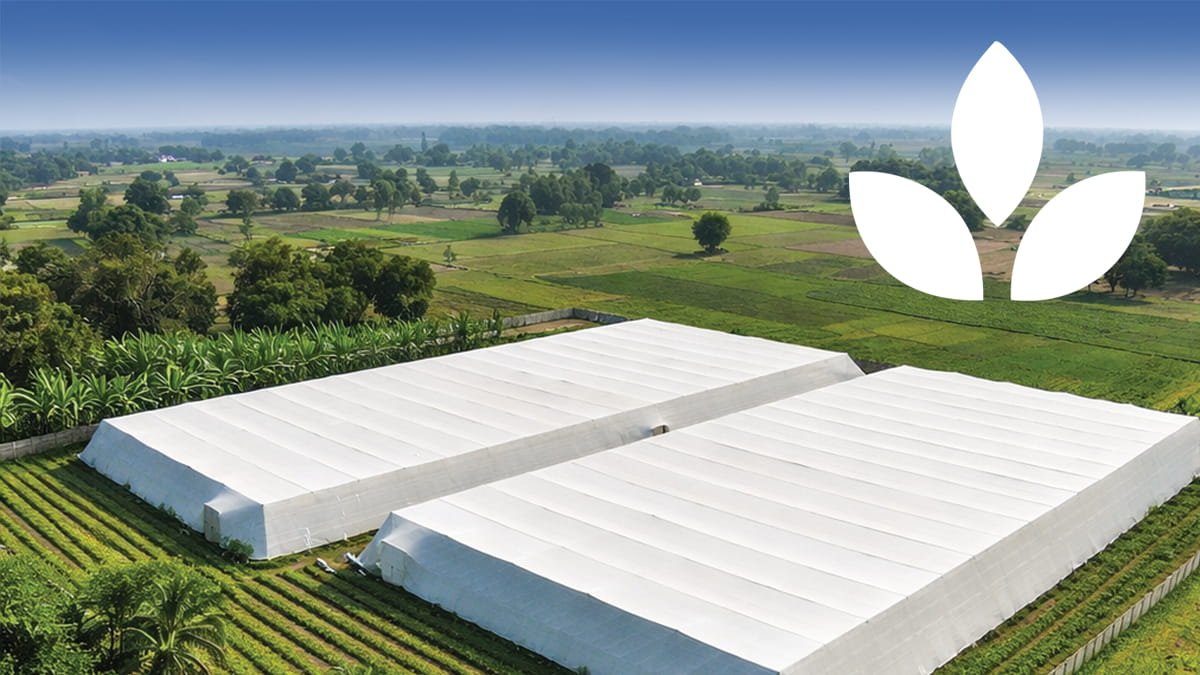
After months of planning and coordinated effort, the polyhouse was successfully completed on 15 October. Standing inside the newly constructed structure for the first time was a proud moment for the entire family. The farmland that had once depended entirely on seasonal weather had now become a modern protected cultivation facility designed for year-round production of high-value crops.
Why Seedless Cucumber Was Chosen for Commercial Polyhouse Farming
Crop selection plays a decisive role in the success of every commercial polyhouse project. Farmers must choose crops that combine strong market demand, high productivity, efficient use of protected environments, and attractive returns on investment.
Based on these factors, the Rai family selected seedless cucumber, one of the most commercially successful vegetables grown under protected cultivation in India. Seedless cucumbers are widely preferred by wholesalers, supermarkets, retailers, hotels, and institutional buyers because of their uniform size, attractive appearance, superior taste, and longer shelf life.
Another major advantage is the crop's harvesting pattern. Unlike many seasonal crops that generate income only once, cucumber plants produce fruits continuously over several weeks when managed scientifically. This creates a regular cash flow for farmers instead of a single seasonal payment.
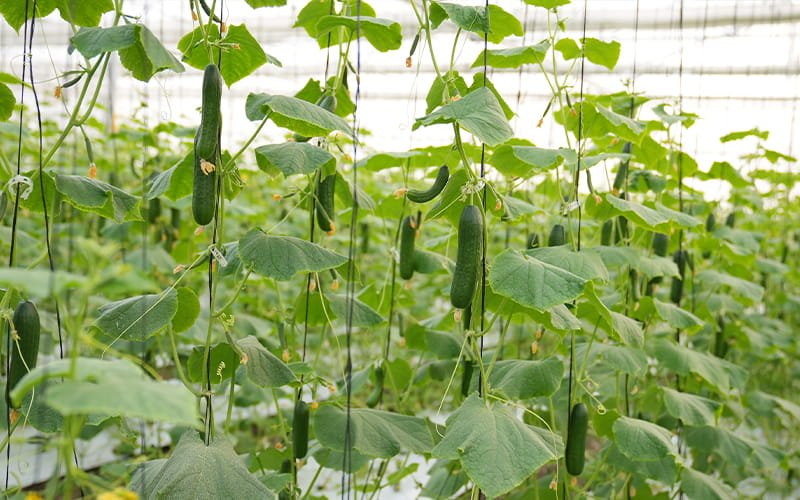
Inside a naturally ventilated polyhouse, cucumber plants benefit from a controlled growing environment where irrigation, nutrition, humidity, and crop management practices can be closely monitored. Such conditions help improve fruit quality while reducing weather-related losses commonly experienced in open-field cultivation.
For progressive farmers seeking consistent income, commercial cucumber cultivation has become one of the preferred crop choices under protected cultivation.
Scientific Crop Establishment: Every Step Guided by Experts
Following completion of the structure, AgriFirst supplied premium-quality seedless cucumber seeds selected specifically for commercial greenhouse cultivation. The family sowed the crop on 16 October under the guidance of AgriFirst's agronomy team.
Unlike conventional farming, where many decisions are based on experience alone, protected cultivation follows a scientific crop management protocol. Every operation—from irrigation scheduling and fertigation to pruning, vine training, crop nutrition, and plant protection—must be carried out at the correct stage of plant development.
The Rai family carefully followed the technical recommendations provided by AgriFirst. Drip irrigation ensured efficient water application directly to the root zone, while fertigation supplied nutrients in balanced quantities throughout the crop cycle. Regular pruning improved air circulation within the canopy, encouraged healthy vegetative growth, and supported better fruit development.
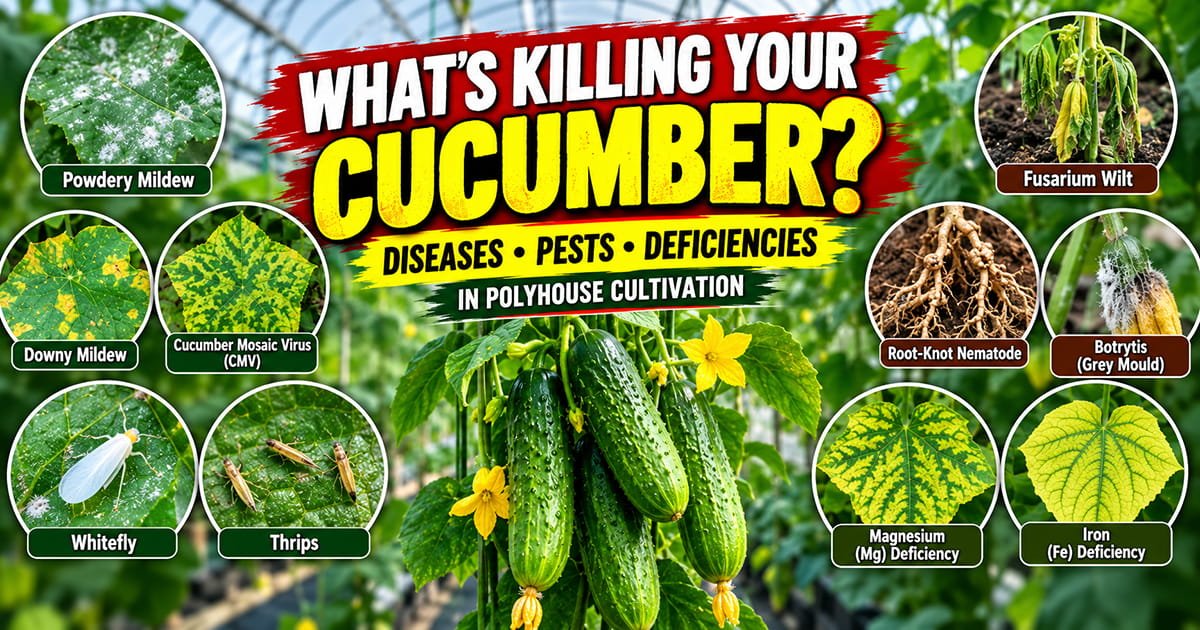
Continuous crop monitoring also allowed the family to identify any nutritional deficiencies or pest issues at an early stage, reducing the likelihood of major crop losses. This scientific approach demonstrated how precision farming techniques can significantly improve both productivity and crop quality.
The First Harvest: Forty Days That Changed Everything
One of the most rewarding moments in every farmer's journey is the first harvest. For the Rai family, that milestone arrived approximately forty days after sowing.
On 24 November, they harvested their first batch of premium-quality seedless cucumbers. The harvest represented much more than the beginning of crop production—it validated months of research, financial planning, training, construction, and disciplined crop management.
Healthy plants, uniform fruits, and excellent crop quality confirmed that the cultivation practices were producing the desired results. The success of the first harvest also reinforced the family's confidence that choosing protected cultivation had been the right decision.
Seeing freshly harvested cucumbers leaving the polyhouse for the market gave the family immense satisfaction. It marked the successful transition from traditional farming to a professionally managed agricultural enterprise.
Harvesting 5–7 Quintals Every Day: A Reliable Income Model
As the crop entered peak production, harvesting became a regular daily activity. Today, the Rai family harvests approximately 5–7 quintals of premium-quality cucumbers every day, demonstrating the productivity that well-managed commercial polyhouses can achieve.
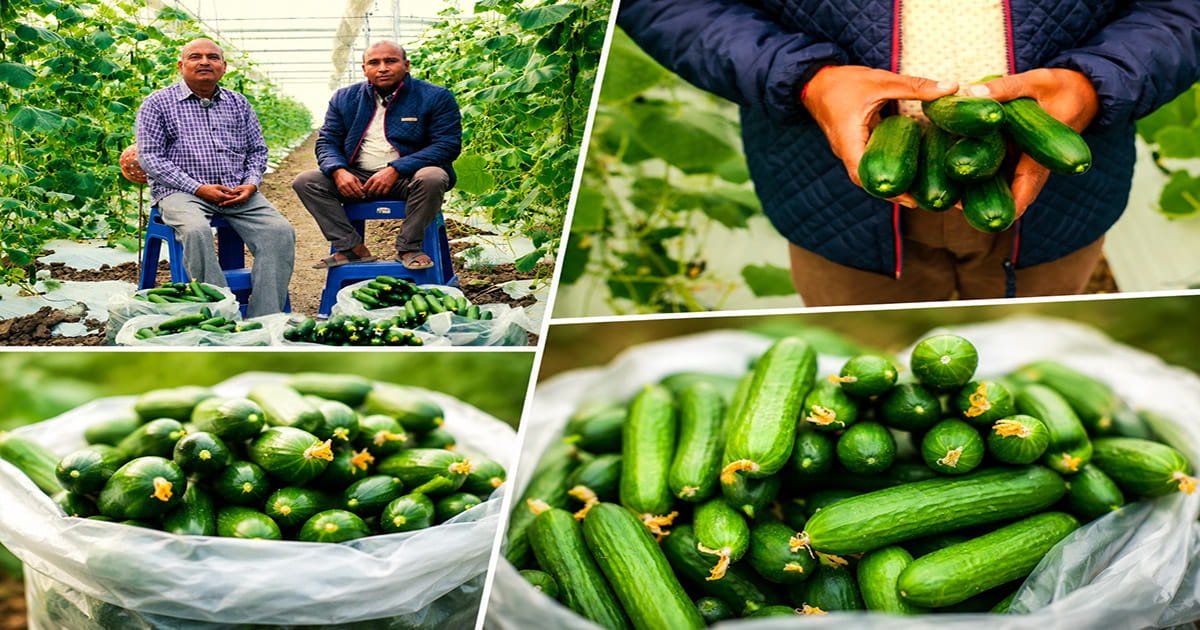
Every morning, harvesting begins early so that fresh produce reaches the vegetable market by around 6:00 AM. Maintaining freshness is critical because premium-quality vegetables command better prices and attract consistent demand from wholesalers and traders.
One aspect that particularly impressed the family was the efficiency of the marketing system. After the produce is sold, the payment is transferred directly into their bank account between 2:00 PM and 3:00 PM on the same day. This fast payment cycle provides steady working capital, enabling the family to manage farm operations smoothly without prolonged payment delays.
Compared with conventional farming, where income often depends on seasonal harvests, commercial cucumber cultivation under protected cultivation provides a much more regular and predictable cash flow. This financial stability has become one of the biggest advantages of the family's farming enterprise.
Protected Cultivation vs Traditional Farming: The Difference They Experienced
Having worked in both traditional farming and protected cultivation, the Rai family has experienced the difference firsthand.
In open-field farming, production is heavily influenced by rainfall, temperature fluctuations, pests, diseases, and unexpected climatic events. Even experienced farmers often face significant uncertainty regarding crop quality and marketable yield.
Inside the polyhouse, however, the growing environment is far more stable. Scientific irrigation, balanced nutrition, systematic pruning, proper vine management, and continuous agronomic monitoring create favourable conditions for healthy crop development. This results in improved fruit quality, greater production consistency, and more predictable farm income.
For the Rai family, the transition was not simply about changing cultivation techniques—it represented a complete transformation in the way agriculture was planned, managed, and operated. Farming evolved from seasonal uncertainty into a structured business driven by technology, scientific management, and informed decision-making.
Government Subsidy Documentation: Expert Support Beyond Construction
For many farmers, establishing a commercial polyhouse is only one part of the journey. Completing government documentation, coordinating with horticulture departments, and ensuring compliance with subsidy guidelines can often become equally challenging. Many deserving farmers delay or even miss subsidy benefits simply because they are unfamiliar with the documentation process.
The Rai family experienced a much smoother process because AgriFirst assisted them with the complete documentation required for the government subsidy. Every required document was prepared systematically, allowing the family to focus on crop management instead of administrative procedures.
After completing the documentation, the family met the District Horticulture Officer (DHO), who assured them that the farm inspection would be conducted shortly. Once the inspection is completed, the subsidy process will proceed according to the applicable government guidelines.
For first-time investors in protected cultivation, professional assistance with subsidy documentation is often just as valuable as technical farming guidance. Proper documentation ensures that farmers can confidently move through every stage of the project without unnecessary delays.
Continuous Agronomy Support: The Difference Between Installing a Polyhouse and Running a Successful Farm
Constructing a polyhouse is only the beginning of commercial protected cultivation. Long-term success depends on how effectively the crop is managed every single day. Irrigation timing, fertigation schedules, pruning, plant training, disease prevention, nutrition management, harvesting, and environmental monitoring all require scientific decision-making throughout the crop cycle.
According to the Rai family, one of the biggest reasons behind their successful cucumber crop has been the continuous technical guidance provided by Peeyush Sir, AgriFirst's agronomy expert.
From the very beginning, he guided the family on every critical aspect of crop management, including irrigation scheduling, fertilizer application, nutrient balance, pruning techniques, vine training, pest management, disease prevention, and maintaining overall plant health. His recommendations helped the family understand not only what should be done but also why each operation was important for maximizing yield and fruit quality.
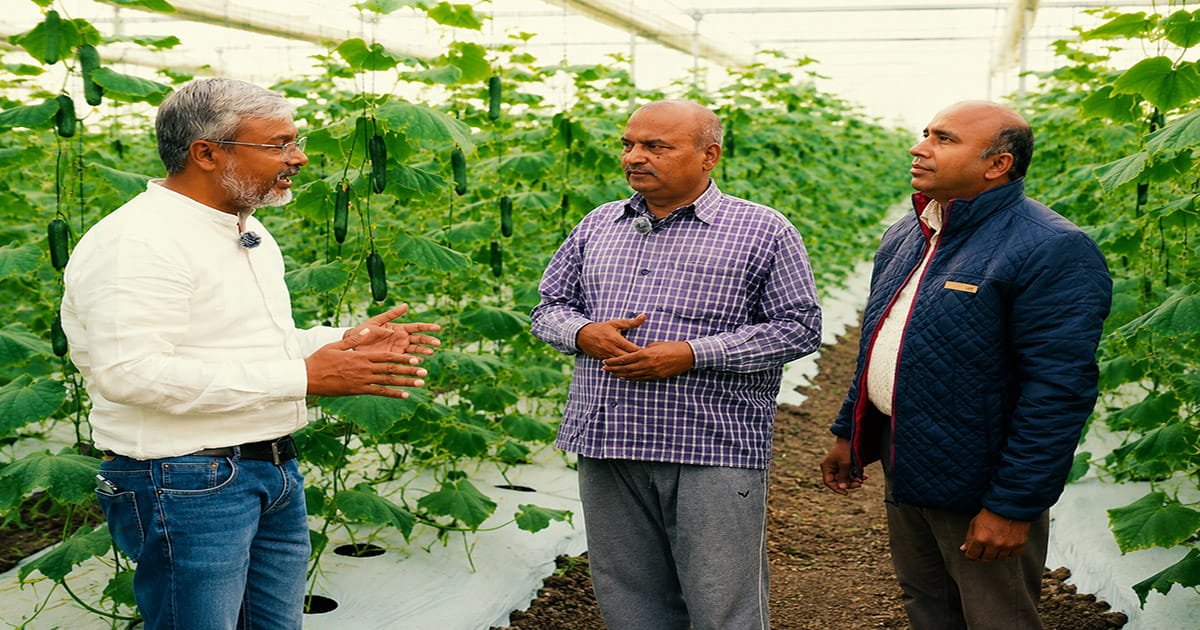
Whenever the family encountered any technical challenge, they contacted him directly. Even if he was occupied with field visits or other farmers, he always returned their calls as soon as possible. This responsive communication gave the family confidence that expert guidance was always available whenever required.
His support extended far beyond phone conversations. He regularly conducted video consultations, shared detailed written crop schedules, explained fertigation programmes, and personally visited the farm on three separate occasions to monitor crop development and recommend practical improvements based on field observations.
This level of post-installation support demonstrates an important principle of modern agriculture: successful protected cultivation depends not only on quality infrastructure but also on continuous agronomic expertise. Scientific crop management helps farmers minimise mistakes, improve productivity, maintain fruit quality, and maximise returns throughout the harvesting season.
What Makes This Polyhouse Farming Success Story Truly Inspiring?
Every successful farming journey is unique, but the story of Mr. Birendra Kumar Rai and Mr. Shailendra Kumar Rai stands apart because it combines experience, education, determination, and innovation across two generations.
A retired Army veteran returned to agriculture with discipline and commitment. His educated son chose entrepreneurship over waiting indefinitely for a government job. Together, they embraced technology, invested in knowledge before infrastructure, completed professional training, trusted scientific farming practices, and successfully established a commercial cucumber polyhouse.
Their success was not created overnight. It was built through careful planning, continuous learning, timely financial decisions, expert technical guidance, and disciplined execution at every stage of the project.
Their journey also reflects a broader transformation taking place across Indian agriculture. Increasingly, educated youth, retired professionals, entrepreneurs, and progressive farmers are recognising that modern farming can become a profitable, technology-driven business rather than merely a traditional occupation.
Key Lessons for Farmers Planning to Start Polyhouse Farming
The Rai family's experience offers valuable insights for anyone considering investment in commercial protected cultivation.
- Invest in knowledge before investing in infrastructure. Proper training and research significantly improve decision-making.
- Select crops based on market demand rather than assumptions. Commercial seedless cucumber is one of the most successful protected cultivation crops because of its strong market acceptance and continuous harvesting cycle.
- Scientific crop management is essential. Proper irrigation, fertigation, pruning, crop nutrition, and disease management directly influence productivity.
- Choose an implementation partner that provides long-term technical support. Continuous agronomy guidance helps farmers avoid costly mistakes.
- Think of agriculture as a business. Successful polyhouse farming requires planning, monitoring, financial discipline, and continuous improvement rather than seasonal decision-making.
- Technology should complement experience. Traditional farming knowledge combined with modern protected cultivation practices creates a powerful foundation for sustainable growth.
The Future of the Rai Family's Farming Journey
Today, the Rai family looks toward the future with optimism and confidence. Their commercial cucumber polyhouse has demonstrated that protected cultivation can generate reliable production, stable income, and long-term business opportunities when supported by scientific crop management.
Receiving regular payments from daily harvests has strengthened their financial confidence, while the continuous support provided by AgriFirst has encouraged them to keep improving their farming practices. As they gain more experience with protected cultivation, they remain optimistic about expanding their operations and exploring additional opportunities in modern agriculture.
For them, polyhouse farming has become much more than an agricultural project—it has become a sustainable family enterprise built on knowledge, discipline, and innovation.
Conclusion: From Traditional Farming to a Modern Agricultural Enterprise
The Birendra Kumar Rai Polyhouse Farming Success Story perfectly illustrates how determination, education, scientific farming, and the right technical guidance can transform a family's future. What began as conventional farming after retirement has evolved into a successful commercial cucumber farming enterprise that now provides consistent production and dependable income.
Their journey proves that polyhouse farming in Uttar Pradesh is creating new opportunities for farmers who are willing to embrace innovation. By combining protected cultivation technology with disciplined crop management, they have built a sustainable agricultural business capable of delivering long-term growth.
Just as importantly, their experience demonstrates that success in modern agriculture is not determined by age or previous profession. Whether you are a retired professional, an educated young entrepreneur, or a progressive farmer looking to diversify your income, protected cultivation offers enormous opportunities when implemented correctly.
With complete project planning, financing assistance, engineering expertise, quality planting material, government subsidy support, agronomy guidance, and post-installation technical assistance, AgriFirst continues to help farmers across India build profitable protected cultivation enterprises that are prepared for the future of agriculture.
Start Your Own Polyhouse Farming Journey with AgriFirst
If you are planning to establish a commercial polyhouse for cucumber, coloured capsicum, tomato, gerbera, roses, or other high-value crops, AgriFirst provides complete end-to-end support—from project consultation and bank loan assistance to polyhouse construction, agronomy guidance, subsidy documentation, and long-term technical support.
Take the first step towards modern agriculture and discover how protected cultivation can transform your farming future with AgriFirst.