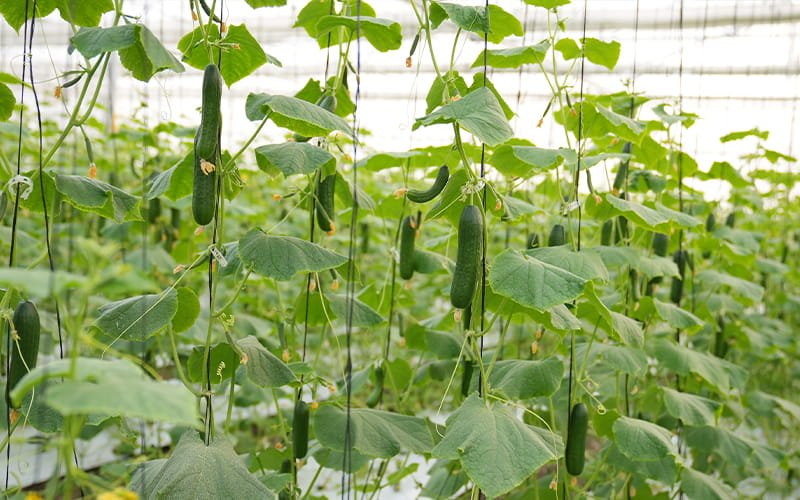
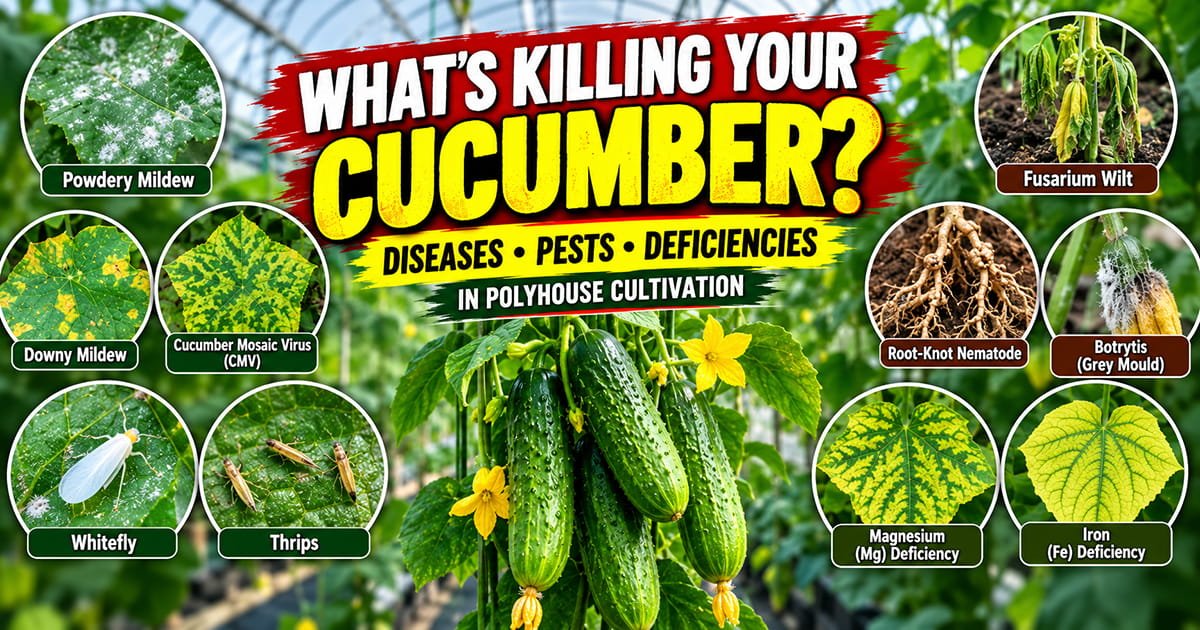
A cucumber plant rarely hides trouble for long. White powder appears across a leaf. Angular yellow-green patches begin forming between veins. A plant suddenly wilts even though moisture is available. Roots carry knots. Young leaves turn almost white. Flowers, stems or fruits develop grey mould. Each visible change is a diagnostic signal, and the difference between one problem and another sits in those details.
Polyhouse cucumber problems covered here fall into five groups: fungal diseases, viral diseases, bacterial diseases, insect pests and nematodes, and nutritional deficiencies. Identification starts with what the plant is physically showing: where the symptom begins, its colour and pattern, whether roots or fruits are affected, and the conditions associated with its development. Treatment then has to match the identified problem.
1. Fungal Diseases in Polyhouse Cucumber
The fungal disease section covers Powdery Mildew, Downy Mildew, Fusarium Wilt, Anthracnose, Pythium Root Rot/Damping Off and Botrytis or Grey Mould. Their symptoms range from leaf coatings and angular lesions to vascular discoloration, root decay, fruit lesions and rapid tissue collapse.
Powdery Mildew: How to Identify It
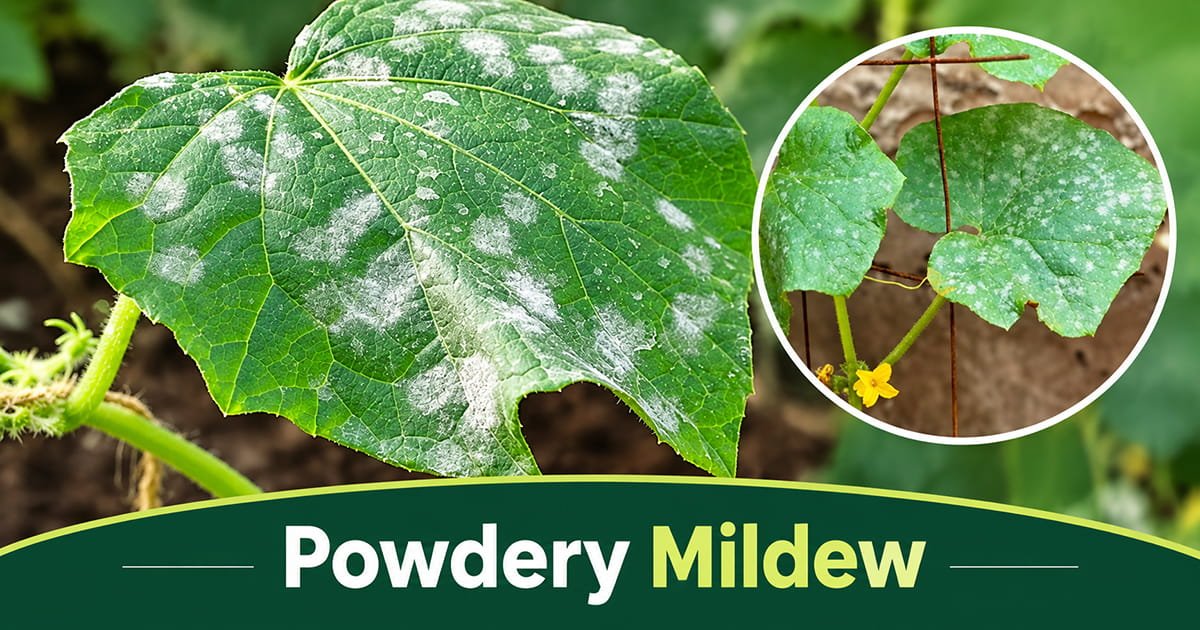
Look for a white powdery coating on the upper leaf surface. Infected leaves turn yellow, curl and dry out. The problem spreads rapidly under high humidity combined with warm temperatures of 25–30°C. Fruits may remain unaffected initially.
Treatment of Powdery Mildew
- Spray Sulphur 80 WP @ 2 g/L water.
- Trifloxystrobin + Tebuconazole @ 0.5 g/L.
- Neem oil (5000 ppm) @ 5 ml/L as preventive.
- Maintain RH <70% in polyhouse; improve ventilation.
- Remove and destroy heavily infected leaves.
Downy Mildew: How to Identify It
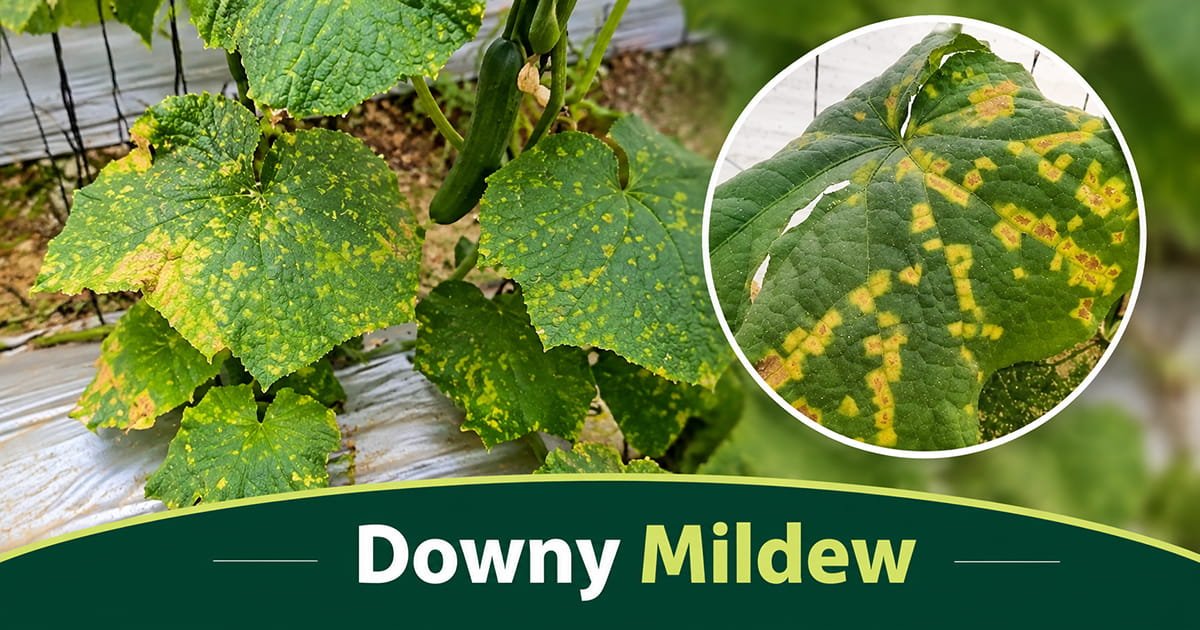
Downy Mildew produces yellow-green angular spots on the upper leaf surface and grey-purple downy sporulation on the lower leaf surface. Lesions are bounded by leaf veins. Under cool, wet conditions, rapid defoliation can occur.
Treatment of Downy Mildew
- Metalaxyl + Mancozeb @ 2 g/L water.
- Dimethomorph 50 WP @ 1 g/L.
- Cymoxanil + Mancozeb @ 2.5 g/L.
- Drip irrigation preferred; avoid wetting foliage.
- Improve air circulation inside polyhouse.
Fusarium Wilt: How to Identify It
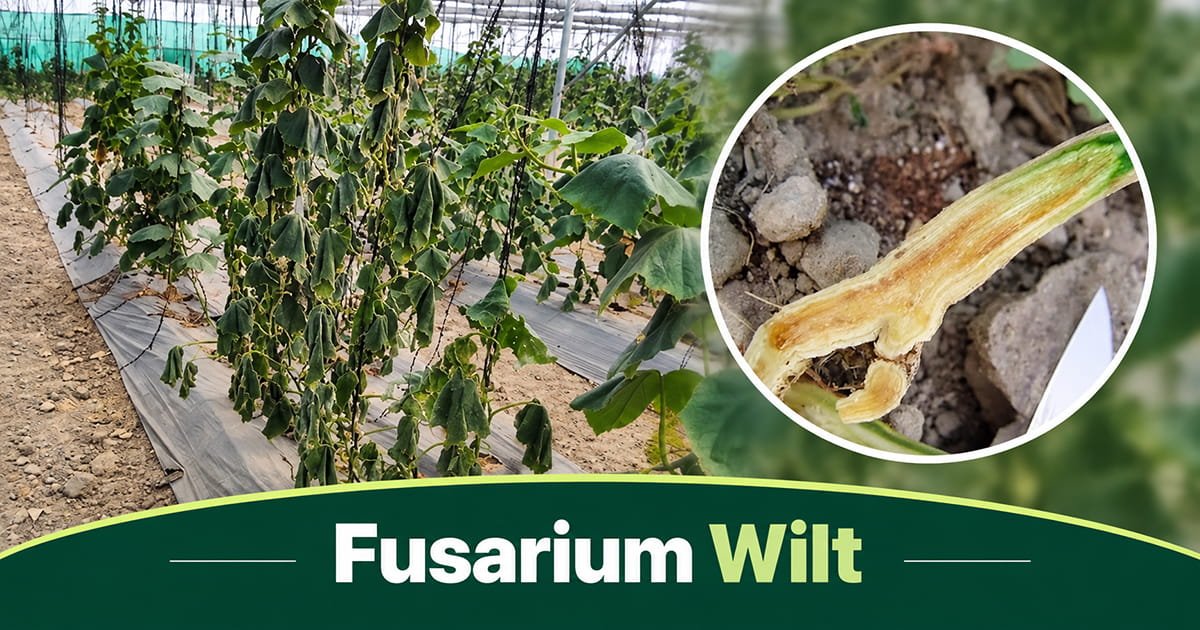
A plant may show sudden wilting of the entire plant or one side only. Cut the stem and brown discoloration of vascular tissue is a key identification sign. Older leaves yellow first, growth becomes stunted, and root rot may carry pink or white fungal growth at the base.
Treatment of Fusarium Wilt
- Seed treatment: Carbendazim 50 WP @ 2 g/kg seed.
- Soil drench with Trichoderma viride @ 10 g/L.
- Carbendazim 50 WP @ 1 g/L at root zone.
- Solarize soil before planting; maintain pH 6–7.
- Use resistant/grafted varieties where available.
Anthracnose: How to Identify It
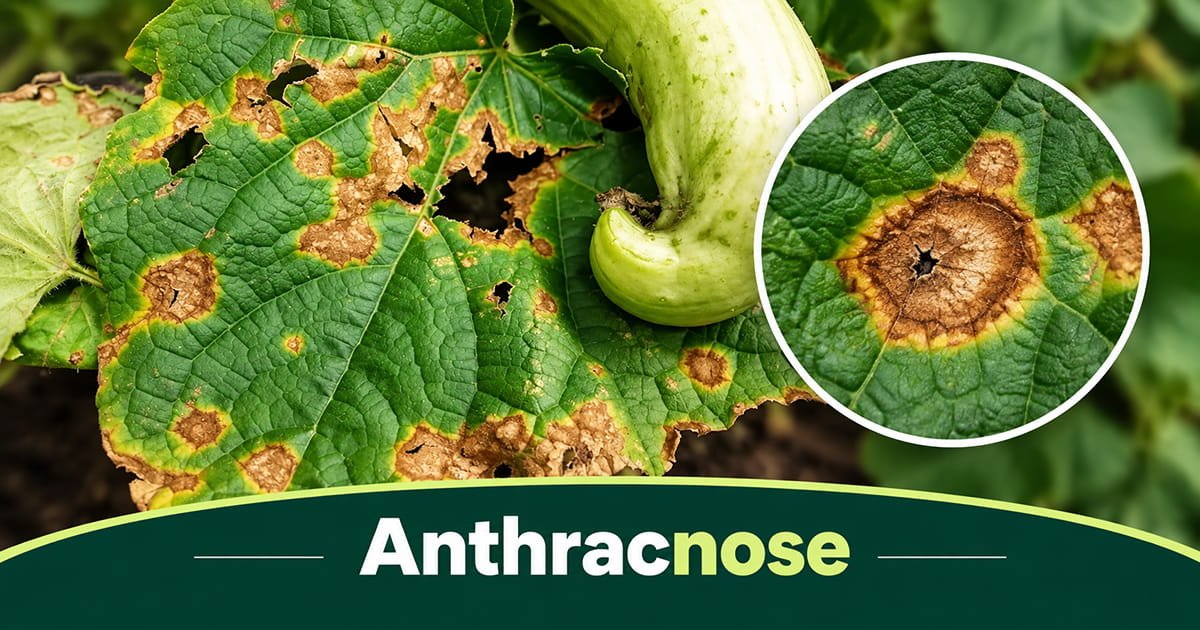
Watch for water-soaked spots on leaves that turn brown. Fruits develop circular sunken lesions with pink spore mass, while stems can develop dark brown cankers. Fruit decay occurs in warm, humid conditions above 25°C.
Treatment of Anthracnose
- Mancozeb 75 WP @ 2.5 g/L preventively.
- Carbendazim 50 WP @ 1 g/L curative spray.
- Chlorothalonil 75 WP @ 2 g/L.
- Avoid overhead irrigation; remove infected fruits.
- Spray at 7-day intervals during humid spells.
Pythium Root Rot / Damping Off: How to Identify It
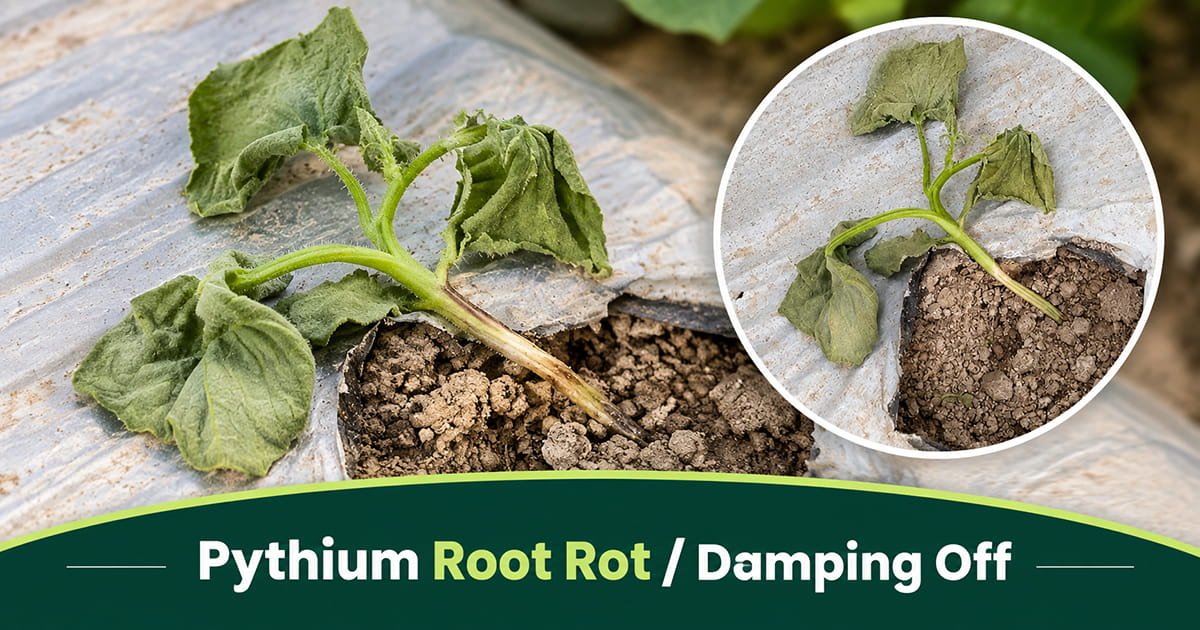
Seedlings collapse at the soil surface in damping off. Roots become water-soaked, brown and rotten. Mature plants yellow and wilt. The problem is prevalent in waterlogged or poorly drained media.
Treatment of Pythium Root Rot / Damping Off
- Metalaxyl 35 WP drench @ 2 g/L.
- Propamocarb hydrochloride @ 3 ml/L drench.
- Ensure proper drainage in growing media.
- Sterilize trays, pots and media before reuse.
Botrytis (Grey Mould): How to Identify It
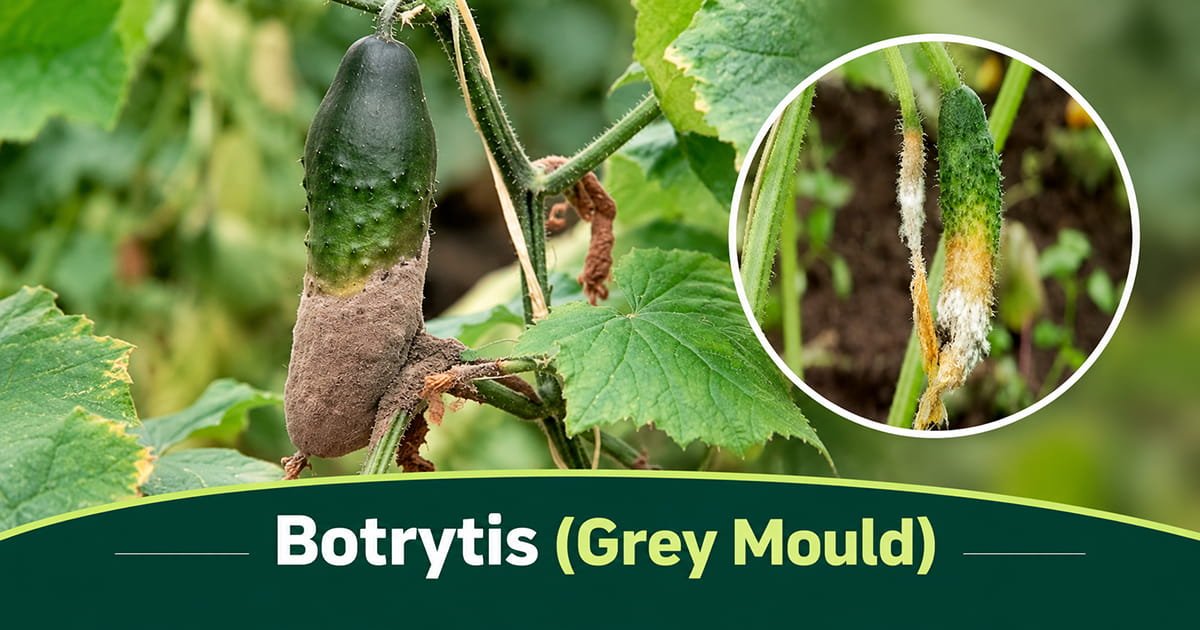
Grey fuzzy mould appears on flowers, stems and fruits. Brown water-soaked lesions spread rapidly, affected tissue collapses in cool, humid conditions, and stem cankers may appear near the soil or grafting point.
Treatment of Botrytis (Grey Mould)
- Iprodione 50 WP @ 1.5 g/L spray.
- Boscalid + Pyraclostrobin @ 0.5 g/L.
- Remove and bag all infected plant debris promptly.
- Reduce humidity; target RH <70% using fans.
- Avoid wounding plants during training/pruning.
2. Viral Diseases in Polyhouse Cucumber
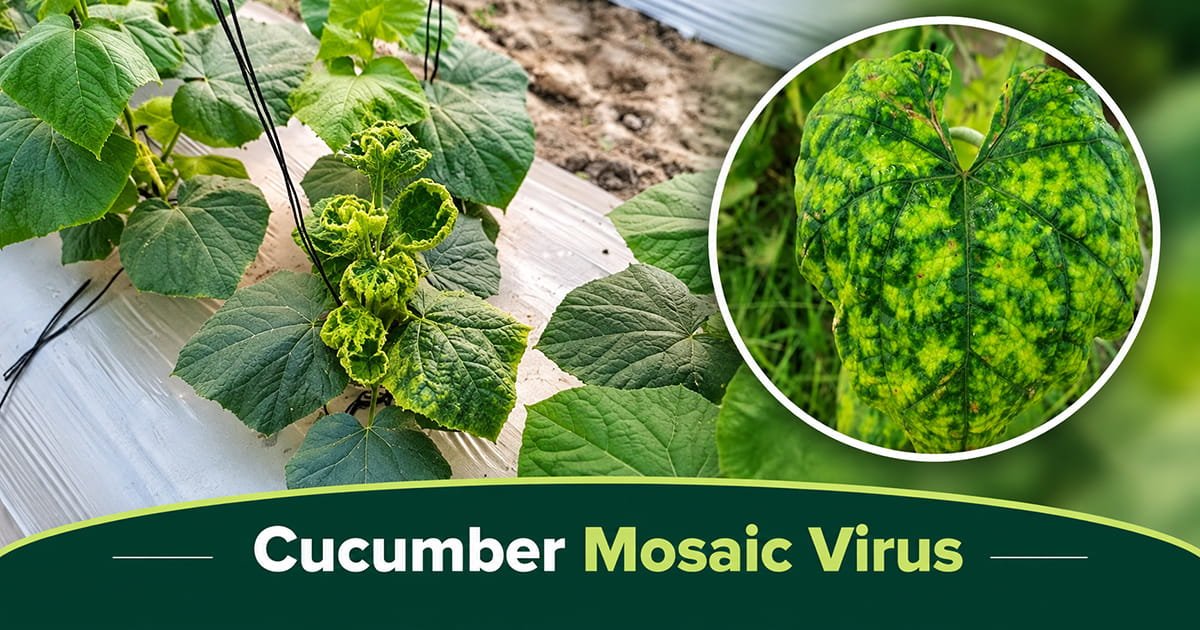
Cucumber Mosaic Virus (CMV): How to Identify It
CMV shows as mosaic, mottling and light-dark green patterning on leaves. Leaves become distorted and curled, with reduced leaf size. Fruits show green and yellow mosaic and become bitter. Plant growth becomes stunted and yield is reduced.
Treatment of Cucumber Mosaic Virus
- No cure – remove and destroy infected plants immediately.
- Control aphid vectors with Imidacloprid 70 WG @ 0.3 g/L.
- Apply reflective silver mulch to repel aphids.
3. Bacterial Diseases in Polyhouse Cucumber
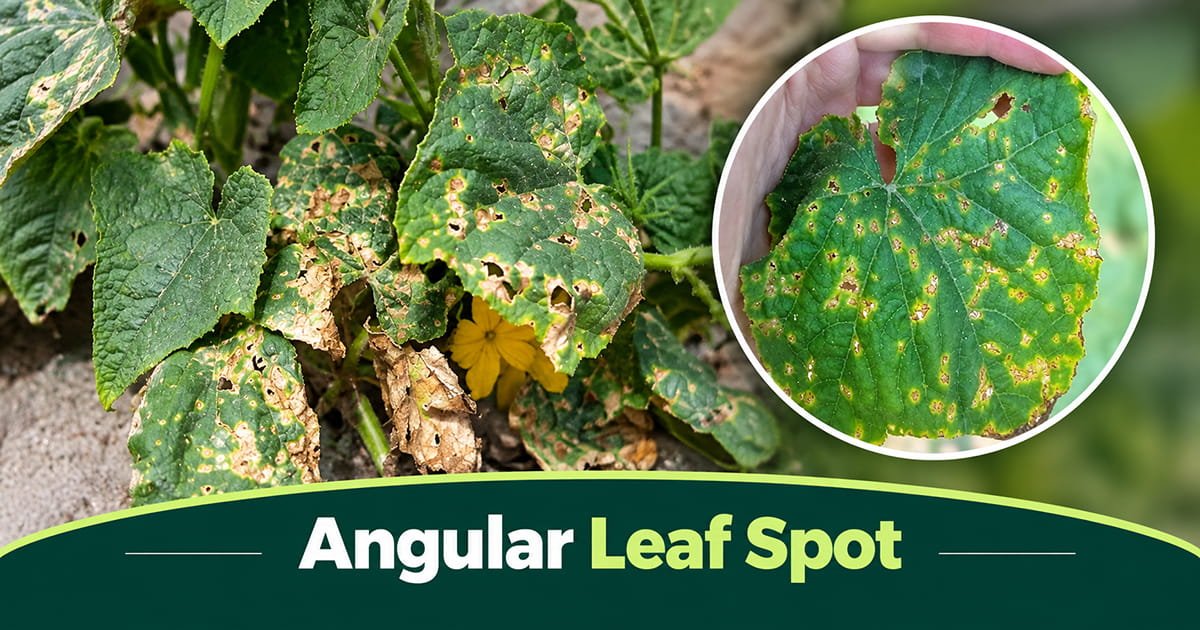
Angular Leaf Spot: How to Identify It
Look for water-soaked angular lesions bounded by veins. Lesions turn brown and dry out, and tissue may drop out. White bacterial exudate or ooze can appear on the undersurface in the morning. Fruits show circular water-soaked spots that turn brown.
Treatment of Angular Leaf Spot
- Copper oxychloride 50 WP @ 3 g/L spray.
- Streptomycin sulphate + Copper oxychloride mix spray.
- Avoid overhead irrigation; water at base.
- Remove and destroy infected leaves promptly.
- Use disease-free seed; treat with hot water at 52°C/20 min.
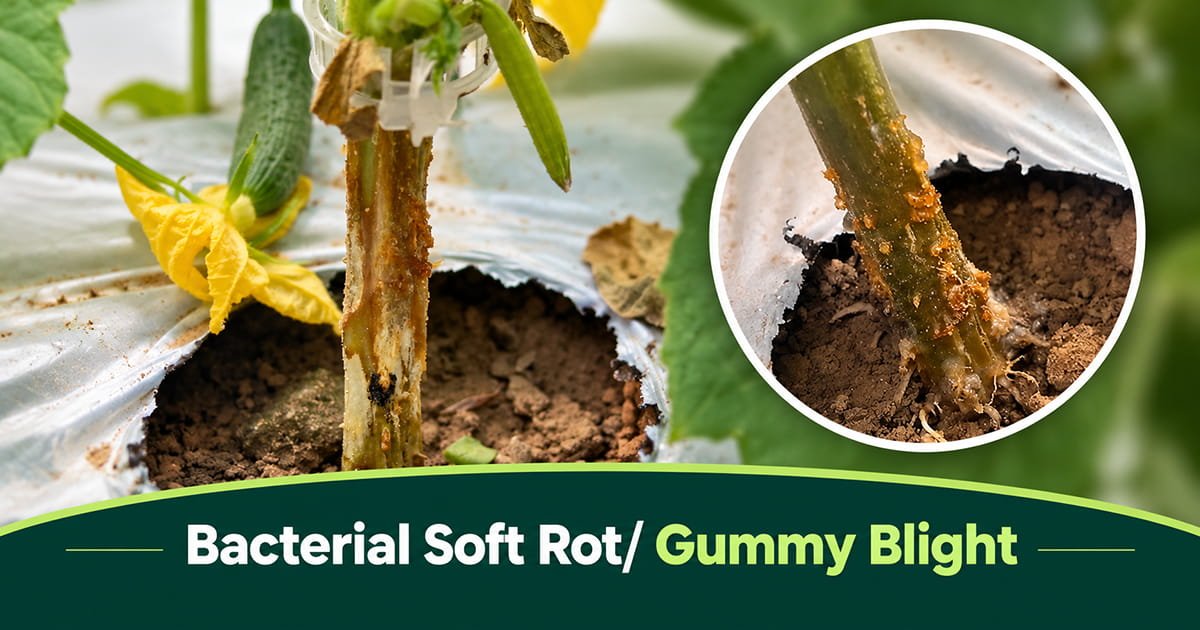
Bacterial Soft Rot / Gummy Blight: How to Identify It
Fruits develop soft, water-soaked, foul-smelling decay. Tissue quickly turns mushy and collapses. Infection enters through wounds or insect feeding sites. It is mainly a post-harvest problem but also occurs on vines.
Treatment of Bacterial Soft Rot / Gummy Blight
- Copper hydroxide 77 WP @ 3 g/L preventive spray.
- Avoid physical injury to fruits during harvesting.
- Ensure good drainage; avoid prolonged wet periods.
- Harvest regularly; do not leave mature fruits on vine.
- Sanitize tools with 70% alcohol between cuts.
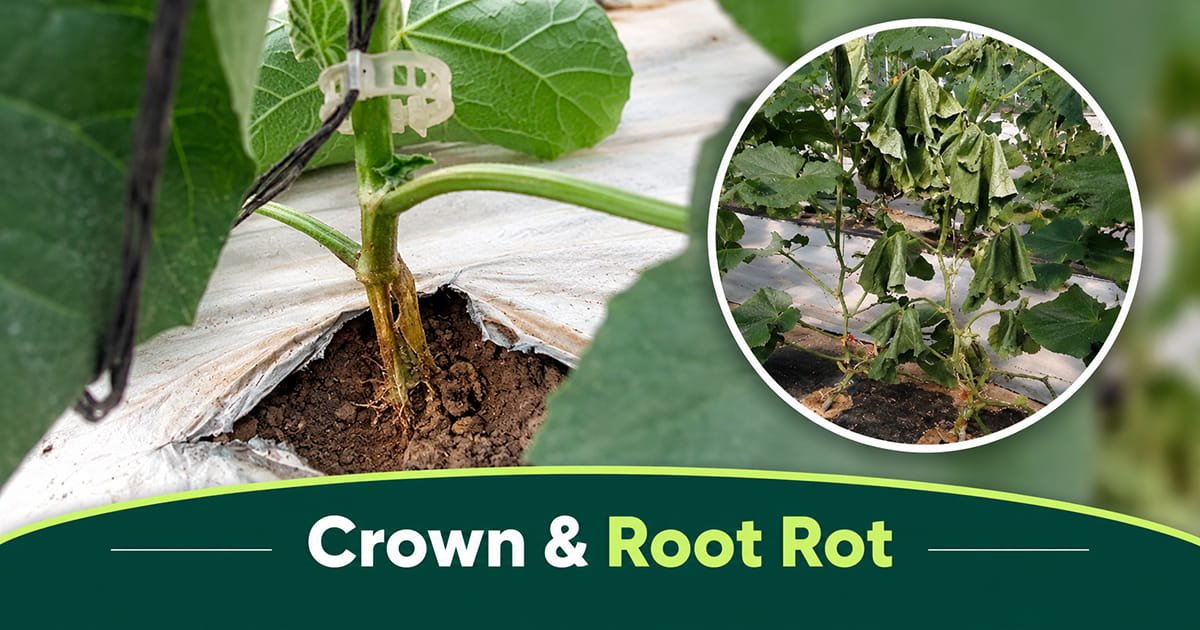
Crown & Root Rot: How to Identify It
A dark water-soaked lesion develops at the crown near the soil line. Plants wilt rapidly even with adequate soil moisture. Roots appear dark brown and mushy. The entire plant can collapse within 24–48 hours.
Treatment of Crown & Root Rot
- Propamocarb + Fosetyl-Al drench @ 2.5 ml/L.
- Mefenoxam 4 SL @ 1 ml/L root drench.
- Raise beds; avoid waterlogging; improve drainage.
- Reduce frequency of irrigation; allow slight drying.
- Soil solarization before next crop.
4. Insect Pests & Nematodes in Polyhouse Cucumber
Whitefly: How to Identify It
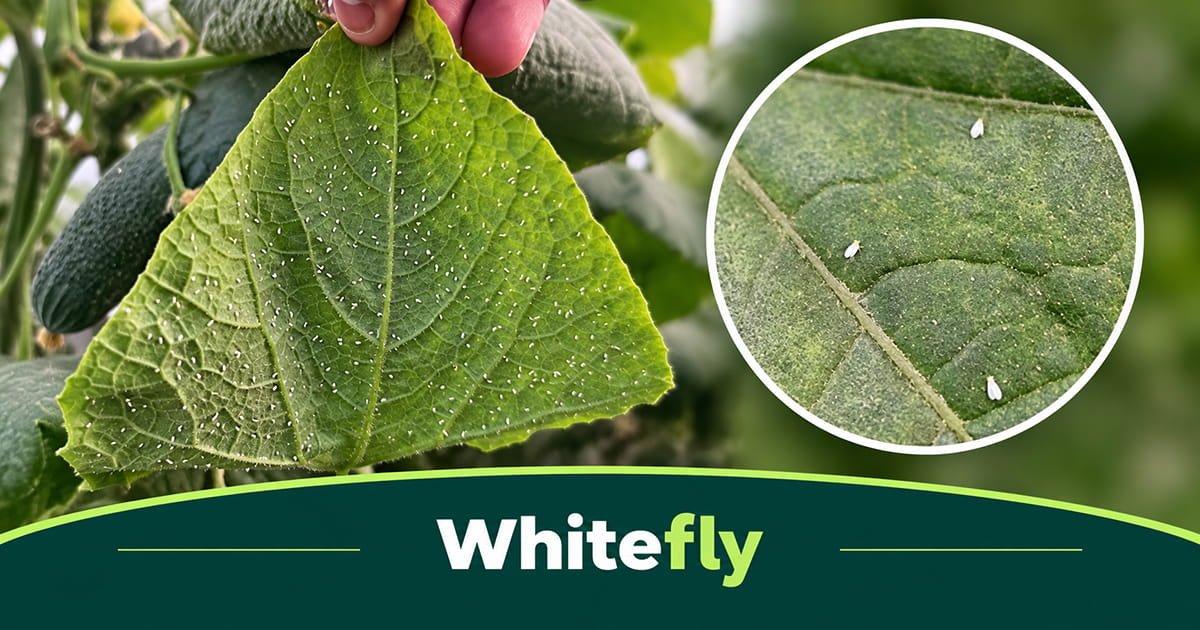
Tiny white insects fly off when the plant is disturbed. Leaves develop yellow stippling, sooty mould appears on honeydew, and leaves curl downward and turn yellow. Whitefly is listed as a vector for TYLCV, ZYMV and Begomovirus diseases.
Treatment of Whitefly
- Spiromesifen 22.9 SC @ 0.9 ml/L.
- Buprofezin 25 SC @ 1.5 ml/L for nymphs.
- Yellow sticky traps @ 20–25/acre.
- Beauveria bassiana 1.15 WP @ 5 g/L biocontrol.
Thrips: How to Identify It
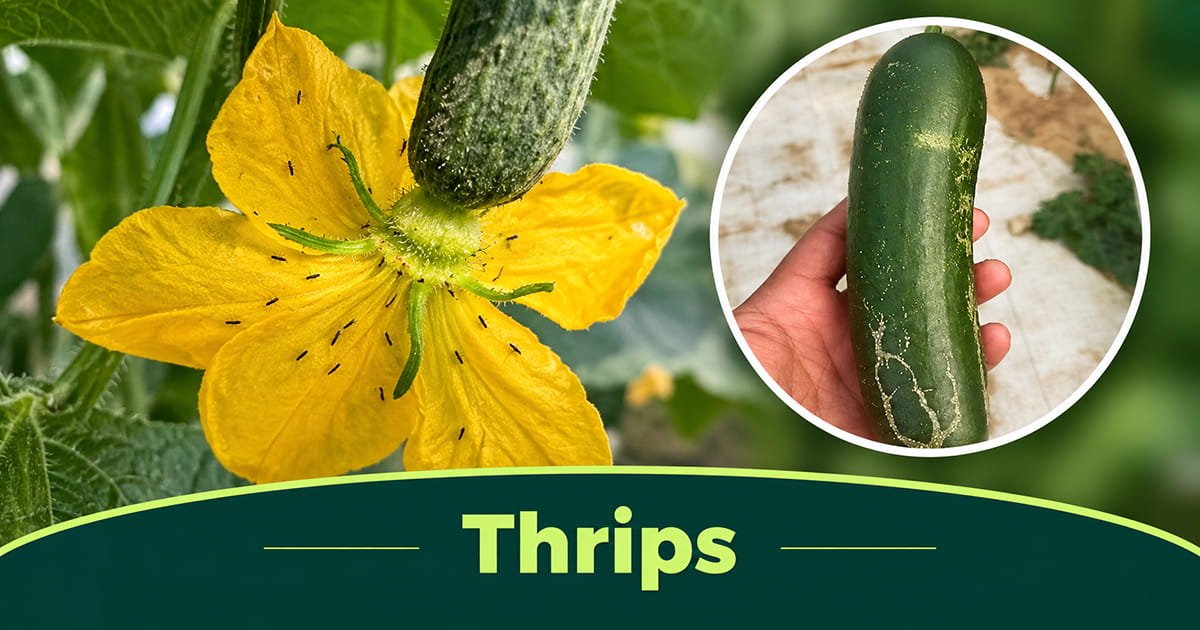
Thrips damage appears as silvery-white scarring or streaks on leaves and fruits. Leaves curl upward with bronze discoloration. Tiny dark fecal spots are visible under magnification. Flowers become deformed and fruits show scarring.
Treatment of Thrips
- Spinosad 45 SC @ 0.75 ml/L.
- Fipronil 5 SC @ 1.5 ml/L.
- Blue sticky traps @ 20–25/acre; blue preferred for thrips.
- Reflective silver mulch at base.
Aphids: How to Identify Them
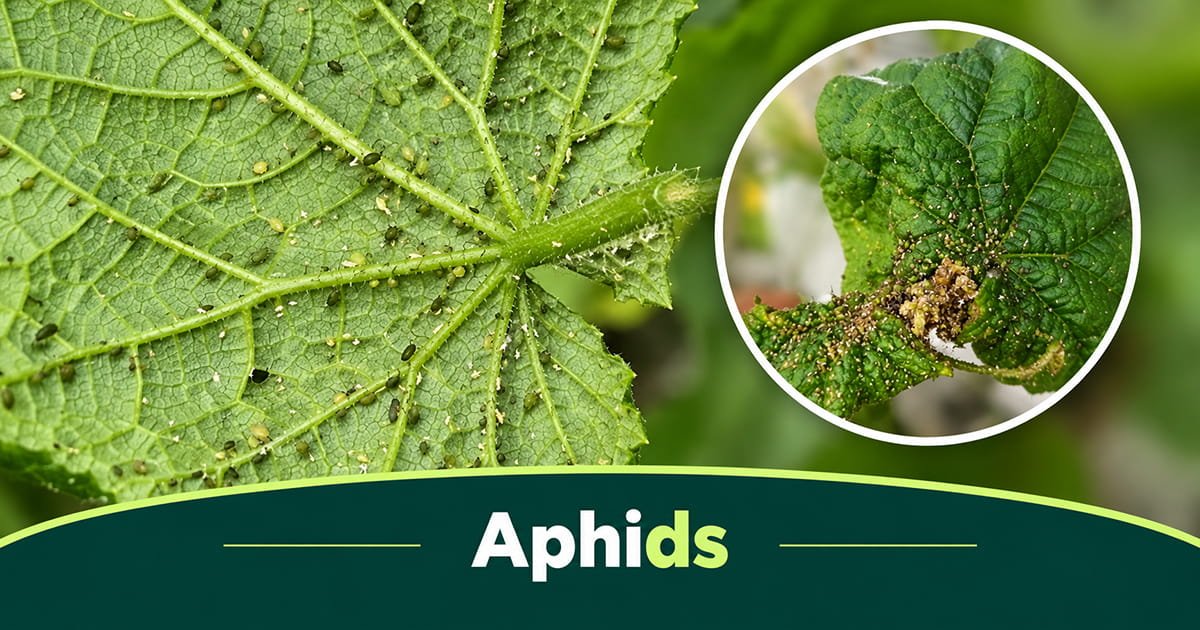
Colonies of soft-bodied insects gather on leaf undersides. Leaves curl downward and become sticky with honeydew. Black sooty mould develops on honeydew deposits. Virus transmission is the main economic damage.
Treatment of Aphids
- Imidacloprid 70 WG @ 0.3 g/L.
- Flonicamid 50 WG @ 0.3 g/L (systemic, safe for bees).
- Neem oil 5000 ppm @ 5 ml/L.
- Reflective mulch and yellow sticky traps.
Leaf Miner: How to Identify It
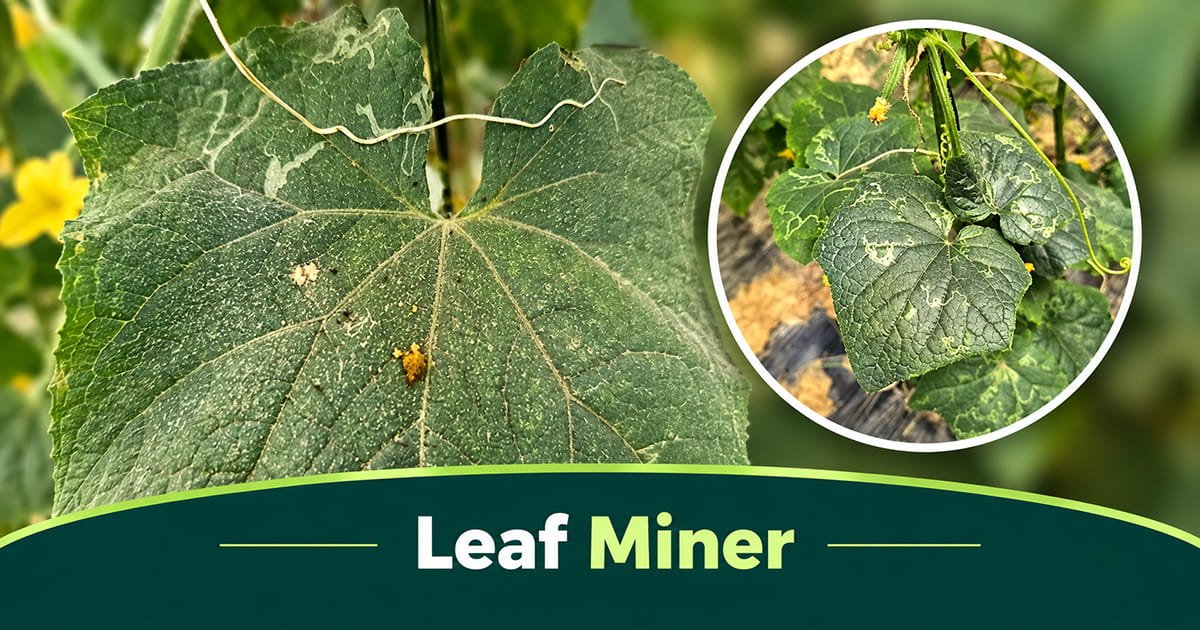
Serpentine white mines or tunnels are visible inside leaves. Adults make tiny feeding punctures on the upper surface. Heavy infestation causes leaves to turn yellow and drop. The tunnels contain white maggots visible against light.
Treatment of Leaf Miner
- Cyromazine 75 WP @ 0.75 g/L (specific to miners).
- Abamectin 1.8 EC @ 0.5 ml/L.
- Remove heavily infested leaves; destroy larvae.
- Yellow sticky traps to monitor adult flies.
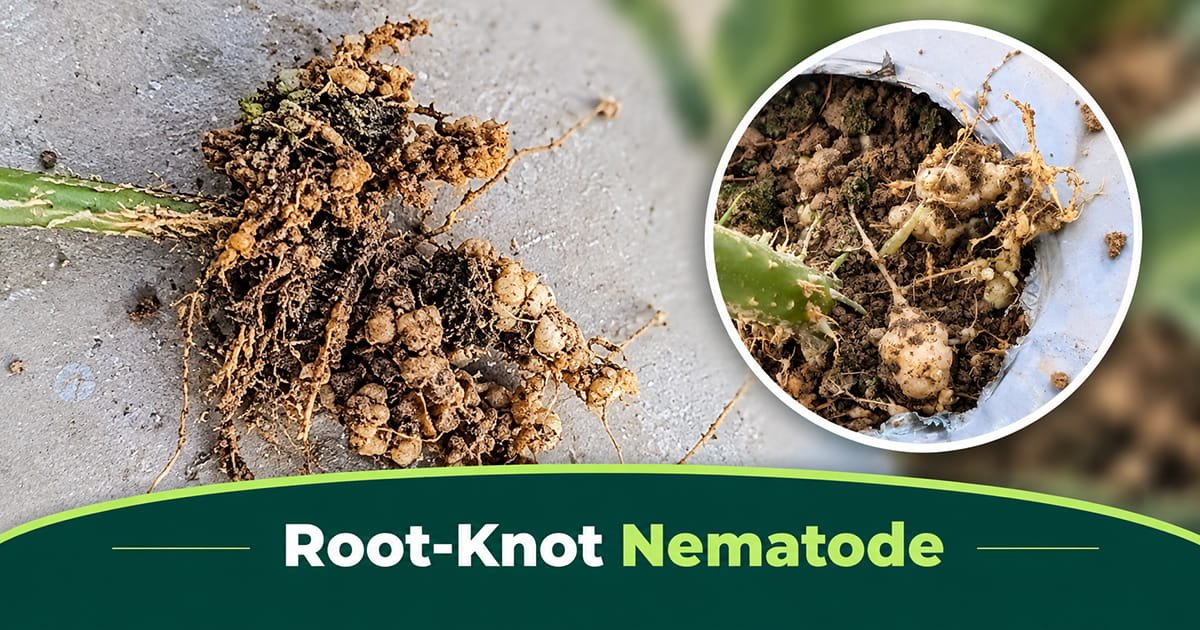
Root-Knot Nematode: How to Identify It
The roots carry galls or knots, while plants become stunted. Leaves yellow and plants wilt despite irrigation. The root system becomes poorly developed and the plant is easily uprooted. Severe cases mimic nutrient deficiency symptoms.
Treatment of Root-Knot Nematode
- Carbofuran 3 G @ 33 kg/acre soil application.
- Fluopyram 40.35 SC @ 1.5 ml/L root drench.
- Trichoderma viride + Pseudomonas fluorescens mix @ 10 g/L.
- Soil solarization with transparent plastic for 6 weeks.
- Paecilomyces lilacinus biocontrol @ 4 g/L drench.
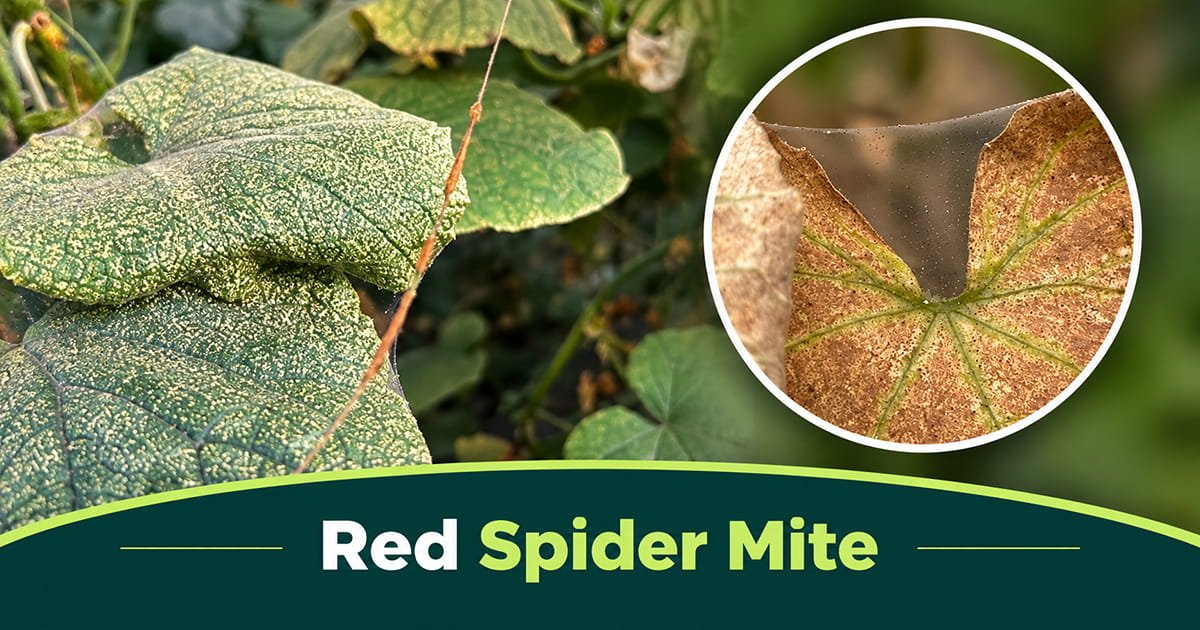
Red Spider Mite: How to Identify It
Fine yellowish stippling appears on the upper leaf surface, with silky webbing on leaf undersides. Severe infestation causes bronze or brown leaf death. Hot, dry polyhouse conditions accelerate the population.
Treatment of Red Spider Mite
- Abamectin 1.8 EC @ 0.5 ml/L.
- Spiromesifen 22.9 SC @ 0.9 ml/L (ovicidal).
- Etoxazole 10 SC @ 0.5 ml/L.
- Maintain humidity >60% to suppress mite populations.
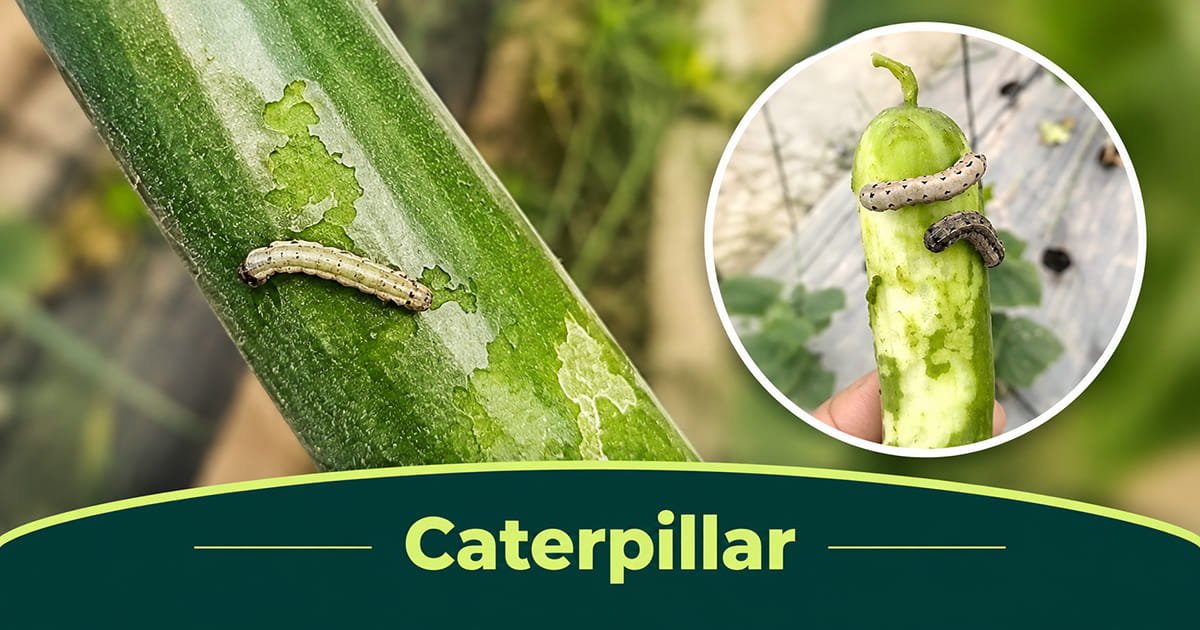
Caterpillar: How to Identify It
Leaves may be cut at the base and seedlings fall over. Leaves become skeletonized in patches, with egg masses on the underside. Flowers are damaged, petals are eaten and entry into buds occurs. Large caterpillars can cause mass defoliation overnight.
Treatment of Caterpillar
- Chlorantraniliprole Coragen 18.5 SC 0.3 ml/litre.
- Emamectin benzoate Proclaim 5 SG 0.4 g/litre.
- Spinosad 45 SC Tracer 0.3 ml/litre.
- Indoxacarb 14.5 SCA 0.7 ml/litre.
- Flubendiamide 39.35 SC Fame 0.3 ml/litre.
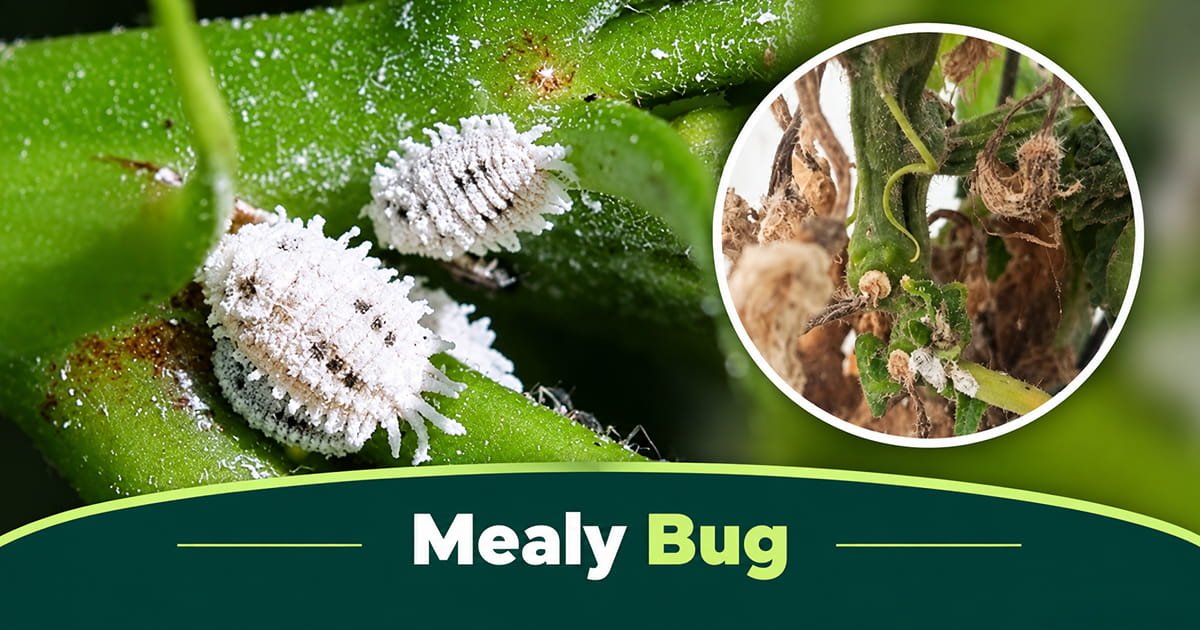
Mealy Bug: How to Identify It
White cottony or waxy masses collect at joints and leaf axils. White powdery colonies occur along veins and the midrib. The growing tip shows stunting, distortion and rosetting of new leaves. White wax can appear near the calyx end, accompanied by russeting and deformed fruit.
Treatment of Mealy Bug
- Buprofezin 25% SC @ 1 ml/L.
- Thiamethoxam 25% WG @ 0.5 ml/L.
- Diafenthiuron 50% WP @ 1 ml/L.
- Chlorpyrifos 20% EC @ 1.5 ml/L.
- Add neem oil 3–4 ml/L with each spray.
5. Nutritional Deficiencies in Polyhouse Cucumber
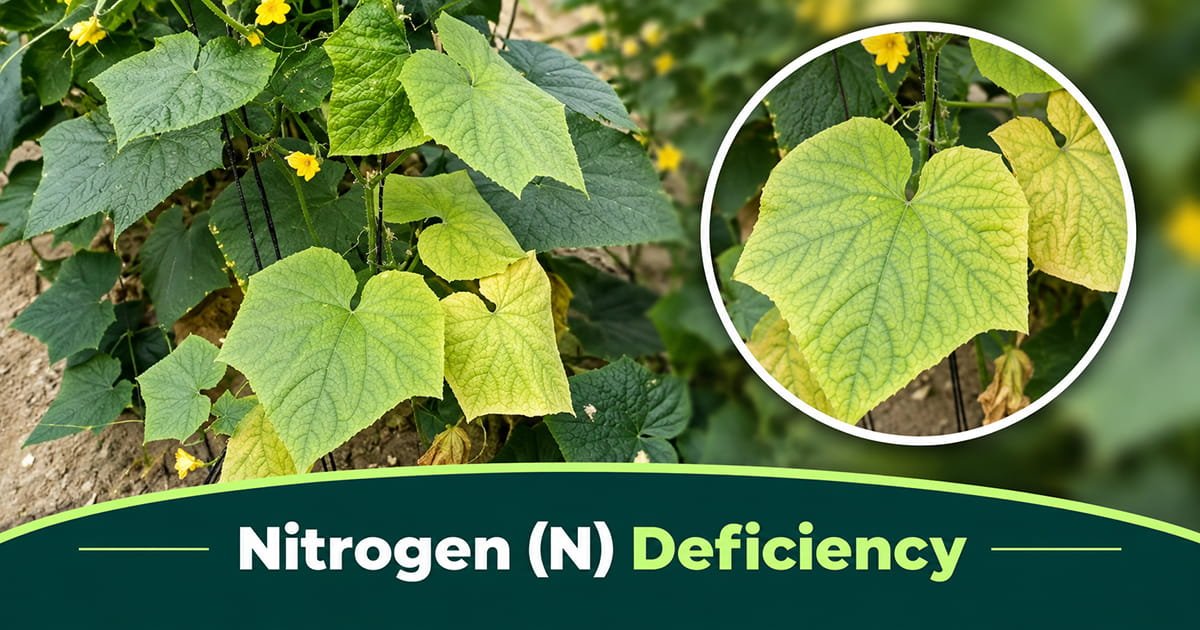
Nitrogen (N) Deficiency: How to Identify It
Nitrogen deficiency begins with uniform pale yellowing of older or lower leaves first. Growth is reduced, new leaves are small and pale, and severe cases show early leaf drop.
Treatment of Nitrogen Deficiency
- Fertigation with Calcium Nitrate @ 1.5 g/L.
- Urea foliar spray @ 1% solution.
- Ensure soil pH 6.0–7.0 for uptake.
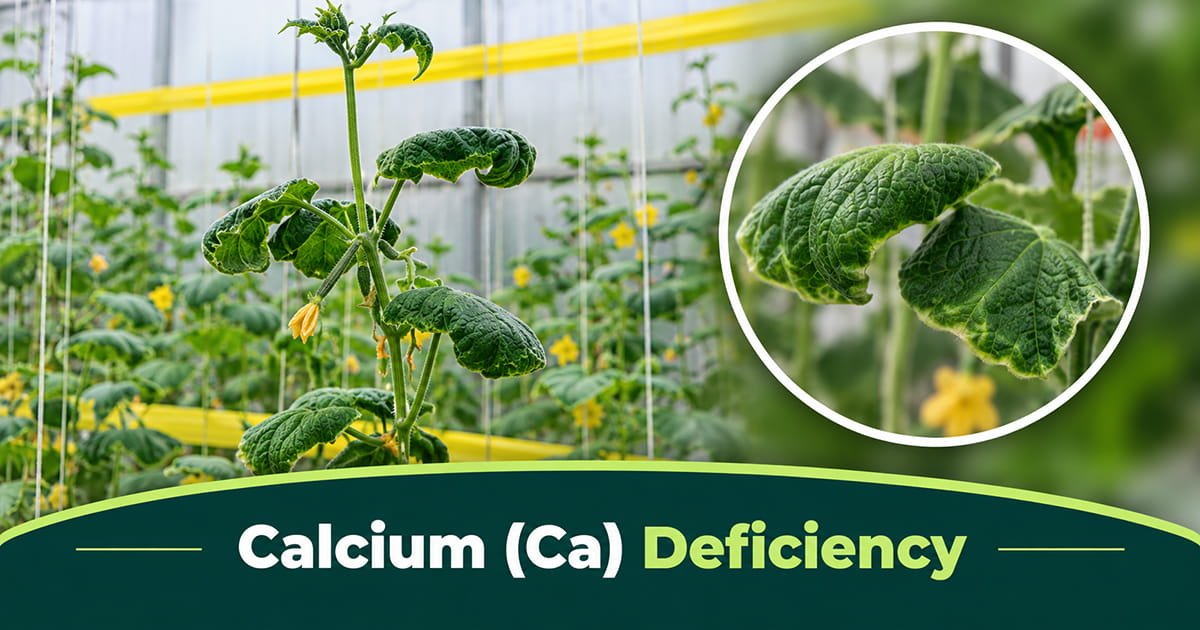
Calcium (Ca) Deficiency: How to Identify It
Young leaves show tip burn and margin scorch. Young fruits develop blossom end rot, while young leaf growth becomes distorted.
Treatment of Calcium Deficiency
- Calcium nitrate fertigation @ 2 g/L.
- Calcium chloride foliar @ 0.4 g/L.
- Maintain consistent irrigation schedule.
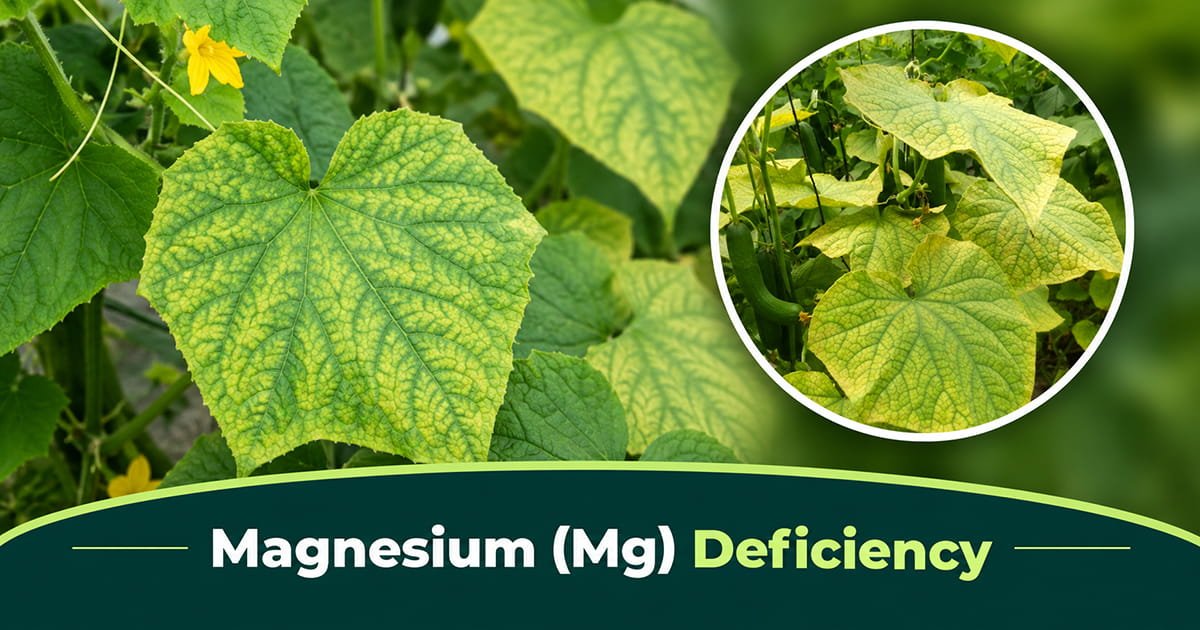
Magnesium (Mg) Deficiency: How to Identify It
Magnesium deficiency causes interveinal chlorosis on older leaves: veins remain green while tissue between them turns yellow. Affected leaves curl upward, and symptoms spread from the lower to the upper canopy.
Treatment of Magnesium Deficiency
- Magnesium sulphate (Epsom salt) foliar @ 2 g/L.
- Fertigation with Mg sulphate @ 2.5 g/L.
- Test EC and balance nutrient solution.
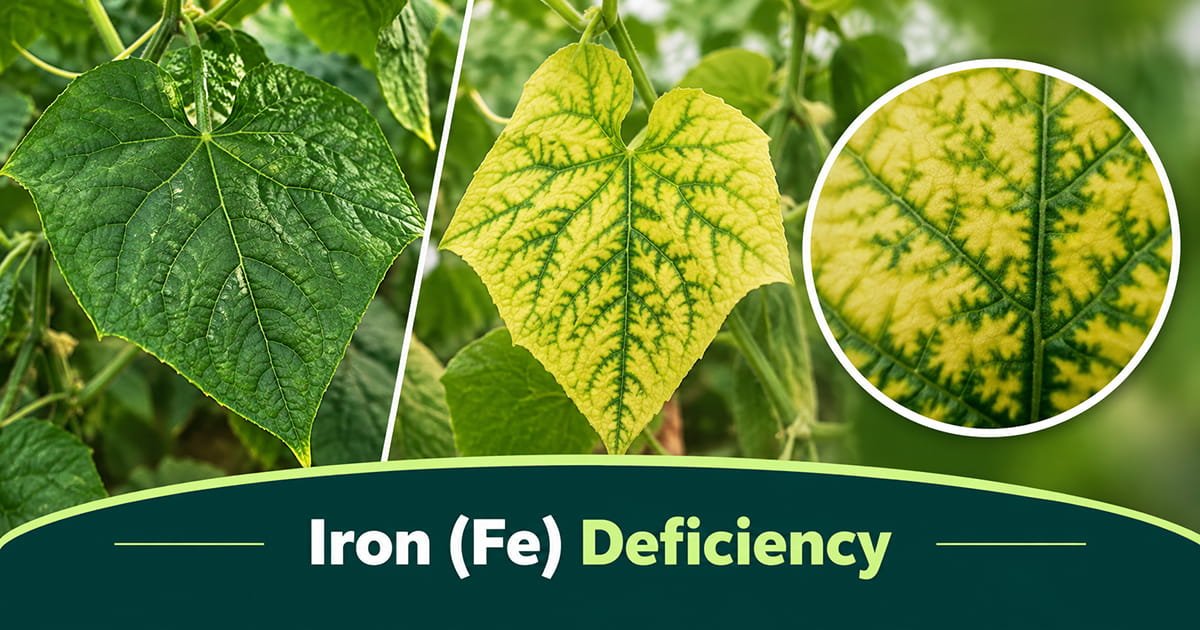
Iron (Fe) Deficiency: How to Identify It
Iron deficiency produces interveinal chlorosis on the youngest leaves, with yellow tissue between green veins. Very young leaves become almost white in severe cases while older leaves remain green.
Treatment of Iron Deficiency
- Chelated iron (Fe-EDTA) foliar @ 0.3 g/L.
- Acidify irrigation water to pH 5.5–6.5.
- Check root health; treat Pythium if present.
Read the Plant Before You Treat the Problem
The visible pattern matters. Powdery Mildew puts white powder on the upper leaf surface. Downy Mildew produces angular spots above and grey-purple sporulation below. Fusarium Wilt can reveal brown vascular tissue inside a cut stem. Root-Knot Nematode produces galls or knots on roots. Magnesium deficiency starts with interveinal chlorosis on older leaves, while Iron deficiency puts interveinal chlorosis on the youngest leaves. Those distinctions are what separate one listed problem from another.
The same precision applies to treatment. The listed actions include sprays, drenches, fertigation, foliar applications, sticky traps, reflective mulch, removal of infected material, drainage management, ventilation, humidity management, soil solarization and sanitation. Each belongs to a specific problem and carries its own stated concentration, rate or operating condition.
Need AgriFirst Support for Your Polyhouse Cucumber Crop?
Contact AgriFirst to implement the specific identification and treatment solutions covered here for fungal, viral and bacterial diseases, insect pests, nematodes and nutritional deficiencies in polyhouse cucumber cultivation.