Economics of Gerbera Polyhouse Farming in India: Complete Cost, Yield, Profitability & Subsidy Guide (2026)
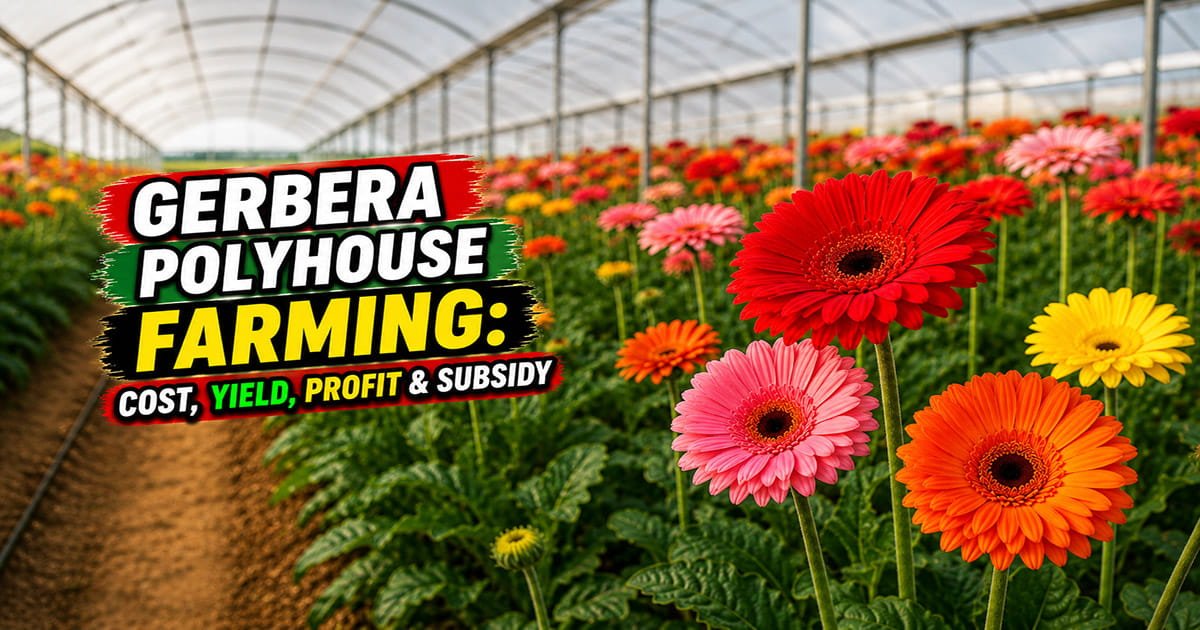
Gerbera polyhouse farming has become one of the most attractive opportunities in India’s protected cultivation sector. Gerbera is a premium cut flower with steady demand across wholesale flower markets, wedding decoration businesses, florists, hotels, and gift bouquet suppliers. When grown under a controlled polyhouse environment, the crop offers uniform quality, regular harvesting, and strong commercial returns.
This guide explains the economics of one-acre gerbera cultivation in a practical way. It covers polyhouse investment, annual operating expenses, expected yield, revenue potential, subsidy support, and ROI period. At AgriFirst, our focus is to support growers with reliable protected cultivation systems, practical agronomy guidance, and project planning that is aligned with real farm conditions.
Why Gerbera Polyhouse Farming is a High-Value Commercial Crop
Gerbera is valued for its bright colors, attractive flower shape, and long vase life. These qualities make it a preferred flower for decoration, bouquets, hotels, events, religious functions, and retail flower markets. Unlike seasonal open-field crops, gerbera grown inside a polyhouse can produce flowers for a longer and more stable production cycle.
Protected cultivation helps farmers maintain better flower quality because the crop is grown in a more controlled environment. The polyhouse reduces the impact of heavy rain, strong wind, direct heat stress, pest entry, and sudden weather changes. This helps produce cleaner flowers, better stems, and more uniform output.
For commercial growers, this quality advantage directly affects market acceptance. In cut flower farming, buyers often look for consistent stem length, flower size, freshness, and color quality. A well-managed gerbera polyhouse helps the farmer meet these market expectations more regularly.
Crop Requirements for Gerbera Cultivation
Gerbera is a sensitive flower crop and performs best when temperature, humidity, light, irrigation, and nutrition are managed carefully. A controlled polyhouse creates a suitable microclimate for healthy root growth, flowering, and stem development.
- Temperature: 18°C to 35°C
- Humidity: 60% to 70%
- Light intensity: 43,000 to 65,000 lux
- Plant population: Approximately 26,000 plants per acre
- Growing media: Well-drained, airy, and root-friendly substrate
These conditions are important because flower crops react quickly to stress. If temperature, humidity, water quality, or nutrition is not managed properly, the plant may produce weak stems, small flowers, irregular flowering, or lower market-grade output.
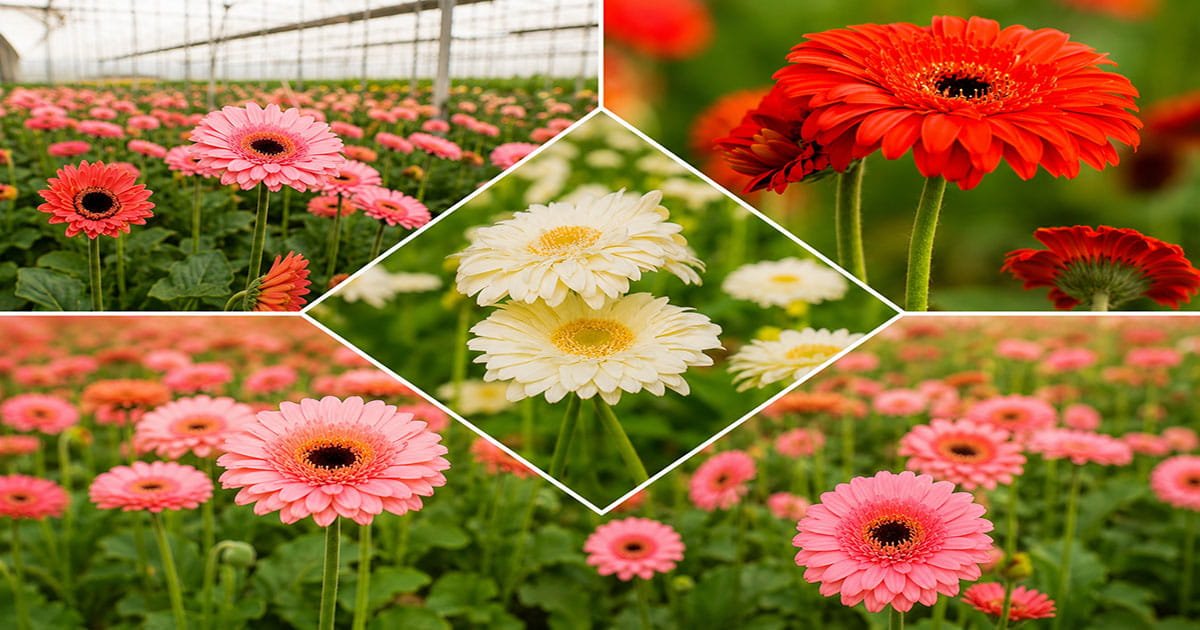
Proper ventilation, shade management, irrigation scheduling, fertigation, and regular monitoring are equally important. Even with a good structure, crop performance depends on daily management. Farmers who maintain stable growing conditions generally achieve better flowering cycles and fewer production losses.
For stronger light control in hot regions, growers may also review shadenet structures and related shadenet products to improve microclimate management.
Geographic Suitability for Gerbera Polyhouse Farming in India
Gerbera polyhouse farming is suitable across many parts of India when the polyhouse is designed properly and the crop is managed scientifically. However, some states have stronger horticulture ecosystems, better nursery availability, experienced growers, and stronger flower market connectivity.
Karnataka, Maharashtra, Tamil Nadu, and Himachal Pradesh are among the better-known regions for commercial gerbera production. These states have a combination of favorable growing conditions, market access, and horticulture infrastructure.
That said, gerbera can also be grown successfully in other regions if the farmer has proper technical support, reliable water, market planning, and a crop-specific polyhouse system. Protected cultivation reduces dependency on outside climate, which is why gerbera has scope beyond traditional floriculture belts.
Farmers exploring different crop choices can also review crops for protected cultivation to match the crop with their local climate, market demand, investment capacity, and available infrastructure.
Benefits of AgriFirst Polyhouse Systems for Gerbera Cultivation
A successful gerbera farming project depends not only on selecting the right crop but also on investing in a high-quality polyhouse structure. Since gerbera remains in production for multiple years, the polyhouse must provide a stable environment throughout different seasons while minimizing maintenance and operational challenges.
A well-designed commercial polyhouse protects the crop from adverse weather, improves growing conditions, supports precision farming, and helps farmers produce premium-quality flowers consistently. Many growers also compare different polyhouse solutions before selecting a structure that suits their climate and business objectives.
Commercial-grade polyhouse structure
AgriFirst designs polyhouse systems specifically for commercial protected cultivation. Every structure is engineered to withstand varying climatic conditions while maintaining optimum ventilation, light distribution, and crop protection. A durable polyhouse reduces long-term maintenance costs and supports stable flower production throughout the crop cycle.
Better growing environment
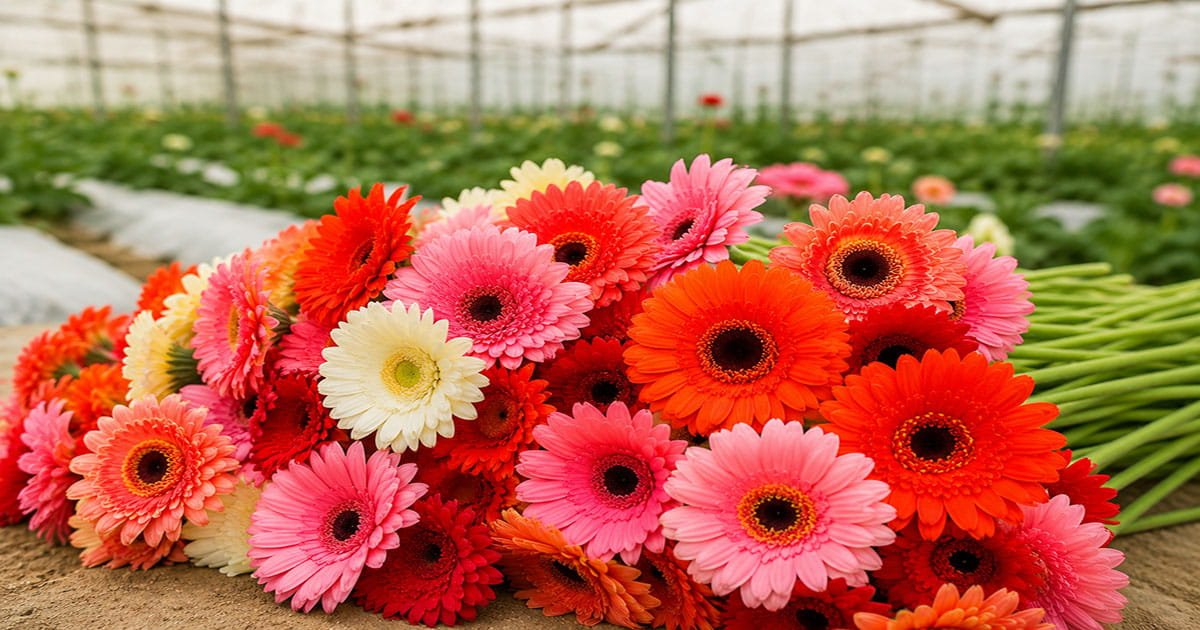
Gerbera responds extremely well to balanced temperature, humidity, airflow, and irrigation. Proper polyhouse design minimizes heat stress, improves air circulation, and creates a uniform growing environment, resulting in healthier plants, stronger stems, larger flowers, and improved marketable yield.
Technical agronomy guidance
Commercial floriculture requires scientific crop management. Agronomy guidance helps farmers make informed decisions regarding fertigation schedules, irrigation management, disease prevention, pest monitoring, flower harvesting, and post-harvest handling. Proper technical support significantly reduces avoidable production losses.
Complete project planning support
Beyond polyhouse construction, successful gerbera farming requires careful planning of irrigation systems, crop scheduling, input management, subsidy documentation, and market strategy. Professional project planning helps growers establish commercially viable projects with realistic production and financial expectations.
"A profitable gerbera project is built on scientific planning, disciplined crop management, and consistent flower quality—not just polyhouse construction."
Gerbera Polyhouse Farming Cost Per Acre
Establishing a commercial gerbera polyhouse requires significant initial investment because the crop performs best under a controlled growing environment. The project cost primarily includes the polyhouse structure, foundation system, covering materials, ventilation, insect-proofing, shade management, irrigation compatibility, and complete installation.
This investment should be viewed as long-term infrastructure rather than a single-season expense. A properly engineered polyhouse can support flower production for many years while maintaining consistent crop quality and reducing weather-related production risks.
Eligible farmers may also receive financial assistance under various horticulture subsidy schemes, reducing the effective capital investment. Before starting any commercial project, farmers should always verify the latest guidelines through the official Mission for Integrated Development of Horticulture (MIDH) and National Horticulture Board (NHB).
Farmers planning a protected cultivation project should also review the latest NHB subsidy updates to understand eligibility criteria, documentation requirements, and recent policy changes before making an investment decision.
The following table shows the approximate investment required for constructing a one-acre commercial gerbera polyhouse. This table represents only the polyhouse structure cost and should not be confused with the annual operating expenses or profitability calculations discussed later.
| Project Particulars | Rate / Status |
|---|---|
| Size of the Unit | 1 Acre (4080 sq.m.) |
| Foundation Pipe | Included |
| Covering Plastic | Included |
| Secondary Layer Shade Net Manual Mechanism | Included |
| Shade Net for Top Vent | Included |
| Insect Net on Four Sides | Included |
| Bottom Skirting on Four Sides | Included |
| Manual Rollup Curtain | Included |
| Double Door Entry System (Aluminium Sliding Door with Buffer Zone) | Included |
| Trellising | Included |
| Structure Installation | Included |
| Ex-factory Price per Sq. Metre | ₹1060 /Sq. Metre |
| Ex-factory Price per Sq. Metre with GST @18% | ₹1250 /Sq. Metre |
| Total Investment Cost without Subsidy | ₹73,00,000* |
| NHB Subsidy | ₹37,00,000* |
| Total Investment Cost with Subsidy | ₹36,00,000* |
The above figures represent the approximate cost of constructing a one-acre commercial polyhouse. Actual project cost may vary depending on location, transportation, structure specifications, material selection, site conditions, and prevailing government subsidy norms.
While infrastructure is the first investment, long-term profitability depends largely on efficient crop management, annual operating expenses, flower quality, and market realization. Understanding these recurring costs is essential before evaluating the overall economics of gerbera cultivation.
Annual Operating Expenses of Gerbera Polyhouse Farming
Once the polyhouse has been established, the next important aspect of the project is managing the annual operating expenses. These recurring costs determine the overall profitability of gerbera cultivation and should be planned carefully before starting commercial production.
Major operating expenses include crop protection chemicals, water-soluble fertilizers, labour, packing material, and miscellaneous farm expenses. Since gerbera is a high-value flower crop, maintaining consistent quality through scientific crop management is essential for achieving better market prices and maximizing returns.
| Cost Component | Annual Cost (₹) |
|---|---|
| Crop Protection | 1,20,000 |
| Water Soluble Fertilizers | 2,20,000 |
| Labour (3–4 Persons) | 3,24,000 |
| Packing Material | 1,47,000 |
| Miscellaneous & Other Expenses | 71,000 |
| Total Annual Operating Cost | ₹8,82,000 |
These expenses are indicative estimates for one acre under commercial protected cultivation. Actual operating costs may vary depending on labour charges, fertilizer prices, pest incidence, packaging requirements, and regional input costs. Efficient crop management helps optimize these expenses while maintaining premium flower quality.
Gerbera Polyhouse Farming Yield, Revenue & Profit Per Acre
A scientifically managed gerbera polyhouse has the potential to produce approximately 7.36 lakh flower stems per acre annually. Revenue depends on flower quality, stem grading, market demand, and seasonal price fluctuations. Better crop management generally results in higher-quality flowers and improved price realization.
| Particulars | Value |
|---|---|
| Total Production | 7,36,000 Stems / Year |
| Average Selling Price | ₹3.50 per Stem |
| Gross Annual Revenue | ₹25,76,000 |
| Annual Operating Cost | ₹8,82,000 |
| Estimated Net Annual Return | ₹16,94,000 |
| Estimated ROI Period | Approximately 2.5 Years* |
*Note: The above estimates are indicative and based on assumed production, market prices, and operating costs. Actual results may vary depending on crop management practices, flower quality, local market prices, weather conditions, and applicable government subsidy schemes.
| Crop Particular | Details |
|---|---|
| Harvest Start | Approximately 90 Days After Planting |
| Economic Crop Life | Up to 4 Years |
Gerbera polyhouse farming offers attractive long-term commercial potential due to its extended production cycle and consistent market demand. Commercial harvesting generally begins approximately 90 days after planting, and with proper crop management, the crop remains economically productive for up to 4 years. Based on an estimated annual production of 7.36 lakh flower stems per acre, an average selling price of ₹3.50 per stem, and annual operating expenses of approximately ₹8.82 lakh, growers can achieve an estimated net annual return of around ₹16.94 lakh per acre. The project economics become even more favorable when eligible subsidy benefits under government horticulture schemes are available, helping reduce the initial investment while improving overall return on investment.

Factors That Affect Gerbera Yield and Profitability
- Selection of healthy, disease-free planting material.
- Efficient polyhouse ventilation and climate control.
- Balanced fertigation and irrigation scheduling.
- Regular pest and disease monitoring.
- Proper flower harvesting and post-harvest handling.
- Strong market linkage and timely sales.
- Skilled labour and scientific crop management.
Since gerbera is a premium floriculture crop, maintaining consistent flower quality throughout the production cycle is one of the biggest contributors to long-term profitability.
NHB Subsidy Support for Gerbera Polyhouse Projects
Government support through NHB and MIDH significantly reduces the initial investment required for protected cultivation. Eligible farmers can avail subsidy benefits as per prevailing government guidelines, making commercial gerbera cultivation more financially viable.
Since subsidy norms may vary by state, project size, and farmer category, applicants should always verify the latest eligibility criteria through the official NHB and MIDH portals before commencing the project.
"The success of a gerbera polyhouse project depends as much on scientific crop management as it does on quality polyhouse infrastructure."
Common Mistakes to Avoid in Gerbera Polyhouse Farming
- Using poor-quality planting material.
- Ignoring water quality analysis.
- Over-irrigation leading to root diseases.
- Improper nutrient management.
- Delayed pest and disease control.
- Poor polyhouse ventilation.
- Lack of market planning before production.
- Compromising on polyhouse quality to reduce initial investment.
Conclusion
Gerbera polyhouse farming has emerged as one of India's most promising commercial floriculture opportunities. With growing demand for premium-quality flowers, scientific cultivation practices, and a properly designed polyhouse, farmers can build a sustainable and profitable farming enterprise.
Although the initial investment in polyhouse infrastructure is substantial, efficient crop management and proper market planning can generate attractive long-term returns. Government subsidy support further improves the financial feasibility of commercial gerbera cultivation.
AgriFirst continues to support growers with polyhouse design, technical guidance, agronomy support, and complete project planning to help farmers succeed in protected cultivation. Farmers can also explore our success stories to learn how commercial polyhouse farming is transforming agriculture across India.