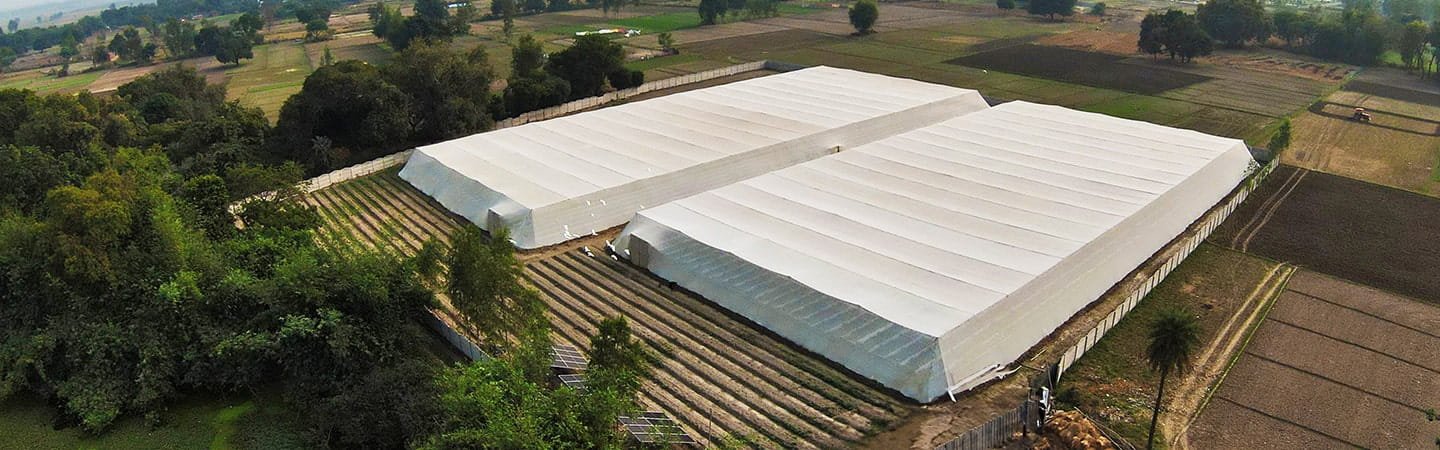
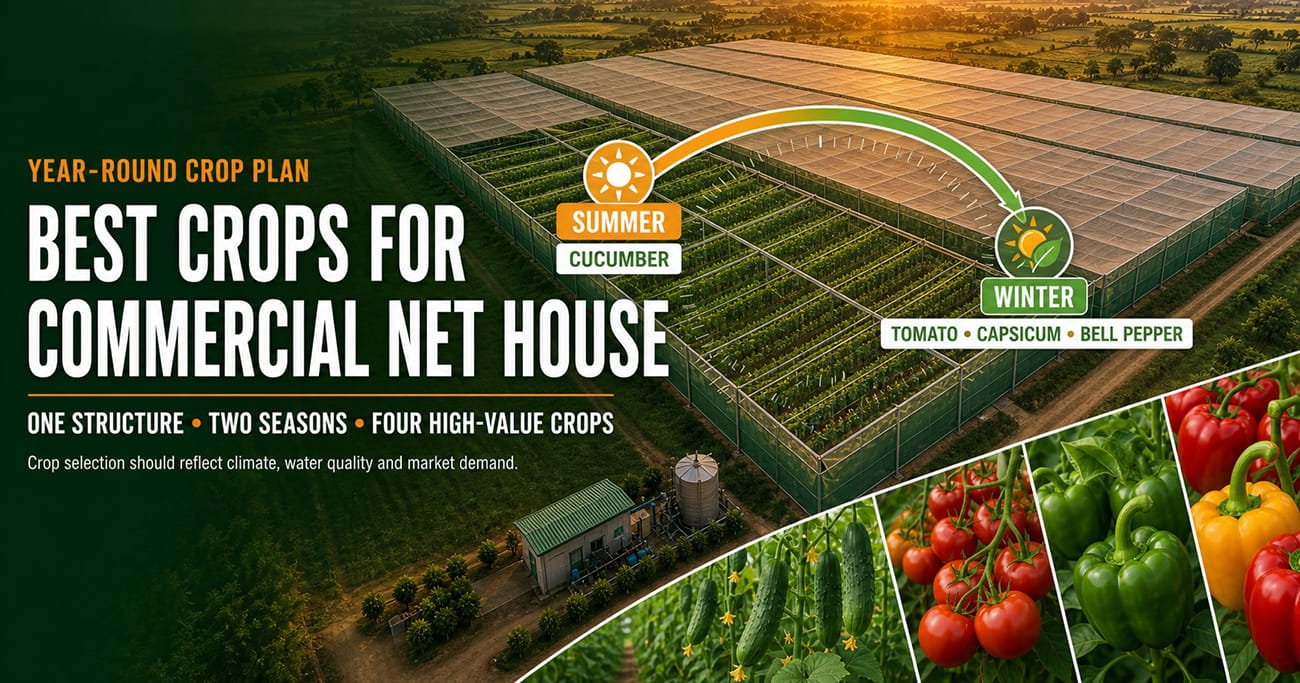
A net house does not make money — the crop plan inside it does. Two identical 10-acre structures can return very different profits depending on what is grown, when, and who it is sold to. Crop selection is the single biggest lever a commercial net house grower controls, so it deserves more thought than any decision other than the build itself.
This guide walks through the crops that make a commercial net house work in India — cucumber, tomato, green capsicum and coloured bell pepper — how they fit a year-round double-crop calendar, and how to choose the right plan for your location. For the wider picture, see our complete guide to commercial net house farming and the cost and ROI breakdown. All figures here are indicative and vary by region, season and market.
What determines crop selection
Before you pick a crop, weigh these factors together — not in isolation:
- Market demand and price — is there a reliable, premium buyer for this produce near you?
- Agro-climate suitability — does your temperature and humidity band suit the crop?
- Water quality and availability — enough good-quality water for fertigation, year-round.
- Crop duration — does it fit a double-crop calendar with cucumber?
- Management capability — some crops (like coloured bell pepper) demand more skill.
- Price risk — how volatile is the market, and can you hedge it?
One structure, two seasons, four crops
The commercial model is a double crop: cucumber across all acres in summer, then a winter crop — tomato, capsicum or bell pepper — on the same area. This keeps the structure productive across all twelve months instead of one season.
| Crop | Season | Typical area | Duration |
|---|---|---|---|
| Cucumber | Summer (Apr–Jul) | All 10 acres | ~90 days |
| Tomato | Winter (Sep onward) | Part of the area | 6–7 months |
| Green capsicum | Winter (Sep onward) | Part of the area | 6–7 months |
| Coloured bell pepper | Winter (Sep onward) | Part of the area | 6–7 months |
Summer anchor: Cucumber
Cucumber is the backbone of the year — a fast, reliable, high-turnover crop grown across all 10 acres in summer. Indicatively it yields around 35,000 kg per acre at about ₹25/kg (~₹8.75 lakh per acre gross) on a roughly 90-day cycle. Its speed and dependability make it the anchor that de-risks the rest of the calendar.
Winter option 1: Tomato
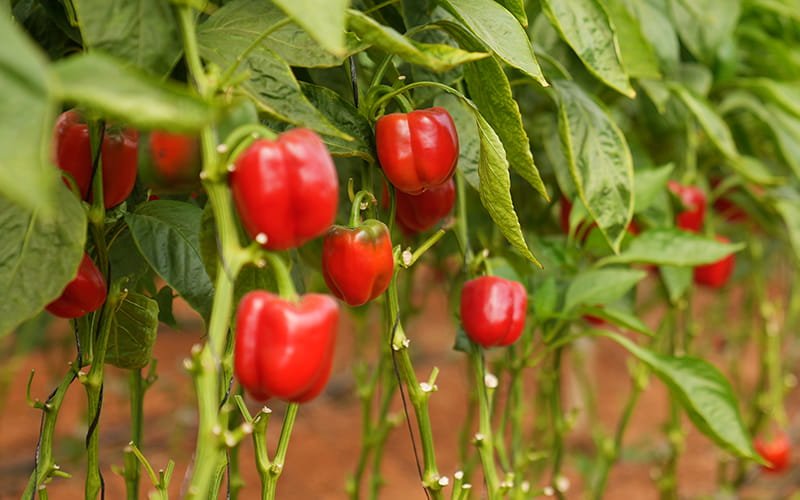
Tomato is a strong, steady-demand winter crop over a 6–7 month cycle. Indicatively around 32,000 kg per acre at ~₹25/kg (~₹8.0 lakh per acre gross). The agronomy priority is calcium nutrition and disciplined irrigation to avoid disorders like blossom-end rot and to hold fruit quality through a long harvest window.
Winter option 2: Green Capsicum
Green capsicum fetches a better price than tomato and enjoys reliable retail demand. Indicatively around 30,000 kg per acre at ~₹30/kg (~₹9.0 lakh per acre gross) over 6–7 months. It is a proven, well-understood protected crop with a good balance of yield and value.
Winter option 3: Coloured Bell Pepper (the premium play)
Coloured bell pepper (red and yellow) is the premium opportunity. Yield is lower, but the price is far higher — indicatively around 12,000 kg per acre at ~₹100/kg (~₹12.0 lakh per acre gross). It targets premium retail, HORECA and export buyers, and it is the most agronomically demanding of the four. Grown well, with a genuine premium market, it delivers the highest gross return per acre.
Local versus premium markets
Match the crop to the buyer. Cucumber and tomato move readily through local and organised markets. Coloured bell pepper only pays off if you can reach premium channels — modern retail, hotels and restaurants, or export — because that is where its price lives. Growing a premium crop without a premium buyer is a common and expensive mistake.
Diversification and price risk
Prices swing. Splitting the winter area across two crops — for example tomato on part of the block and capsicum on the rest — hedges you against a price crash in any single crop. Concentrating everything on one volatile, premium crop maximises upside but also maximises risk. The right balance depends on your appetite for both.
Water, climate and growing-media considerations
Every crop choice is constrained by the physical basics: water quality (EC and pH suitable for fertigation), your local agro-climate band, and whether you are growing in soil or a controlled medium. A crop that thrives in one district can struggle a few hundred kilometres away purely on water and climate — which is why these are checked before, not after, the crop is chosen.
Assess the market before you plant
The most important step happens before a single seedling goes in: confirm your buyers and prices first, then choose the crop. Grow to the market, not the other way around. A confirmed off-take at a known price turns crop selection from a gamble into a plan.
Why one crop plan does not suit every location
There is no universal best crop plan. North and south differ in climate and season; water quality varies field to field; buyer access and cold-chain reach are local. The right plan is site-specific — built around your land, water, climate and the buyers you can actually reach. That is exactly what an Agrifirst crop plan does.
Build your crop plan
Cucumber anchors the summer; tomato, capsicum or bell pepper drives the winter — and the mix you choose sets your profit and your risk. To model a plan for your land and market, use the net house investment calculator or request a crop plan from the Agrifirst agronomy team.