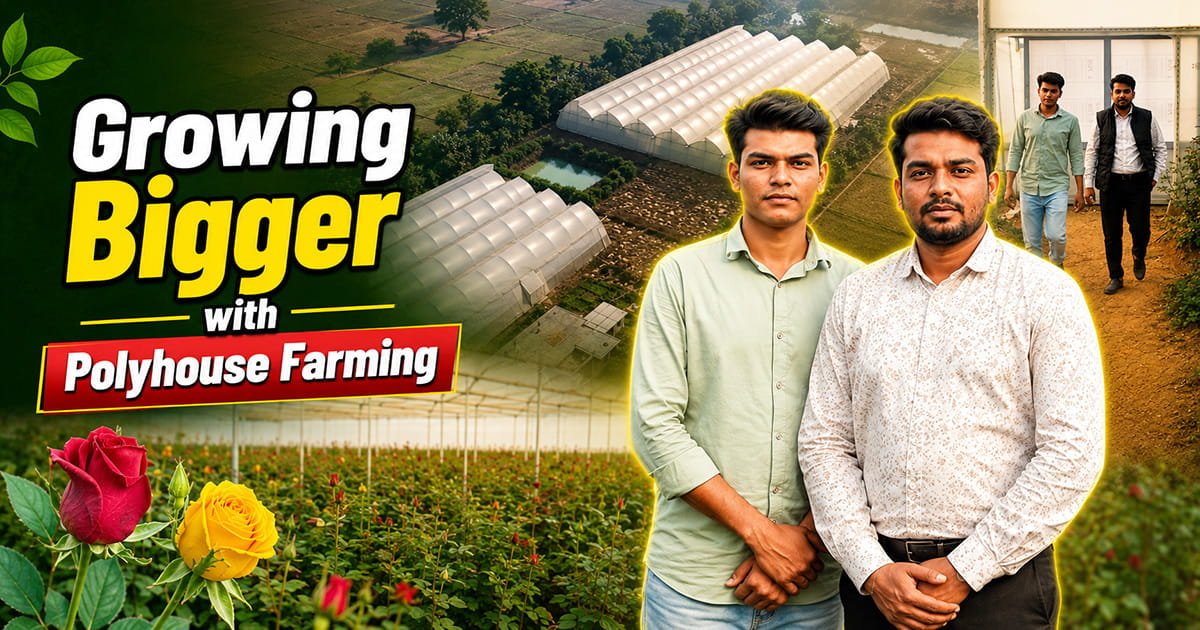
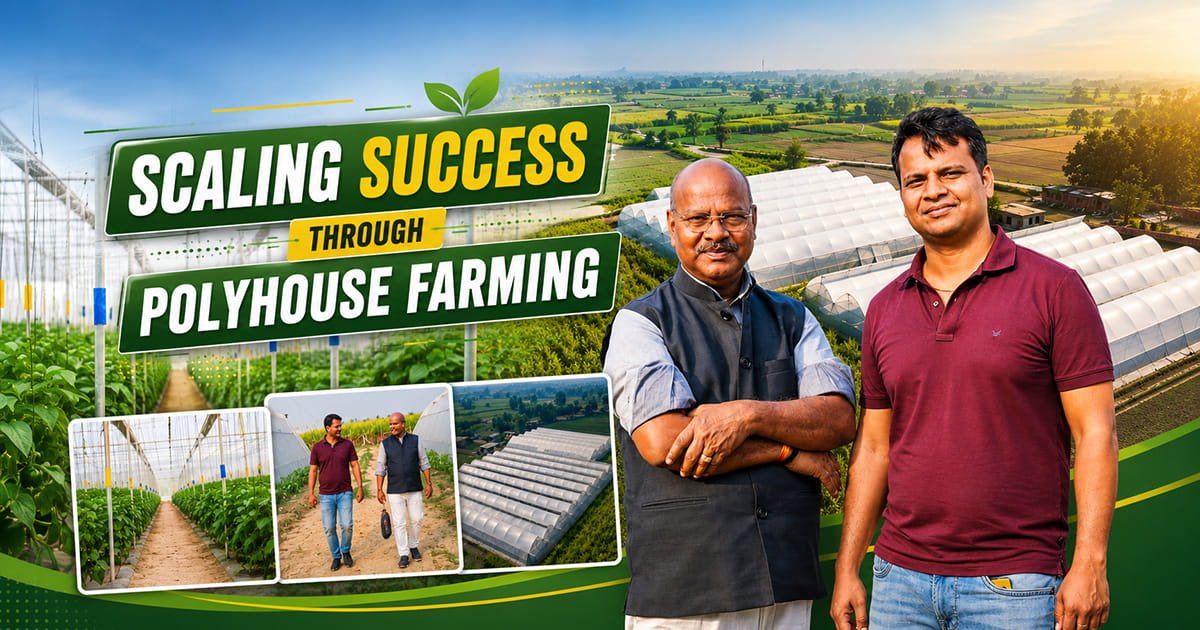
Polyhouse Expansion Success Story: Scaling Beyond One Acre
Building one successful polyhouse is an important milestone, but turning that initial success into a sustainable farming business requires a completely different mindset. Expansion involves larger investments, operational planning, crop diversification, market understanding, and the patience to grow steadily instead of chasing quick results.
For the Singh family from Sitapur, Uttar Pradesh, the first commercial cucumber crop answered one question—protected cultivation could work on their farm. The next challenge was far more significant: deciding whether that success could be replicated on a larger scale while improving long-term profitability. Rather than repeating the same approach without reflection, they evaluated what they had learned, identified gaps in marketing and crop planning, and used those insights before investing in another polyhouse.
Their journey demonstrates that commercial protected cultivation is not simply about constructing additional structures. Every expansion introduces new operational responsibilities, different crop management requirements, changing market dynamics, and more complex business decisions. This phase of their journey highlights how careful planning became just as important as production itself.
From Trial Project to Long-Term Farming Vision
When the family established their first commercial polyhouse, the objective was straightforward—to test whether protected cultivation could become a practical alternative to conventional farming on their land. The results gave them confidence, but confidence alone was never enough to justify expansion.
According to Divyanshu Singh, success in commercial farming should never be measured only by production figures. The first crop provided valuable operational experience, but it also revealed how many other factors influence profitability. Marketing, buyer networks, harvest planning, labour coordination, and seasonal pricing all became part of the learning process.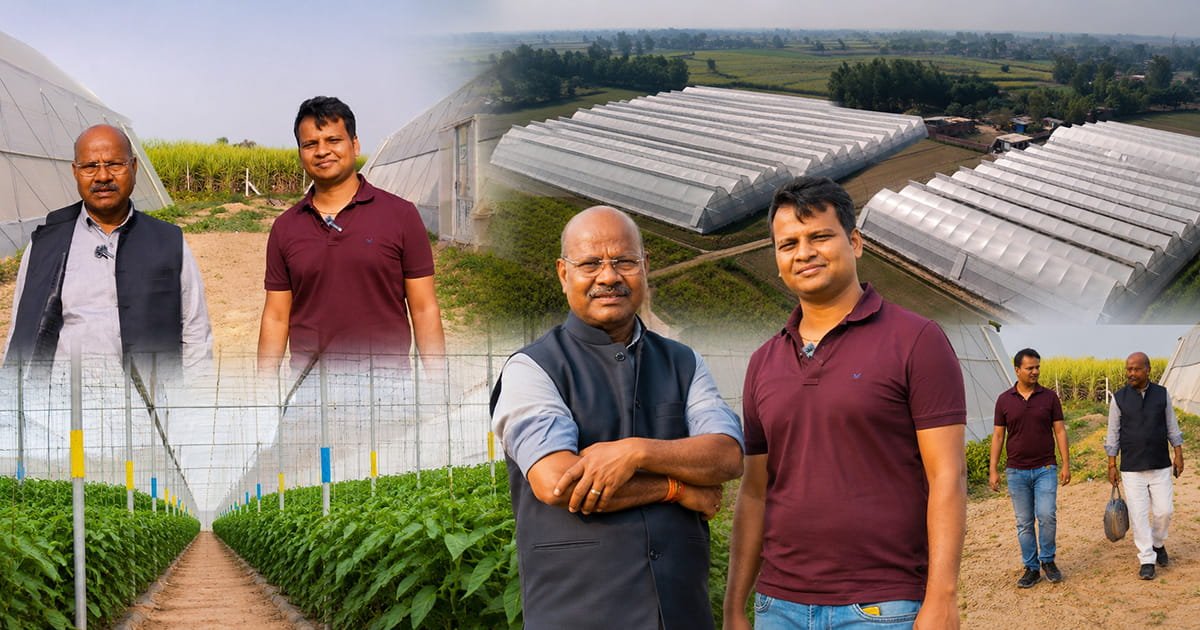
Instead of treating the first season as the finish line, the family viewed it as a learning phase. Every observation made during cultivation helped shape decisions for the next stage of growth. This practical approach reduced uncertainty before committing additional resources to another protected cultivation project.
Why Scaling Requires More Than Just Building Another Polyhouse
Many farmers assume that once one protected cultivation project performs well, expanding to additional acreage becomes an automatic decision. In reality, scaling is a gradual process that requires both financial discipline and operational maturity.
Divyanshu explains that expansion cannot happen overnight. Every additional polyhouse increases management responsibilities, introduces higher investment, and requires better planning across production, harvesting, labour, and marketing. These decisions cannot be rushed simply because one crop performed well.
Their experience reinforced an important business principle: sustainable agricultural growth depends on systematic expansion rather than rapid expansion. Each stage should build upon practical experience gained from the previous one.
This philosophy influenced how the family approached their second project. Instead of chasing maximum acreage immediately, they focused on creating a stronger production system that could support future growth over many years.
Understanding the Market Before Expanding Production
One of the biggest lessons from the family's first commercial cucumber crop had nothing to do with cultivation techniques. It came from the marketplace.
The crop delivered excellent production, attracting local buyers in significant numbers during the harvest period. While production met expectations, the family realised that strong yields alone do not always guarantee the best financial outcome. Seasonal price fluctuations and market timing influence profitability just as much as production volume.
This experience changed how they looked at expansion. Instead of assuming that producing more automatically means earning more, they recognised the importance of understanding buyer demand, harvesting schedules, local market behaviour, and crop selection before increasing production capacity.
These insights became an essential part of planning the second polyhouse, helping the family make decisions based not only on cultivation experience but also on real commercial observations from their first season.
Looking Beyond Traditional Crops: Why Horticulture Made Business Sense
For the Singh family, expanding their protected farming business was never about increasing acreage alone. It was equally about deciding what should be grown and why. Their experience from the first commercial season encouraged them to think less like traditional cultivators and more like long-term agricultural entrepreneurs.
Divyanshu observed a gradual shift in food consumption patterns. While cereals such as rice and wheat continue to remain important, the demand for fresh vegetables and horticultural produce has steadily increased. However, cultivation practices in many regions have not evolved at the same pace. This difference between consumption trends and production patterns convinced the family that protected horticulture offered greater long-term potential than relying only on conventional field crops.
Rather than following what neighbouring farms were cultivating, they chose to evaluate where future opportunities were emerging. Protected cultivation offered the flexibility to grow high-value vegetable crops under controlled conditions while making more efficient use of available land.
Expansion Was Also About Diversification
Constructing a second polyhouse created an opportunity to rethink the family's cultivation strategy instead of simply repeating the previous season. They wanted each structure to serve a different purpose while reducing dependence on a single crop throughout the year.
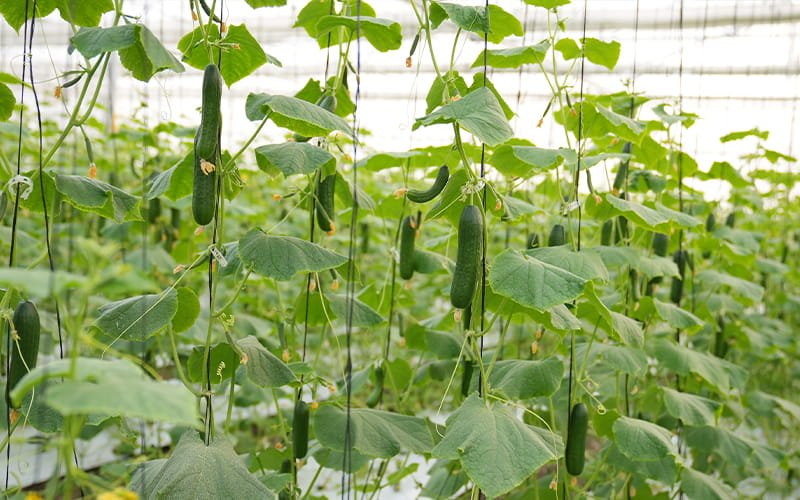
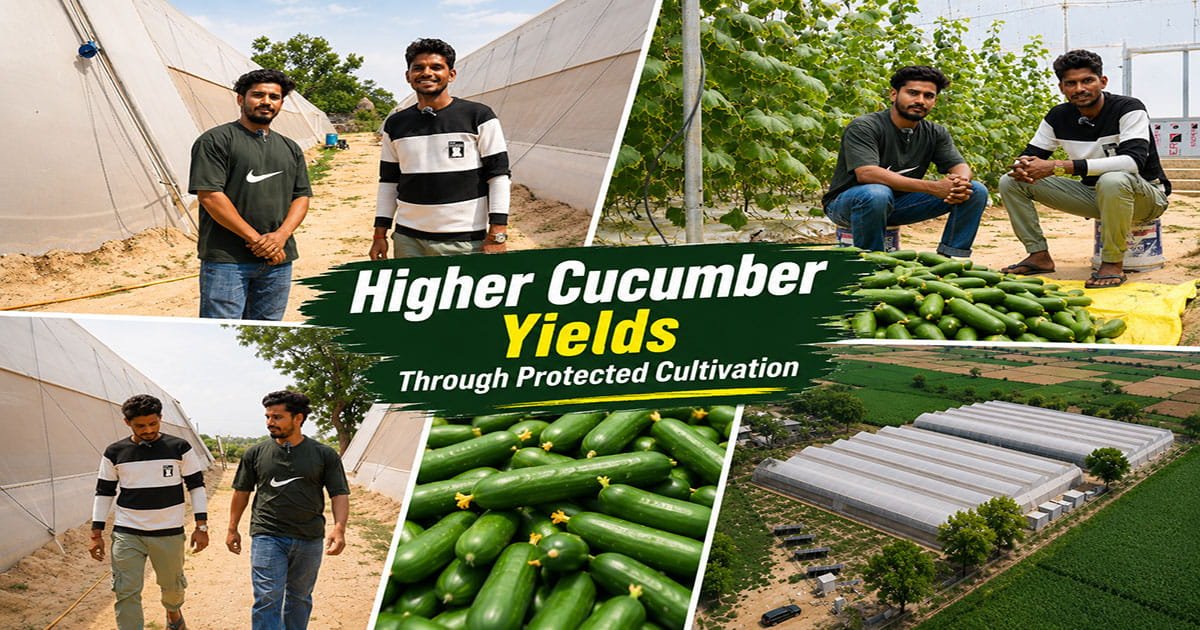
The newly established polyhouse was dedicated to cucumber cultivation once again. Their earlier experience had shown that cucumber remained comparatively straightforward to manage, established quickly, and required relatively fewer interventions during cultivation. Familiarity with the crop also meant that operational decisions could be taken with greater confidence.
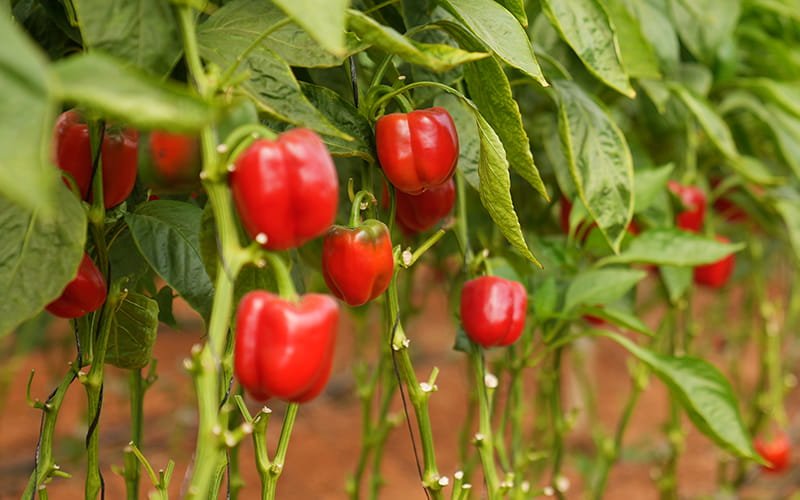
Meanwhile, the original polyhouse entered a different phase through crop rotation. Instead of continuing with cucumber, the family introduced bell peppers, allowing them to diversify production while gaining practical experience with another commercially valuable protected cultivation crop.
This combination represented more than crop rotation. It reflected a conscious effort to balance operational stability with continuous learning—retaining a crop they already understood while simultaneously developing expertise in another segment of protected horticulture.
Why Cucumber Continued to Play an Important Role
Although the family had decided to diversify, cucumber remained an important part of their expansion strategy. Their earlier cultivation experience had demonstrated that the crop could be managed efficiently while delivering consistent production under protected conditions.
According to Divyanshu, cucumber demands comparatively less day-to-day attention than several other commercial vegetable crops. This makes it a practical choice while expanding operations because management resources can be allocated more effectively across multiple cultivation units.
Maintaining cucumber production in the newly developed polyhouse also reduced operational uncertainty during expansion. Instead of introducing two unfamiliar variables at the same time—a new structure and a completely different crop—the family retained one proven production system while focusing their learning efforts elsewhere.
Bell Pepper Introduced a New Learning Curve
The decision to cultivate bell peppers in the existing polyhouse brought an entirely different management experience. Unlike cucumber, the crop demanded greater attention throughout its growth cycle, requiring closer observation as fruit development progressed toward harvest.
At the time of sharing their experience, the family was waiting for the peppers to develop their final colour before harvesting and transporting them to the mandi. This stage represented another milestone in their protected farming journey because it introduced them to a crop with different cultivation dynamics, harvesting schedules, and marketing considerations.
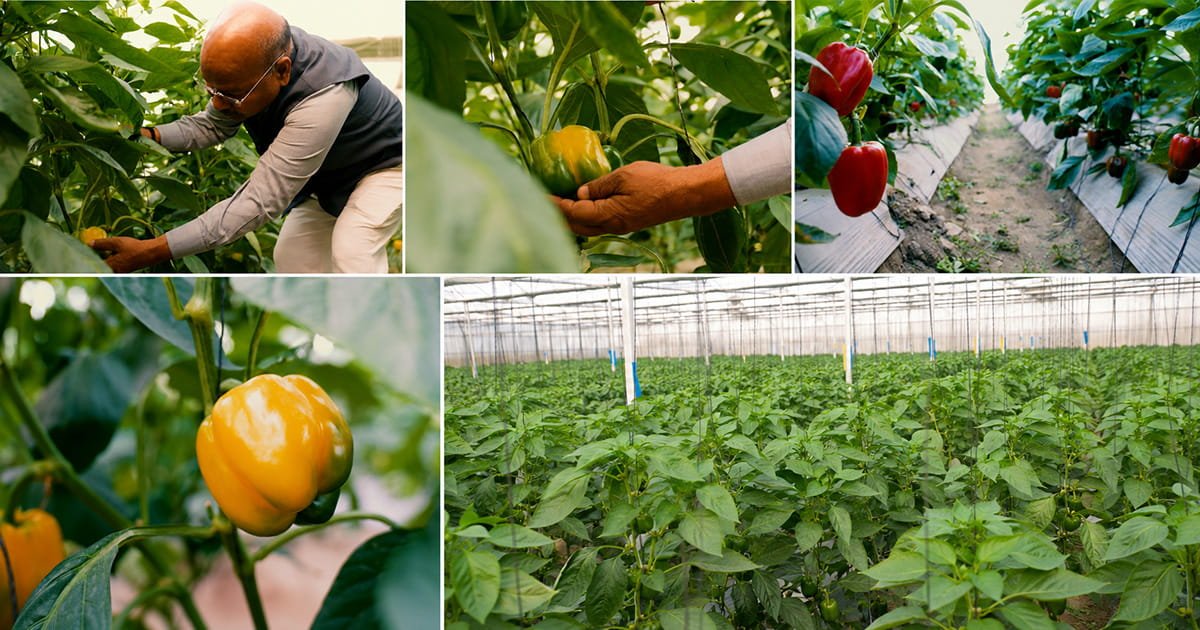
Despite requiring more care, Divyanshu found bell peppers equally encouraging from a commercial perspective. Since production volumes are naturally lower compared to cucumber, marketing becomes comparatively easier. Instead of handling exceptionally high daily harvest quantities, growers can focus on maintaining quality while supplying produce according to prevailing market demand.
Scaling a Farm Also Means Managing New Challenges
Adding another polyhouse increased the family's production capacity, but it also introduced a new level of responsibility. Managing two protected cultivation units meant paying closer attention to crop planning, daily monitoring, labour coordination, and harvesting schedules. Expansion was no longer just about constructing additional infrastructure—it required building a stronger management system.
Every crop behaves differently under changing weather conditions. Variations in temperature, humidity, and seasonal transitions influence plant growth in different ways, making continuous observation an important part of protected cultivation. As operations expanded, responding quickly to these changes became an essential part of day-to-day farm management.
This phase reinforced an important lesson for the family: commercial protected farming is a continuous learning process. Every crop cycle presents new situations, and long-term success depends on adapting to them rather than assuming previous experience will solve every future challenge.
Building Experience Through Every Crop Cycle
One of the biggest differences between establishing a first polyhouse and operating multiple units is the confidence that develops through experience. Decisions are no longer based solely on research or assumptions. Instead, they are shaped by practical observations collected season after season.
For the Singh family, every cultivation cycle has contributed new knowledge. Earlier, the focus was on proving that protected cultivation could work successfully on their farm. Today, the emphasis has shifted towards improving efficiency, refining crop selection, and making better operational decisions based on firsthand experience.
This gradual improvement demonstrates that agricultural growth rarely happens through a single breakthrough. Sustainable progress comes from repeatedly analysing outcomes, identifying areas for improvement, and applying those lessons during the next crop cycle.
The Importance of Timely Agronomic Guidance
Even experienced growers encounter situations where expert guidance becomes valuable. Different crops respond differently to environmental conditions, and unexpected changes during the growing season often require timely technical decisions.
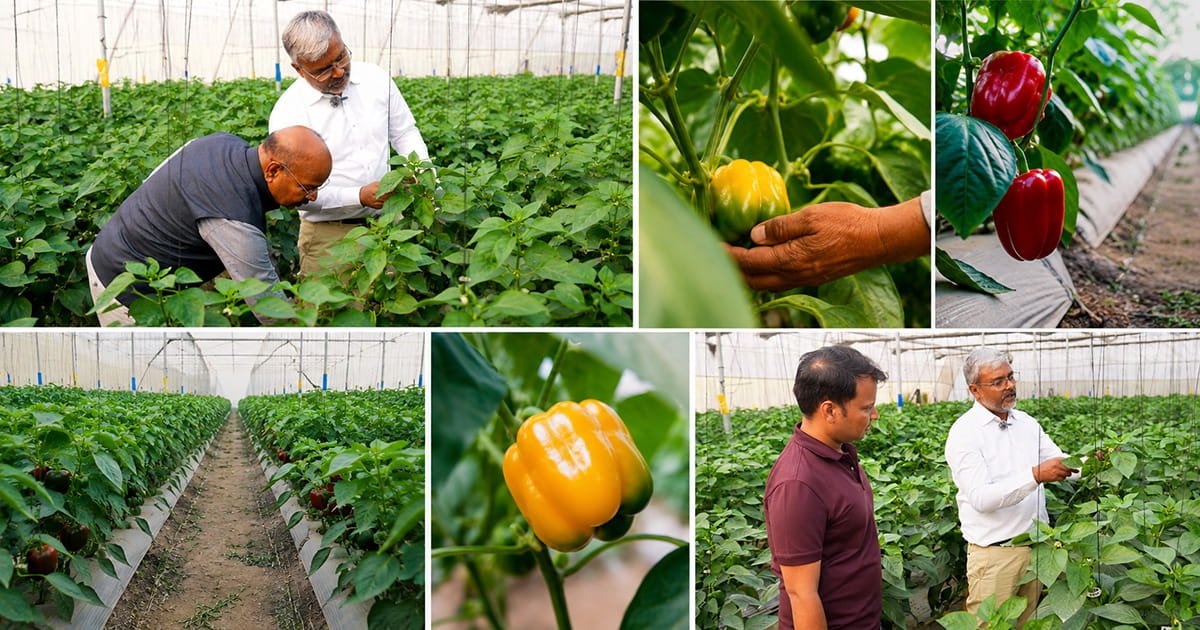
According to the family, continuous agronomic support helped them address crop-specific challenges whenever they arose. Rather than waiting for problems to become severe, they received practical guidance throughout different stages of cultivation, allowing them to move forward with greater confidence as their operations expanded.
This collaborative approach became increasingly valuable during diversification. Managing cucumber and bell pepper simultaneously exposed the family to different cultivation requirements, making timely technical support an important part of maintaining healthy crop development.
Looking Ahead: Growing With Experience, Not Speed
The Singh family's journey reflects a measured approach to agricultural growth. Instead of expanding aggressively after their first successful season, they chose to build gradually, applying lessons from production, marketing, and crop management before increasing the scale of operations.
Their focus now extends beyond adding infrastructure. Every new cultivation cycle is an opportunity to strengthen farm management practices, improve crop planning, and deepen their understanding of commercial protected farming. This long-term perspective provides a stronger foundation for future expansion than rapid growth without adequate preparation.
For farmers considering a similar path, their experience offers a practical reminder that successful expansion is built on patience, observation, and informed decision-making. Scaling a protected farming business is not about becoming bigger overnight—it is about becoming better with every season.
What Other Farmers Can Learn From This Expansion Journey
- Treat the first successful crop as the beginning of the learning process, not the end of it.
- Study market behaviour alongside production performance before planning expansion.
- Introduce crop diversification gradually so that operational risks remain manageable.
- Expand only when management systems are ready to support additional cultivation.
- Continue improving through practical experience rather than expecting immediate perfection.
Conclusion
The Singh family's story illustrates that the real measure of success in protected cultivation is not simply building a polyhouse—it is developing the knowledge, confidence, and operational discipline to expand responsibly over time. Their transition from one commercial unit to multiple cultivation strategies highlights how careful planning, market awareness, and continuous learning can shape a stronger farming business.
While every farm has its own challenges, one lesson remains consistent: sustainable growth comes from making thoughtful decisions at every stage rather than pursuing rapid expansion. By combining practical experience with a willingness to adapt, the family continues to build a protected cultivation enterprise designed for long-term progress.
Final Takeaway
The Singh family's expansion story demonstrates that protected cultivation is not defined by the number of polyhouses a farmer owns but by the ability to grow responsibly with experience. Their decision to expand only after understanding production, marketing, crop diversification, and operational management offers a practical roadmap for growers who view agriculture as a long-term enterprise rather than a short-term opportunity. By treating every cultivation cycle as a chance to learn, they continue building a stronger and more resilient protected farming business.