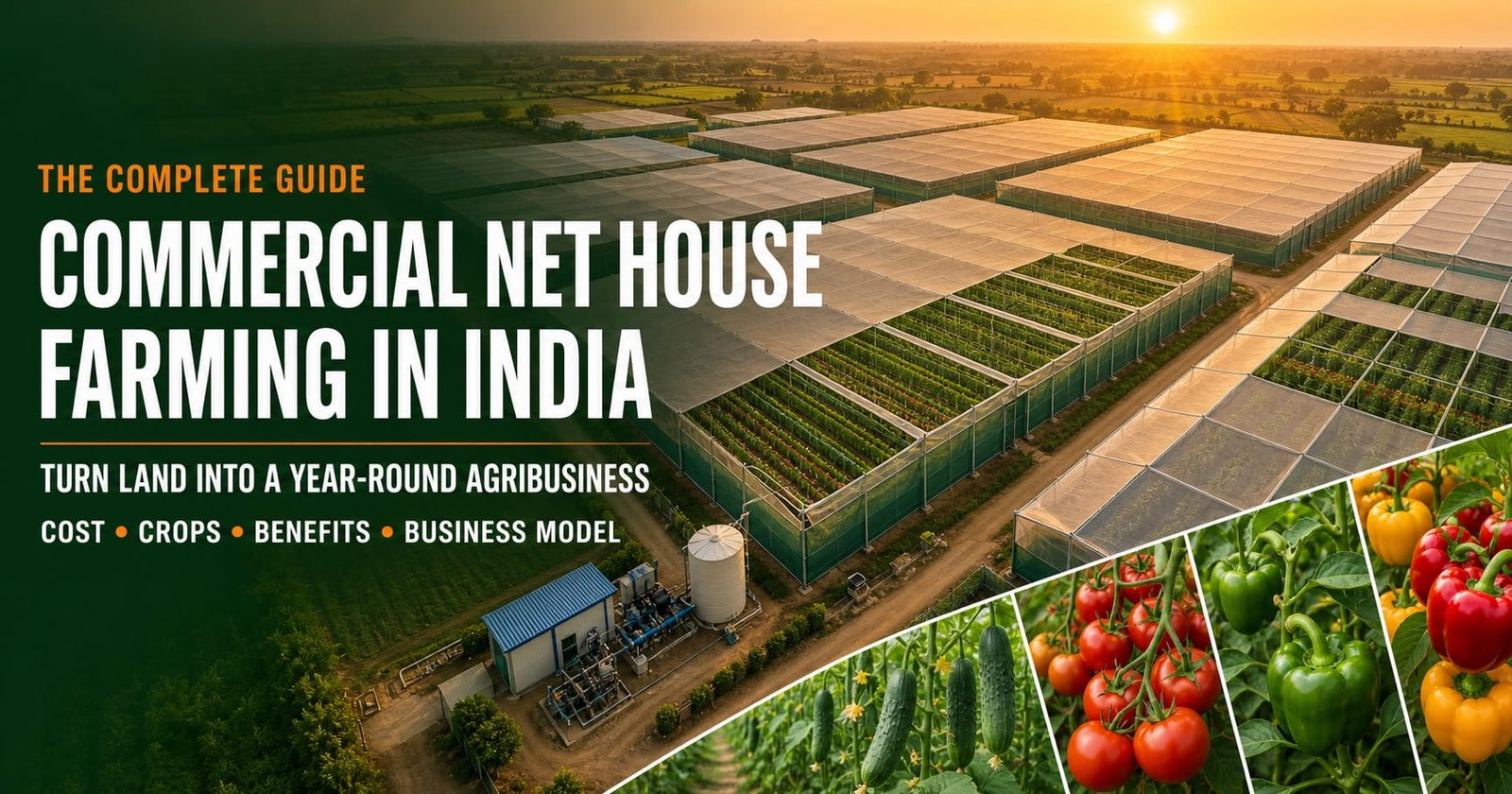
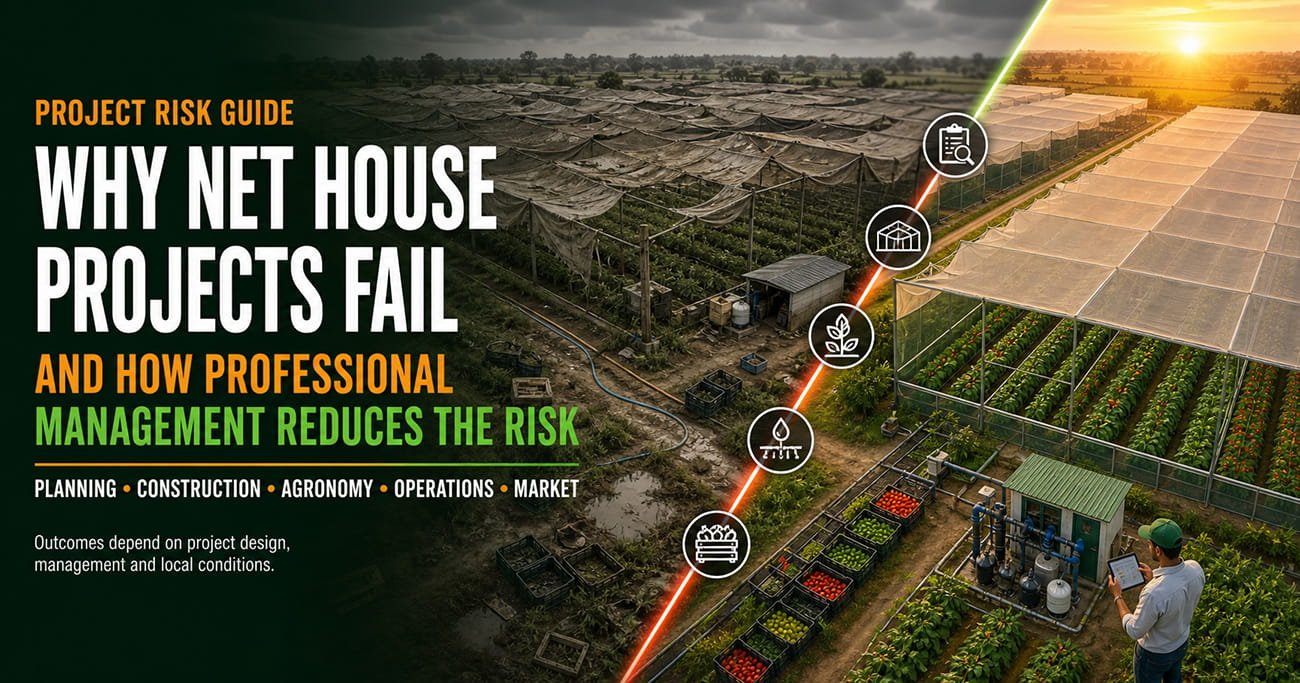
A net house does not guarantee profit. Plenty of protected-cultivation projects underperform or fail outright — almost never because the concept is flawed, and almost always because of avoidable mistakes in planning and execution. The structure is only the hardware; the system around it decides whether it makes money.
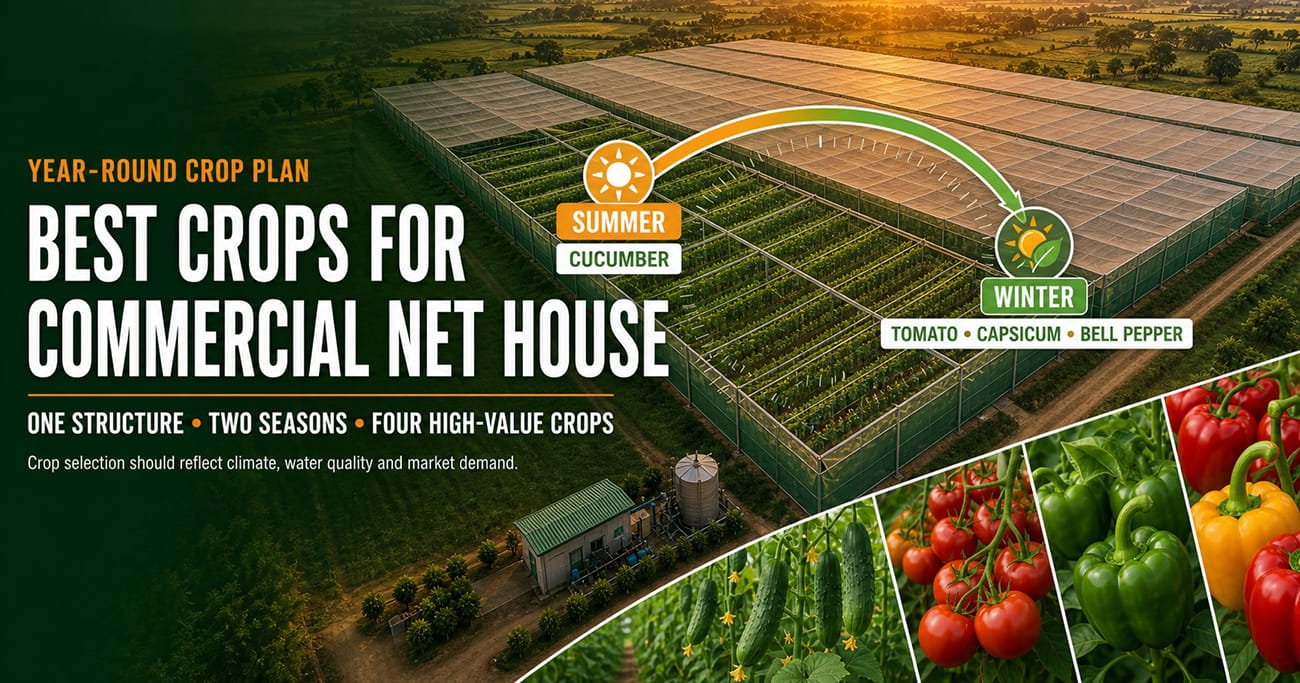
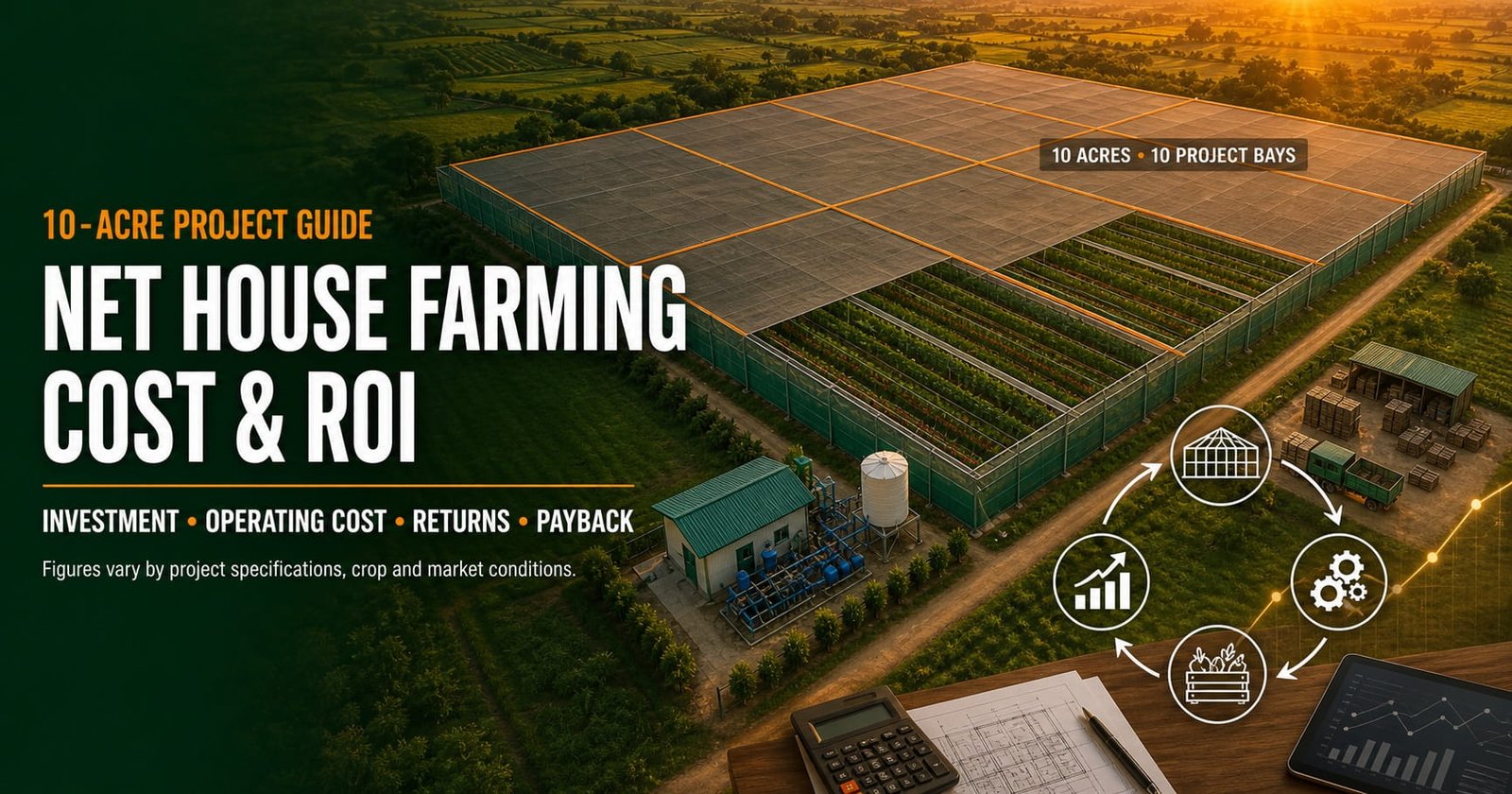
Here are the ten mistakes that most often sink commercial net house (and polyhouse) projects — and how professional, hands-on management removes each one. If you are a landowner or investor, treat this as your due-diligence checklist. Background reading: our complete guide, the cost and ROI breakdown, and the year-round crop plan.
1. Selecting unsuitable land
Sloping, fragmented, poorly drained or badly connected land undermines a project before it begins. A commercial net house wants a reasonably level, contiguous block with road access for inbound material and outbound produce. Fix: a proper site assessment before purchase or commitment.
2. Skipping water and soil analysis
Water is the make-or-break input, and too many projects start without testing it. Insufficient yield or poor water quality (high EC, wrong pH) quietly caps every crop that follows. Fix: test water yield and quality, and soil, up front — and design the fertigation around the results.
3. Choosing the wrong crop
Growing a crop that does not suit the local climate, or one with no premium buyer nearby, guarantees weak returns. Crop selection is the biggest profit lever, and it is often made backwards — by preference rather than by market. Fix: choose the crop from the market and agro-climate, as covered in our crop-plan guide.
4. Building a low-quality or wrong structure
Cutting cost on the GI frame, netting or drip system saves a little up front and costs a lot later — through early failure, poor protection and lost crops. The structure is a multi-year asset. Fix: build to specification with quality materials and a warranty, not to the lowest quote.
5. Starting without a market study
Producing quality volume means little if it lands in a crashing mandi. Projects that plan production but not sales leave most of their value on the table. Fix: confirm buyers, channels and indicative prices before planting.
6. Depending on an expected subsidy
Building a business case that only works with a subsidy — and then waiting months for a sanction that may be delayed or reduced — stalls projects and strains cash flow. Fix: make the project viable on its own economics. Agrifirst runs net house as a non-subsidy model precisely so you can start now, with any subsidy treated as a bonus rather than a dependency.
7. Underestimating working capital
The build cost is not the whole cost. Seedlings, inputs and labour are spent through a crop cycle before any revenue arrives, and a project that runs out of working capital mid-season starves the crop exactly when it matters. Fix: budget the first cycle’s operating cost as working capital on top of the build — see the cost and ROI breakdown.
8. Poor fertigation and irrigation management
Protected cultivation lives or dies on precise water and nutrient delivery. Guesswork on dosing, scheduling or stock-solution compatibility leads to deficiencies, blockages and lost yield. Fix: run a disciplined, crop-stage-based fertigation program under agronomic supervision.
9. Inadequate pest and disease monitoring
A net house reduces pest pressure — it does not eliminate it. Projects that skip regular scouting discover problems only once they have spread and become expensive. Fix: scheduled monitoring and integrated pest management (IPM), acting early rather than reacting late.
10. No harvest, post-harvest or market-linkage plan
Value is created at the very end — in grading, timing, cold chain and getting produce to the right buyer in good condition. Treating harvest and market linkage as an afterthought erodes the premium the whole project was built to capture. Fix: plan harvest windows, post-harvest handling and organised off-take before the crop is ready.
The common thread: it is a system, not a structure
Notice the pattern — almost none of these failures are about the net house itself. They are about the system around it: site, water, crop, market, capital, agronomy and records. Weak record-keeping and the absence of expert agronomy support quietly amplify every other mistake, because problems are neither caught early nor corrected cycle over cycle.
How professional management reduces the risk
This is exactly why a hand-held model exists. Agrifirst delivers commercial net house farming as a fully guided, hands-on model — you run the project, and our team guides every step — which directly removes the mistakes above:
- Site, water and crop validation — the project is designed on tested ground, not assumptions (mistakes 1–3).
- Engineered, warrantied structure — built to specification (mistake 4).
- Non-subsidy model with a real market study — viable on its own economics, no waiting (mistakes 5–6).
- Full agronomy hand-holding — fertigation, IPM and stage-wise management, cycle after cycle (mistakes 7–9).
- Complete market linkage — we connect you to organised buyers at premium, contracted prices (mistake 10).
In short: a net house alone does not create profit — the system around it does.
Do your due diligence
If you are evaluating a commercial net house, run this checklist against any proposal you are given. To have Agrifirst validate your land, water and market and build a de-risked project plan, request a project assessment — or start with our complete guide to commercial net house farming.