Success in agriculture is often measured by healthy crops, high yields, or profitable harvests. However, behind every successful farm is a journey that usually includes years of experimentation, setbacks, learning, and perseverance. Very few farmers achieve success on their first attempt. Those who eventually build sustainable agricultural businesses are often the ones who learn from failure rather than fear it.
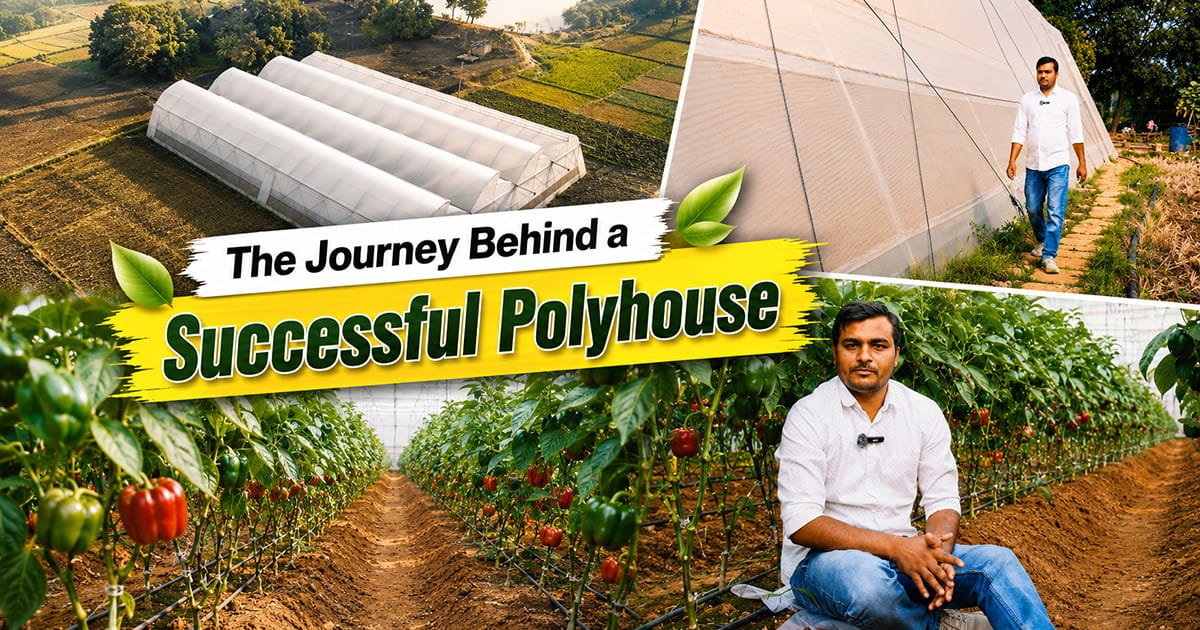
The story of Chandan Patel from Mirzapur, Uttar Pradesh, perfectly reflects this reality. Before establishing his 2,000 Sq. Meter AgriFirst polyhouse and cultivating premium-quality red and yellow colored capsicum, Chandan had already explored multiple businesses. He tried dairy farming, worked in the corporate sector, experimented with pearl farming, cultivated lemongrass, created a successful YouTube farming channel, and built a goat farming enterprise. Every venture taught him valuable lessons, but none provided the long-term confidence he was seeking.
Today, Chandan's journey has become an inspiring polyhouse farming success story in Mirzapur. What makes his experience different is not just the income potential of protected cultivation but the way he approached the investment. Instead of making another quick decision, he spent nearly one and a half years researching every aspect of polyhouse farming before investing. That patience ultimately became one of the biggest reasons behind his confidence in protected cultivation.
- 📍 Farmer: Chandan Patel, Mirzapur, Uttar Pradesh
- 🏡 Project: 2,000 Sq. Meter AgriFirst Polyhouse
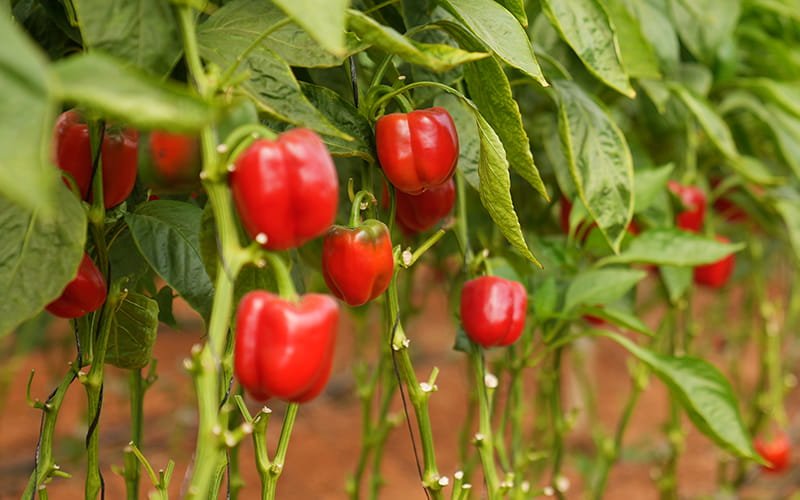
- 🌶 Crop: Red & Yellow Colored Capsicum
- 🌱 Plants: Approximately 5,000
- 📅 Harvest Period: October to May (Approx. 8 Months)
- 📦 Total Production (First Crop): Around 16 Tonnes
- 💰 Average Selling Price: Around ₹100/kg
A Dream That Started After Engineering
Like many educated youngsters from rural India, Chandan believed that education would open new opportunities. After completing his B.Tech from Lucknow in 2015, he returned to Mirzapur with a clear ambition—to build his own business instead of pursuing a conventional career.
Initially, dairy farming appeared to be the ideal opportunity. However, circumstances prevented him from starting the project. Rather than remaining idle, he accepted a job with Jio, where he worked for nearly two years.
Although the job offered stability, Chandan always felt that it wasn't the future he wanted. His real interest lay in building something independently in his own village. Agriculture had always fascinated him, but he wanted to approach it as a business rather than as traditional farming.
Eventually, he resigned from his corporate job and returned home with one objective—to discover an agricultural business capable of generating sustainable income.
Learning Through Failure Instead of Giving Up
Unlike many success stories that only showcase achievements, Chandan openly speaks about the ventures that did not work. According to him, every unsuccessful business became a classroom that prepared him for his future in protected cultivation.
One of his earliest experiments was pearl farming. During that period, pearl farming was becoming popular in many nearby villages, and several farmers were constructing ponds to start production. Inspired by this trend, Chandan also invested in pearl farming.

However, one major challenge quickly became evident. The Mirzapur region regularly faced water shortages during summer. As water levels dropped, the ponds began drying up, making pearl farming practically impossible.
Instead of blaming the business itself, Chandan realized that he had overlooked one crucial factor before investing—local water availability. That experience permanently changed the way he evaluated future opportunities.
A business that performs well in one region may completely fail in another if local resources, climate, and infrastructure are not properly evaluated.
Searching for a Crop That Needed Less Water
After pearl farming, Chandan began looking for crops that required comparatively less water. His search eventually led him to lemongrass cultivation, a crop known for its essential oil production and commercial demand.
Rather than relying solely on internet videos, he personally visited experienced farmers, observed commercial fields, collected planting material, and learned how essential oils were extracted. He also attended professional training at CIMAP, Lucknow, where he gained technical knowledge about lemongrass cultivation and processing.
Encouraged by what he learned, Chandan planted lemongrass on approximately one acre of land and even established facilities for essential oil extraction.
Initially, the results were encouraging. During winter and summer, the crop performed well. Unfortunately, the rainy season exposed another challenge that had not been properly studied beforehand. The soil conditions on his farm were unsuitable for heavy monsoon conditions, resulting in severe crop damage.
Looking back, Chandan openly admits that this business was selected too quickly. Although the crop itself had commercial value, it was not the right fit for his local conditions.
A YouTube Channel That Changed His Perspective
Many people are surprised to learn that before becoming a successful polyhouse farmer, Chandan also spent considerable time as an agricultural content creator.
He launched a YouTube channel called Chandan Group Farm, where he travelled extensively across nearby districts interviewing progressive farmers. Over time, he conducted nearly 200 farmer interviews.
These interviews became far more valuable than simply creating online content. Every conversation introduced him to a different agricultural business model. Some farmers specialised in horticulture, others in livestock, while many had developed profitable enterprises through modern farming techniques.
Instead of watching agriculture from a distance, Chandan was now learning directly from people who had already experienced both success and failure. Those practical conversations gradually transformed his understanding of commercial farming.
Goat Farming Added Another Business Experience
Among the many enterprises he studied, goat farming attracted his attention the most. After interacting with several successful goat farmers, he realized that livestock farming could provide a stable source of income when managed professionally.
Today, alongside his polyhouse, Chandan continues operating a goat farm where around 50 goats are currently reared.
Interestingly, goat farming also taught him another important lesson. People often assume that successful businesses generate effortless profits. However, according to Chandan, every business carries hidden responsibilities. Daily management, animal health, labour, feed, disease prevention, and market fluctuations require constant attention.
This practical understanding later influenced how he viewed polyhouse farming. Instead of believing unrealistic promises, he approached protected cultivation with realistic expectations, knowing that every successful business requires continuous management and informed decision-making.
Unlike his previous ventures, Chandan decided that his next investment would only happen after thoroughly understanding the crop, market demand, climate suitability, water availability, production system, and long-term profitability. That decision eventually led him towards protected cultivation and AgriFirst.
Why Chandan Patel Chose Polyhouse Farming After 1.5 Years of Research
By the time Chandan completed his journey through pearl farming, lemongrass cultivation, YouTube, and goat farming, his mindset towards business had completely changed. Instead of chasing opportunities based on popularity, he wanted his next investment to be backed by research, practical observation, and long-term sustainability.
Around 2023, while interviewing progressive farmers and exploring different modern farming models, Chandan became increasingly interested in polyhouse farming. Unlike conventional agriculture, protected cultivation offered farmers greater control over growing conditions, better crop quality, higher-value produce, and protection from unpredictable weather.
However, he did not immediately decide to build a polyhouse. Remembering the mistakes he had made in earlier ventures, Chandan chose a completely different approach. For nearly one to one and a half years, he dedicated himself to understanding every aspect of protected cultivation before investing a single rupee.
During this period, he travelled extensively to meet successful polyhouse farmers, watched hundreds of educational videos, compared different crops, analysed production costs, understood market demand, and carefully studied how commercial polyhouse businesses were operating across different regions.
His research focused on answering practical questions rather than searching for shortcuts:
- Which crop performs consistently under protected cultivation?
- Which crops have stable market demand throughout the year?
- How much labour is required to manage a polyhouse?
- What are the biggest risks involved in commercial greenhouse farming?
- How important is agronomy support after construction?
- Can protected cultivation generate better returns than traditional farming?
- How should a farmer choose the right polyhouse company?
Unlike many first-time investors, Chandan refused to make a decision based on attractive income figures alone. His goal was to understand whether polyhouse farming could remain profitable over the next ten to fifteen years rather than just during the first crop cycle.
"I could have installed my polyhouse much earlier, but I didn't want to repeat my previous mistakes. I wanted to be completely sure before making such a large investment."
Watching Rajeev Singh's Success Changed Everything
One of the biggest turning points in Chandan's decision came much closer to home. His relative, Rajeev Singh, had already established a successful AgriFirst polyhouse.
Instead of depending only on promotional material or online reviews, Chandan had the opportunity to observe a working commercial polyhouse from close quarters. He visited Rajeev's farm repeatedly and carefully monitored how the crops performed season after season.
He witnessed Rajeev's first crop, followed by his second colored capsicum crop. He also observed the successful cultivation of Dutch roses inside the same protected environment. More importantly, he noticed something that many new investors often overlook—the quality of technical support provided after the structure was completed.
Regular visits from AgriFirst's agronomy team, continuous crop monitoring, timely technical guidance, and quick problem-solving gave Chandan confidence that he would not be left alone after the polyhouse was constructed.
This practical experience became one of the strongest reasons behind his final decision. He wasn't investing based on promises—he was investing after seeing real crop performance, real farmer satisfaction, and real technical support.
Choosing AgriFirst for His Protected Cultivation Project
After months of research and multiple discussions with the AgriFirst team, Chandan decided to move forward with a 2,000 Sq. Meter commercial polyhouse project. According to him, what impressed him most was not only the quality of the structure but also the company's systematic approach towards project execution.
The team clearly explained every stage of the project—from documentation and government approval to construction, plantation, and post-installation agronomy support. This transparent process gave him confidence that every stage would be professionally managed.
Since a polyhouse requires a significant financial investment, Chandan wanted a company capable of supporting him beyond the construction phase. He understood that infrastructure alone cannot guarantee successful farming. Long-term technical guidance is equally important.
- Observed successful farmer projects personally.
- Saw consistent agronomy support in the field.
- Transparent documentation process.
- Professional project execution.
- Strong post-installation technical guidance.
Polyhouse Approval and Documentation Process
Once Chandan confirmed his decision, the project entered its documentation phase. Since commercial polyhouse projects require approval from the Department of Horticulture before construction begins, proper documentation was essential.
AgriFirst guided him through the entire process. The company collected all the required documents, including land ownership records, Aadhaar card, and bank passbook details, before initiating the approval procedure with the horticulture department.
For many first-time farmers, paperwork often becomes one of the biggest concerns while planning a protected cultivation project. Chandan appreciated that AgriFirst handled the approval process systematically, allowing him to focus on preparing for his upcoming farming venture instead of worrying about administrative procedures.
Construction Completed Even During Heavy Rainfall
After receiving project approval and completing the necessary payment formalities, construction materials reached Chandan's farm within approximately one week. Work began on 11 June, marking the beginning of his long-awaited transition into protected cultivation.
Despite challenging weather conditions and continuous rainfall during the construction period, the project progressed smoothly. According to Chandan, the foundation work was completed on schedule, and the entire structure was erected within approximately 35 to 40 days.
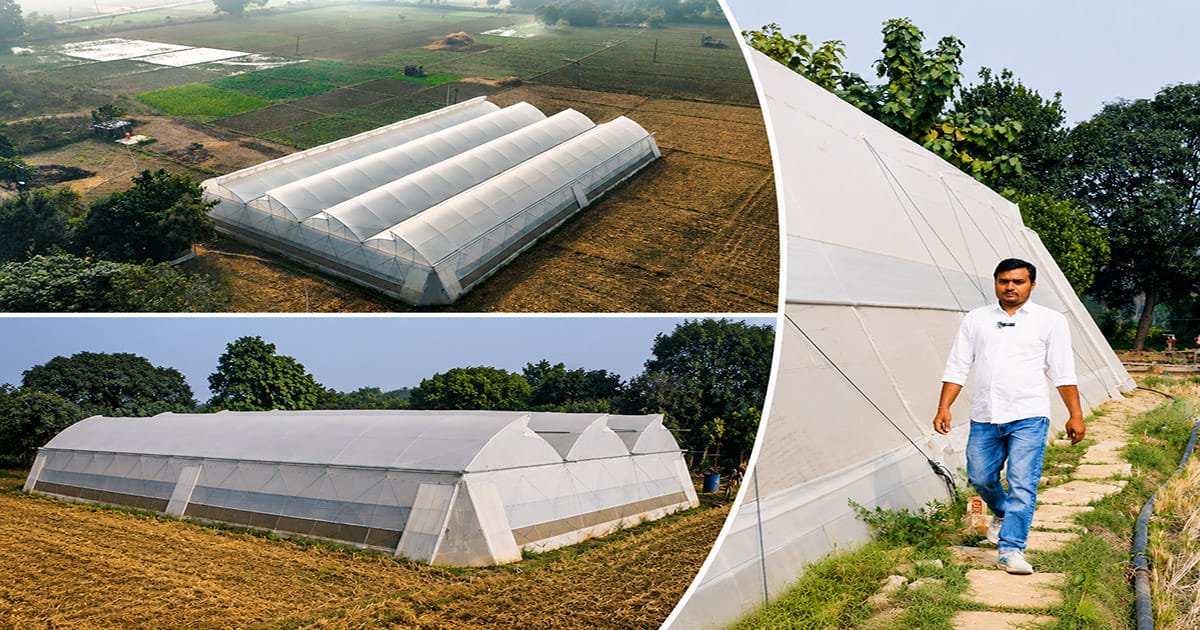
Construction was completed around the middle of July, allowing plantation activities to begin exactly according to the planned crop calendar.
Timely completion plays an extremely important role in commercial polyhouse farming because delays can affect nursery planning, crop scheduling, market timing, and overall profitability. Completing the structure within the planned timeframe ensured that Chandan could start his first production cycle without losing an entire growing season.
Beginning His First Colored Capsicum Crop
The plantation of colored capsicum was completed on 6 August. Around 5,000 seedlings were transplanted inside the 2,000 Sq. Meter AgriFirst polyhouse.
Colored capsicum is considered one of the premium vegetables grown under protected cultivation because of its consistent demand from supermarkets, hotels, restaurants, food processing companies, and organised retail chains. Compared to open-field cultivation, polyhouses provide a controlled environment that helps improve fruit size, colour, appearance, and shelf life.
Within approximately 80 days after transplanting, harvesting began on 22 October. According to Chandan, the crop developed excellent colour, healthy plant growth, and good fruit quality during its first production cycle.
The harvesting season continued until May, giving the crop an overall harvest period of approximately eight months. During this first crop cycle, Chandan harvested around 16 tonnes of red and yellow colored capsicum from his 2,000 sq. m. polyhouse, averaging approximately 2 tonnes per month over the harvesting period. Depending on market conditions, he received an average selling price of approximately ₹100 per kilogram.
Although prices naturally fluctuate throughout the year, premium-quality colored capsicum grown inside a properly managed polyhouse generally attracts better buyers because of its uniform size, attractive appearance, and superior quality.
- 🌶 Crop: Red & Yellow Colored Capsicum
- 🌱 Plantation Date: 6 August
- 📅 First Harvest: 22 October
- 🌿 Plants: Approximately 5,000
- 📦 Average Monthly Production: Around 2 Tonnes
- 💰 Average Selling Price: Around ₹100/kg
- 🏪 Major Buyers: Retail markets, supermarkets, hotels and institutional buyers
Looking at his healthy crop today, it is easy to assume that success came quickly. In reality, every healthy plant standing inside Chandan Patel's polyhouse represents years of learning, careful planning, and patient decision-making. His journey proves that successful protected cultivation begins long before construction—it begins with research, observation, and choosing the right technical partner.
AgriFirst's Agronomy Support: The Difference Begins After Construction
Many people believe that once a polyhouse is constructed, the difficult part is over. In reality, experienced growers know that the real journey begins only after the first seedling is transplanted. A polyhouse is a highly technical farming system where every decision—from irrigation scheduling to pruning and nutrition management—directly influences crop health, fruit quality, and profitability.
This is where Chandan believes AgriFirst has made the biggest difference. According to him, the company did not disappear after handing over the structure. Instead, its technical team continued working alongside him throughout the crop cycle.
One of the people he frequently mentions is Peeyush Sir, who regularly visits his farm to inspect crop growth, identify potential issues, and recommend timely corrective measures. These visits have been particularly valuable because this is Chandan's first commercial crop under protected cultivation.
Whenever an unexpected problem appears, Chandan doesn't have to rely on guesswork or random advice from the internet. Even if an on-site visit is not immediately possible, AgriFirst provides guidance through phone calls, photographs, and video consultations so that crop management decisions can be taken without unnecessary delay.
According to Chandan, this continuous technical guidance gives new farmers confidence because they know experienced agronomists are available whenever required.
"A polyhouse is not something you build and forget. Every crop requires continuous observation, timely decisions, and expert guidance. Having agronomists available whenever needed makes a huge difference, especially for first-time growers."
How Colored Capsicum Is Managed Inside the Polyhouse
Growing colored capsicum inside a polyhouse involves much more than planting seedlings and waiting for harvest. Every stage of crop development requires planned management to ensure healthy plant growth, balanced fruit load, and consistent production throughout the harvesting period.
According to Chandan, the plantation itself is carried out by AgriFirst's technical team. Once the seedlings are transplanted and properly established, the responsibility shifts towards systematic crop management, which begins within the first month after planting.
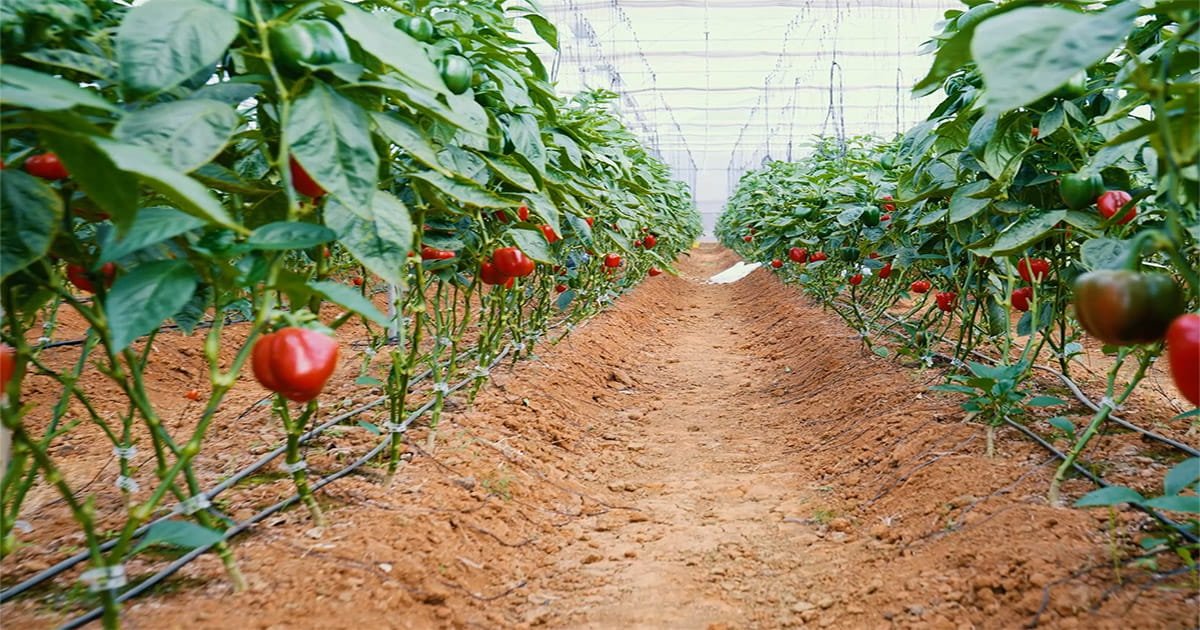
One of the most important operations is pruning. Instead of allowing the plant to produce unlimited branches, only two main stems are maintained throughout the crop cycle. Any additional side shoots are removed regularly so that the plant directs its energy towards developing strong stems, healthy foliage, and premium-quality fruits.
This practice also improves air circulation within the crop canopy, reduces unnecessary competition between branches, and allows sunlight to penetrate deeper into the plant, resulting in better fruit colour development.
Plant Training and Trellising System
As colored capsicum plants continue growing, they naturally become heavier due to increasing fruit load. Without proper support, stems may bend or even break, reducing productivity and making harvesting difficult.
To prevent this, each plant is trained vertically using support strings (trellising twine). The strings help maintain upright plant growth while supporting developing fruits throughout the production cycle.
Vertical training offers several advantages beyond physical support. It improves crop uniformity, simplifies pruning operations, makes pest and disease monitoring easier, and enables workers to harvest fruits more efficiently without damaging neighbouring plants.
Regular crop training also keeps the production area organised and allows better movement inside the polyhouse, making routine maintenance significantly easier.
- Maintaining only two productive stems per plant.
- Regular side-shoot removal.
- Continuous pruning throughout the crop cycle.
- Vertical training using trellising twine.
- Maintaining proper crop hygiene.
- Regular monitoring for pests and diseases.
Drip Irrigation Makes Every Drop Count
Water management has always been an important consideration for Chandan. His earlier experience with pearl farming taught him how critical efficient irrigation is for long-term agricultural success.
Inside the polyhouse, irrigation is provided through a drip irrigation system. Each planting bed is equipped with two drip laterals that deliver water directly to the root zone of every plant. Plant-to-plant spacing is maintained at approximately 35 centimetres, ensuring adequate room for healthy growth while making efficient use of available space.
Compared to traditional flood irrigation, drip systems reduce water wastage, improve nutrient availability, and maintain consistent soil moisture. Since colored capsicum is a high-value crop, uniform irrigation plays an important role in maintaining fruit quality and reducing plant stress.
Efficient irrigation also supports better fertilizer application through fertigation, allowing nutrients to be supplied directly to the root zone in controlled quantities according to crop growth stages.
Farmers exploring advanced protected cultivation techniques can also learn about AgriFirst's Hydroponics & Soilless Farming Systems, designed for efficient commercial crop production.
Daily Labour Management Inside the Polyhouse
One common misconception is that polyhouse farming requires very little work after installation. Chandan disagrees with this perception. While protected cultivation offers a controlled environment, it also demands regular observation and disciplined crop management.
The daily routine inside his polyhouse includes pruning, removing unwanted side shoots, training plants, cleaning the growing area, monitoring crop health, harvesting mature fruits, and maintaining irrigation systems.
Unlike traditional farming, where many activities are seasonal, protected cultivation requires consistent attention throughout the crop cycle. This systematic management is one of the reasons why polyhouse farming delivers better crop quality and more stable production.
Why Practical Training Is Equally Important
Although Chandan is satisfied with the support he has received, he believes that practical farmer training can make protected cultivation even more successful for first-time growers.
According to him, theoretical knowledge alone is not sufficient. Farmers should have the opportunity to spend at least 10 to 15 days learning practical crop management inside a working commercial polyhouse.
Such training would help farmers understand pruning techniques, irrigation scheduling, fertigation practices, crop hygiene, pest identification, harvesting methods, and labour management before they begin their own production.
He also feels that training should not be limited to a single crop. Learning multiple crops enables farmers to diversify their business and respond more effectively to changing market conditions.
Farmers planning long-term expansion can explore AgriFirst's complete range of greenhouse and polyhouse solutions suitable for different crops and project sizes.
- 🥒 English Cucumber
- 🍈 Muskmelon
- 🍅 Tomato
- 🌹 Floriculture Crops
According to Chandan, learning multiple protected cultivation crops will help farmers reduce dependency on a single market and improve long-term business sustainability.
Planning for Diversification Instead of Depending on One Crop
Even though this is only his first colored capsicum crop, Chandan is already thinking about the future. However, unlike his earlier ventures, he does not want to make expansion decisions in haste.
He plans to expand his polyhouse area in the coming years but intends to select future crops only after analysing market demand, profitability, and long-term sustainability.
Among the crops that interest him most are cucumber, muskmelon, tomato, and floriculture. Rather than depending entirely on colored capsicum, he wants to gradually build a diversified protected cultivation business capable of adapting to changing consumer demand and market prices.
This long-term approach reflects how much his thinking has evolved over the years. Earlier in his career, he often selected businesses based on immediate opportunities. Today, every decision is backed by research, observation, and practical experience. That change in mindset has become one of the strongest foundations of his success.
Polyhouse Farming vs Traditional Farming: Chandan's Real-Life Comparison
Even after establishing his commercial polyhouse, Chandan Patel has not completely moved away from traditional agriculture. Alongside protected cultivation, he continues farming on nearly 7 to 8 acres of land, where his family grows crops such as paddy and wheat. This gives him a unique perspective because he has experienced both conventional farming and protected cultivation side by side.
According to Chandan, the biggest difference is not just the income potential but the level of certainty. Traditional farming is heavily dependent on weather conditions. A single hailstorm, untimely rainfall, strong winds, or prolonged dry spell can significantly reduce production despite months of hard work. In open-field agriculture, farmers have very little control over these external factors.
Protected cultivation offers a completely different environment. Inside a polyhouse, crops remain shielded from many weather-related risks, allowing farmers to manage growing conditions more effectively. While polyhouse farming also requires discipline, technical knowledge, and continuous monitoring, the crop is far less vulnerable to sudden climatic changes.
Chandan believes that this stability is one of the biggest advantages of commercial polyhouse farming. In his own experience, the earning potential from just 2000 sq. meters under protected cultivation can exceed the income generated from seven to eight acres of traditional paddy and wheat cultivation.
"Traditional farming will always remain important, but when I compare the income, stability, and crop security, my 2,000 Sq. Meter polyhouse performs much better than several acres of conventional farming."
Modern Farming Is Also Creating Rural Employment
Another positive outcome of Chandan's polyhouse project has been employment generation within his own village. Today, around four to five local workers are regularly engaged in crop management activities such as pruning, training, harvesting, cleaning, and routine maintenance inside the polyhouse.
Unlike open-field farming, where labourers often work under direct sunlight and harsh weather conditions, the protected environment inside the polyhouse provides a safer and more comfortable workplace. According to Chandan, this has improved the overall working experience for local labourers, many of whom enjoy working in the controlled environment.
Beyond generating income for one family, protected cultivation has also contributed to creating skilled agricultural employment in the village. As more farmers adopt modern farming technologies, opportunities for trained agricultural workers are also expected to increase.
Success Looks Easy from a Distance, But Every Business Has Challenges
One of the most honest parts of Chandan's interview is the advice he gives to aspiring farmers. He believes that people often judge a business only by its visible success while overlooking the hard work happening behind the scenes.
When someone watches a healthy colored capsicum crop or sees photographs of a modern polyhouse, it is easy to assume that the farmer is earning huge profits with very little effort. Chandan says the reality is quite different.
He compares this with his own goat farming business. Visitors often assume that maintaining a goat farm must be highly profitable, but they rarely see the daily challenges of feeding, disease management, breeding, labour supervision, and market fluctuations.
The same principle applies to polyhouse farming. Although the returns can be attractive, they come only when farmers continuously monitor the crop, follow scientific cultivation practices, manage labour efficiently, and make timely technical decisions. Success is the result of disciplined management rather than luck.
A polyhouse is not a shortcut to success. It is a long-term agricultural business that rewards planning, technical knowledge, patience, and consistent crop management.
Advice for Farmers Planning to Invest in a Polyhouse
Having experienced both failures and successes, Chandan offers very practical advice to anyone planning to start a commercial polyhouse project.
His first recommendation is simple: never invest in a hurry. Instead of making decisions based on social media videos or hearing about someone else's income, farmers should first understand the complete business model.
He encourages aspiring growers to spend sufficient time reading real farmer success stories, visiting successful polyhouse farms, interacting with experienced farmers, understanding market demand, and speaking directly with agronomists. According to him, every region has different climatic conditions, market opportunities, and crop suitability, so practical field visits are far more valuable than assumptions.
He also recommends maintaining regular communication with experienced technical teams like AgriFirst's agronomists before making the final investment decision. Understanding the challenges beforehand helps farmers enter protected cultivation with realistic expectations.
Perhaps the most valuable lesson from Chandan's journey is patience. He intentionally delayed his investment for nearly one and a half years because he wanted complete confidence that protected cultivation would remain sustainable over the long term. Looking back today, he believes that waiting was one of the best decisions he ever made.
Looking Ahead: Expansion Through Knowledge, Not Speed
Satisfied with his first experience, Chandan already plans to expand his protected cultivation project in the future. However, his approach remains exactly the same as before—careful planning before investment.
Rather than expanding immediately, he intends to continue studying market trends before selecting the next crop. His future interests include cucumber, muskmelon, tomato, and floriculture. By diversifying into multiple high-value crops, he hopes to reduce market risk and build a stronger agricultural business over the coming years.
His story demonstrates how modern farmers are increasingly thinking like entrepreneurs. Instead of depending on a single crop, they analyse demand, evaluate profitability, and continuously adapt their production strategy according to changing market conditions.
A Journey Built on Research, Not Luck
Every successful farm has its own story, but Chandan Patel's journey stands out because of the lessons behind it. His success did not come from making perfect decisions from the beginning. Instead, it came from learning why previous ventures failed and refusing to repeat the same mistakes.
Pearl farming taught him the importance of water availability. Lemongrass cultivation taught him the importance of climate and soil suitability. Interviewing hundreds of farmers taught him that every agricultural business comes with its own challenges. Goat farming taught him that visible success often hides countless hours of management and hard work.
By the time he decided to establish his AgriFirst polyhouse, he had completely transformed his decision-making process. Every step—from crop selection and market research to choosing the right company—was based on observation, experience, and careful planning rather than assumptions.
Today, his healthy colored capsicum crop is not simply the result of a well-constructed greenhouse. It is the outcome of years of learning, disciplined research, technical guidance, and the willingness to keep improving with every season.
Final Takeaway
Chandan Patel's story reminds us that successful polyhouse farming is not about chasing quick profits. It is about making informed decisions, understanding the science behind protected cultivation, choosing the right technical partner, and staying committed to continuous learning. When planning meets proper execution, modern agriculture can become a sustainable and profitable business for the long term.
Start Your Protected Cultivation Journey with AgriFirst
If you are planning to invest in a polyhouse, greenhouse, or protected cultivation project, take the first step the same way Chandan did—by learning before investing.
AgriFirst supports farmers at every stage of the journey, from project planning and documentation to polyhouse construction, crop establishment, agronomy guidance, and ongoing technical support. Whether you are interested in colored capsicum, cucumber, tomato, flowers, or other high-value crops, the right planning and expert guidance can help you build a sustainable farming business.