
Quick Answer: At Mahaberry Nursery Farm, strawberry plants are checked mainly for healthy white roots, clean runners and leaves without black spots before they are selected for plantation and dispatch. Melissa and Marimbella perform very well under Mahabaleshwar conditions from the colder months through temperatures reaching 35°C, while Rossetta needs more chilling hours.
The biggest takeaway from the farm visit is simple: do not judge a strawberry nursery plant only by its leaves. Sunil Ji says the root system is the main thing to check.
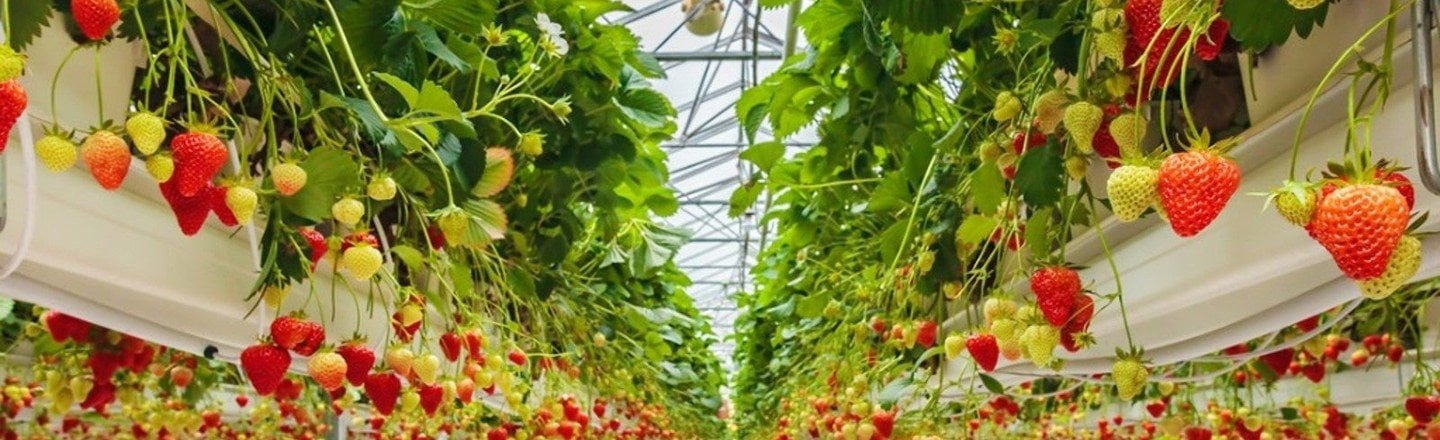
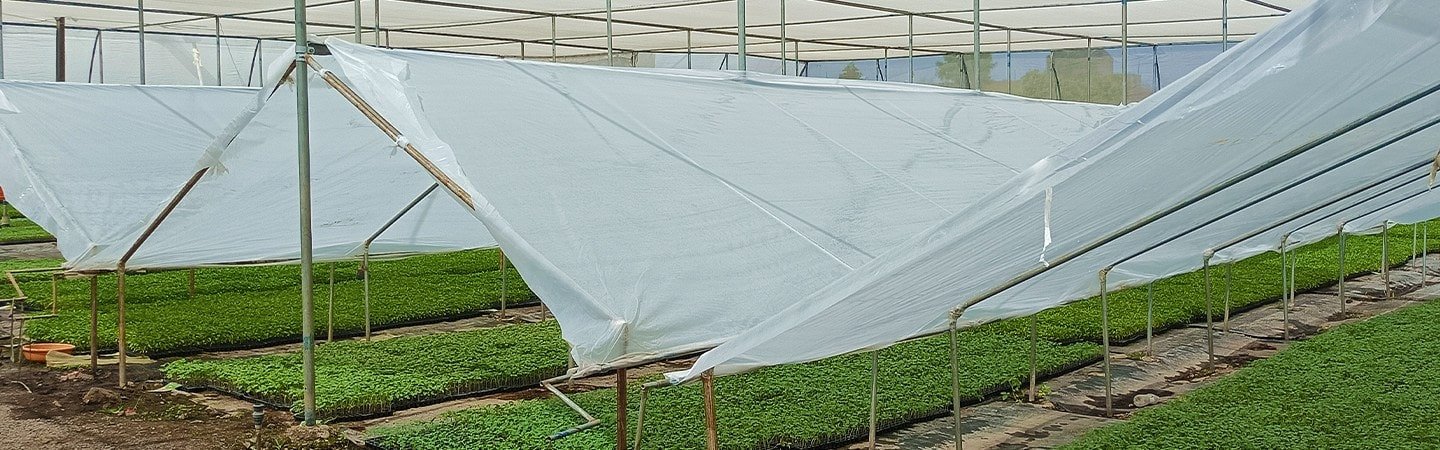
We have arrived at Mahaberry Nursery Farm, and strawberry plants for the coming season are being prepared around us. These are the plants that will later be distributed to farmers. Peeyush Sir, AgriFirst Agronomist, is here to understand how strawberry nursery plants are prepared, how farmers should select them, and what happens before these plants travel from the nursery to the farm.
Mahaberry Farm, according to Peeyush Sir, is one of the largest farms in India preparing strawberry nursery plants. Managing the farm is Sunil Ji, who has many years of experience with the newer strawberry varieties being discussed during this visit.
The conversation is not limited to seeing plants in trays. Peeyush Sir asks the practical questions a farmer would ask before taking these plants home: Which variety should be considered? What should healthy roots look like? How many leaves are enough? What happens to runners after plantation? How are plants packed for Lucknow or another distant location? And how long can they remain in transit?
Sunil Ji answers each of these questions right there at the nursery, even taking a plant out to show what a farmer should inspect.
How Are Strawberry Nursery Plants Prepared at Mahaberry?
Strawberry nursery plants at Mahaberry are being prepared for distribution to farmers in the coming season, with plant quality judged mainly by the condition of the roots, runners and leaves.
That becomes clear when Sunil Ji pulls out a nursery plant during the farm visit. His attention goes straight to the plant itself. He checks whether the runners are clean, whether the root system has developed properly and whether the leaves show black spots.
The roots are particularly important. Sunil Ji explains that the entire root should be white. The roots should also have developed well from both sides. When the roots have completely filled out, he considers the plant good for plantation.
This is also why leaf size alone does not decide whether a plant is ready. A plant with 3–4 leaves is not a problem, according to Sunil Ji. The main consideration is whether the root has developed properly and whether the plant has a proper main root system.
So when we talk about how strawberry nursery plants are prepared, the view from inside Mahaberry Nursery is very practical. The plant that looks bigger above the root zone is not automatically the plant Sunil Ji wants farmers to judge as better. He keeps bringing the discussion back to root development.
Which Strawberry Varieties Are Suitable for Uttar Pradesh Climate?
Melissa and Marimbella are the two varieties Sunil Ji says will perform well under the similar cold-period conditions discussed for Uttar Pradesh, while Rossetta needs more chilling hours and performs well in locations where there is more cold.
At Mahaberry, three varieties come into the discussion: Melissa, Marimbella and Rossetta. Sunil Ji describes Melissa and Marimbella as two good varieties and also confirms that Rossetta is available.
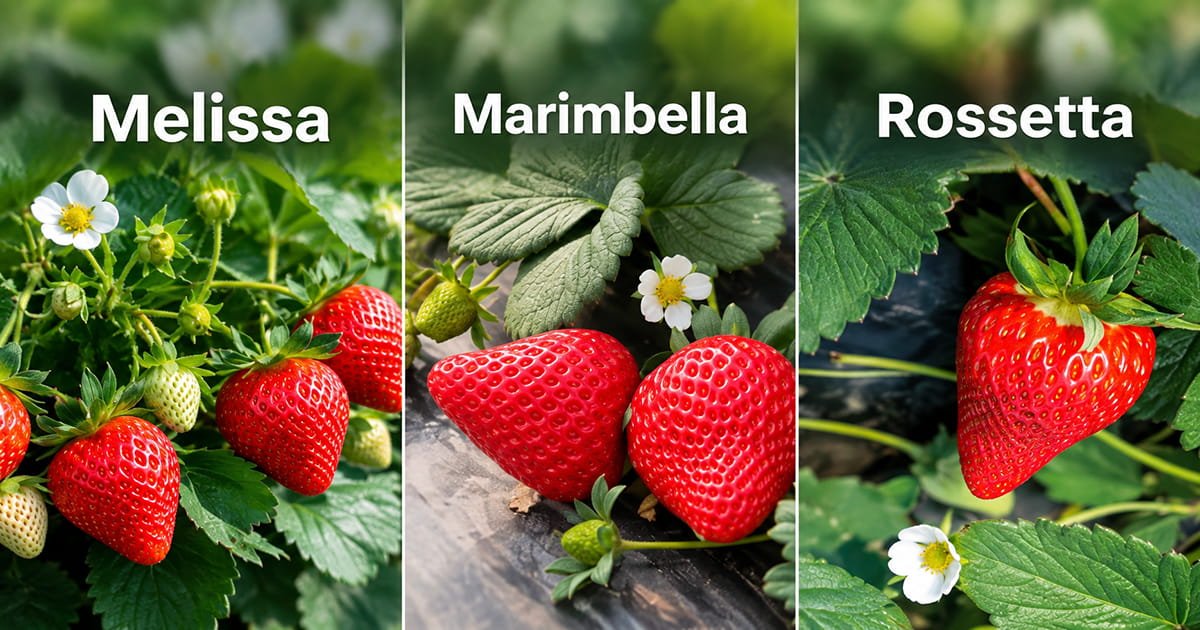
For farmers comparing the best strawberry variety for Uttar Pradesh climate, the temperature discussion from the farm is especially useful. Sunil Ji explains that Melissa and Marimbella perform very well in Mahabaleshwar's temperature conditions.
From October to February, the minimum temperature in the conditions he describes can fall to 4°C, while the maximum remains around 18–22°C. Melissa and Marimbella perform very well during these conditions.
The temperature then rises. In April and May, Sunil Ji says temperatures there can reach 35°C, and Melissa and Marimbella still perform very well. Referring specifically to the discussion about Uttar Pradesh, he says its cold period is also similar and therefore both varieties will perform well there too.
Melissa vs Marimbella vs Rossetta Strawberry Variety
The main distinction made during the Melissa vs Marimbella vs Rossetta strawberry variety discussion is that Rossetta requires more chilling hours, while Melissa and Marimbella are described as performing very well across the Mahabaleshwar temperature conditions discussed by Sunil Ji.
| Variety | What Sunil Ji Says | Temperature / Cold Requirement Discussed |
|---|---|---|
| Melissa | Performs very well in Mahabaleshwar temperature conditions and is also expected to perform well under the similar cold-period conditions discussed for Uttar Pradesh. | Performs very well when minimum temperature reaches 4°C and maximum is around 18–22°C; also performs very well when temperature reaches 35°C in April and May. |
| Marimbella | Performs very well in Mahabaleshwar temperature conditions and is also expected to perform well under the similar cold-period conditions discussed for Uttar Pradesh. | Performs very well when minimum temperature reaches 4°C and maximum is around 18–22°C; also performs very well when temperature reaches 35°C in April and May. |
| Rossetta | Needs more chilling hours and performs well where there is more cold. | No exact number of chilling hours is stated in the farm discussion. |
For the Rossetta strawberry chilling hours requirement, the transcript gives an important limitation: Sunil Ji says Rossetta needs more chilling hours, but he does not give an exact number. So the practical point from this visit is simply that Rossetta is associated with locations having more cold.
How Do You Select Healthy Strawberry Nursery Plants?
To select a healthy strawberry nursery plant, Sunil Ji recommends checking for runners without spots, completely white and well-developed roots, and leaves without black spots.
This is one of the most useful moments of the Mahaberry farm visit. Instead of explaining plant quality only in words, Sunil Ji takes a plant out and shows Peeyush Sir what to inspect.
For anyone asking how to select healthy strawberry nursery plants, the three checks demonstrated at the nursery are straightforward:
- Check the runners: There should be no spots on runners coming from the plant. Sunil Ji says spots can indicate a fungal infection and can create a problem.
- Check the roots: The entire root should be white. The roots should have good growth and should be developed well from both sides. When the roots are completely filled, the plant is good for plantation.
- Check the leaves: There should not be any black spots on the leaves.
These are the three things Sunil Ji specifically tells farmers to keep in mind before taking the plant.
What Are the Most Important Strawberry Plant Root Selection Tips?
The most important strawberry plant root selection tips from Sunil Ji are to look for an entirely white root system, good development from both sides and roots that have completely filled out.
Peeyush Sir also asks whether farmers should judge the plant by the number of leaves or its thickness. Sunil Ji's answer again brings the focus back below the plant.
Having 3–4 leaves is not a problem. The main thing is the root. If the root has developed well, Sunil Ji says the plant will also be good. He specifically points to a proper main root system as the parameter to watch.
That is a useful distinction when standing in front of many nursery plants. Leaf size may be the first thing the eye notices, but Sunil Ji does not use that as the main basis for plant selection.
What Matters in Strawberry Plant Care During the First Month After Transplanting?
During the first month after transplanting, Sunil Ji says the complete focus should be on root development rather than leaf size or vegetative growth.
For the first one month after plantation, the roots are the priority. Sunil Ji explains that the better the roots develop, the better the plant will perform in the next month. After this first month, attention can move toward vegetative growth.
He also makes an important distinction about what farmers see above the plant. Very good vegetative growth in strawberry does not automatically mean that the plant will give more fruit.
According to Sunil Ji, better root development below the plant is connected with better plant performance and with the plant continuing to work for longer. This is why his advice before plantation and after plantation stays consistent: watch the roots.
What Should Farmers Do With Runners After Plantation?
One or two runners may appear in the beginning after plantation, and Sunil Ji says these runners should be cut and thrown away as early as possible.
He explains that when plantation is done in September or October, some rainy weather can still remain. When the weather stays cloudy, runners naturally begin to appear.
So seeing a few runners in the beginning is expected in the conditions Sunil Ji describes. His instruction is not to leave those initial runners on the plant. One or two may come, and they should be removed.
The reason he gives is direct: the earlier the runners are cut, the earlier the plant will come to fruiting.
How Are Strawberry Nursery Plants Packed for Farmers?
At Mahaberry, the tray shown during the visit contains 14 plants, while a normal tray has 70 plants and is cut into sections of 14 plants for safety.
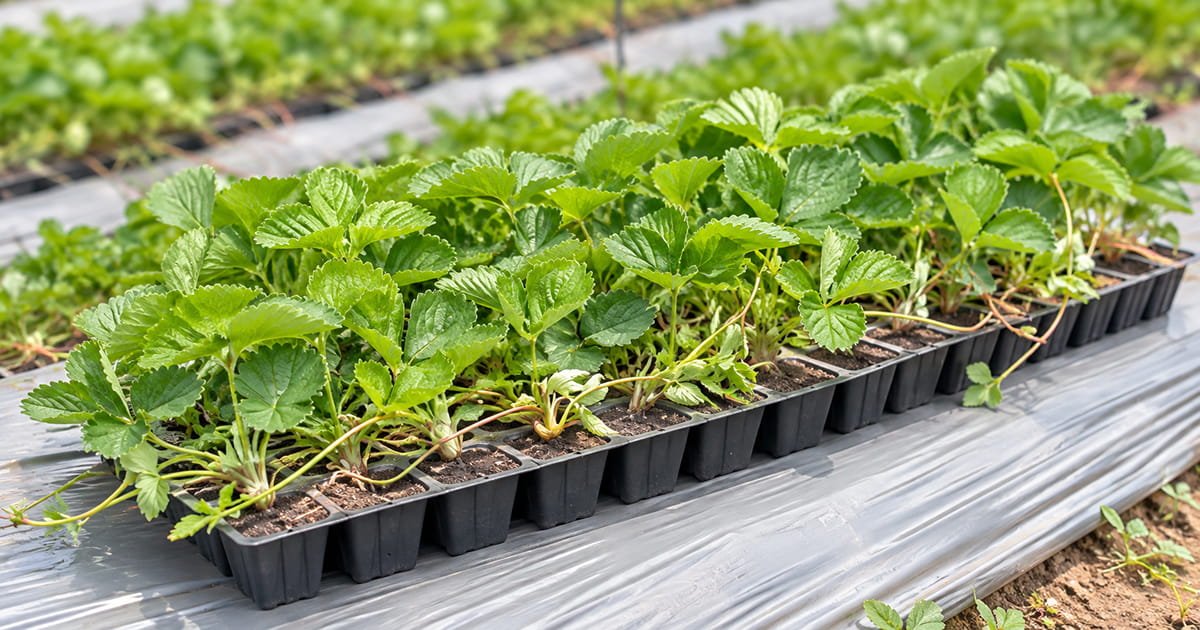
This gives us another behind-the-scenes view of how strawberry nursery plants are prepared before dispatch. When the plants have to travel over a long distance, the trays are packed into cartons.
Around 200–250 plants can fit into one box.
The plants are packed along with the tray. Sunil Ji explains why the tray is not simply removed before packing: if the tray is removed, the cocopeat can open up, become completely loose and not work properly.
So the tray remains with the plant during this packing process.
What Is the Strawberry Nursery Plant Transport Shelf Life?
For the strawberry nursery plant transport shelf life discussed at Mahaberry, Sunil Ji says packed plants can be sent to Lucknow or anywhere in India with no problem for up to 6 days.
But what happens after the carton reaches the farm matters too.
As soon as the plants are unboxed, Sunil Ji says they should be given water if they are dry. They should then be kept like that for one day. Plantation should not be done on the same day the plants are unboxed.
During that day, the plants take up water on their own and become fresh. Plantation can then be done.
What About Large Quantities and Long-Distance Transport?
For a large quantity of strawberry nursery plants, Sunil Ji recommends arranging a direct AC vehicle instead of sending the plants through the normal box-travel process.
His reason is the condition in which the plants arrive. With a direct AC vehicle, he says the plants can reach the destination in the same condition as when they left the nursery.
He also refers to the delay that can normally happen during 10–12 days of travelling. A direct vehicle reduces that delay and helps prevent the plants from losing their strength.
Plants packed in boxes for 5–6 days do not receive sunlight or water during that period, so Sunil Ji says there can be some effect on the plants. With the AC vehicle method he describes, that effect does not occur in the same way and the plants perform well.
What Are the Melissa Strawberry Brix Level and Shelf Life?
The Melissa strawberry Brix level is 10–12, and Sunil Ji says Melissa can easily have a shelf life of up to 5 days compared with the 2–3 days he gives as an example for a normal variety.
Sunil Ji describes Melissa's sweetness as very good and says its shelf life is the best so far. He also explains what he has observed when ripe Melissa fruit remains on the plant.
Even when the ripe fruit is not removed from the plant for 8–10 days, Sunil Ji says it does not lose its water. Instead, it slowly dries in the way a grape dries, becomes sweeter and does not lose its water.
He says both varieties discussed in this part of the conversation are good in terms of shelf life.
When Peeyush Sir asks for a comparison with regular varieties under market conditions, Sunil Ji gives a simple example: a normal variety may last 2–3 days, while Melissa can easily last 5 days.
There is another point he does not want farmers to miss. Strawberry is meant to be eaten fresh. For its natural taste, Sunil Ji says fruit picked today should be eaten within 24–30 hours.
Does Mahaberry Nursery Provide Support After Farmers Take the Plants?
Mahaberry provides guidance to farmers who take plants from the nursery and later face a problem at their farm, according to Sunil Ji.
If a farmer faces a problem, the farmer can make a video call or send a photo. Sunil Ji says they then tell the farmer what needs to be done and which medicine should be used.
Support can go beyond a video call or photograph in some cases. Sunil Ji says that when it is a very large nursery and they are asked to visit, they also make a visit and explain what should be done there.
What Should a Farmer Remember Before Taking Strawberry Nursery Plants?
The main lesson from the Mahaberry nursery Mahabaleshwar visit is to look below the leaves before making a decision. Sunil Ji repeatedly puts root development at the centre of both plant selection and the first month after plantation.
At the nursery, that means looking for completely white, well-developed roots, runners without spots and leaves without black spots. Having 3–4 leaves is not a problem when the root system has developed properly.
Variety selection also needs attention to the conditions discussed during the visit. Melissa and Marimbella perform very well under Mahabaleshwar conditions ranging from a minimum of 4°C and maximum of around 18–22°C in October to February to temperatures reaching 35°C in April and May. Sunil Ji says the similar cold period discussed for Uttar Pradesh means both varieties will perform well there too. Rossetta, on the other hand, needs more chilling hours and performs well where there is more cold.
Once plants are ready to leave the nursery, handling continues to matter. The 70-plant tray shown at Mahaberry is cut into 14-plant sections for safety, and around 200–250 plants can be packed into one box. Plants travel with the tray so the cocopeat does not open up and become loose.
For long-distance dispatch, Sunil Ji says packed plants can travel for up to 6 days. After unboxing, dry plants should receive water and should be kept for one day rather than being planted immediately. For large quantities, he recommends direct transport in an AC vehicle.
And once plantation is done, the focus returns to where this farm visit started: the plant itself. Cut the early runners, concentrate on root development during the first month, and do not judge future performance simply by how much vegetative growth can be seen above the plant.
That is what the visit to Mahaberry Nursery Farm shows about how strawberry nursery plants are prepared: plant selection starts with the roots, continues through careful tray packing and transport, and carries through to the way the plant is handled after it reaches the farmer.
Need Guidance for Strawberry Cultivation?
If you are planning strawberry cultivation and need guidance on nursery plants, variety selection, plant quality, transport or plantation, connect with AgriFirst.
Contact AgriFirst