Proper plant support is an important part of greenhouse cultivation, especially for crops such as cucumber and capsicum that are grown using trellising systems. As plants grow upward, they need to remain connected to their supporting twine. Plastic trellis clips make this process easier by holding the plant stem and twine together.
Trellis clips for plants are small plastic fasteners with a strong gripping mechanism. They are easy to attach and help farmers secure plants during routine trellising work. These clips can be used in greenhouses, polyhouses, and net houses where crops are trained using supporting twine.
Although the clips are simple to use, their placement matters. Positioning them correctly, using the required number, and understanding how their role changes as plants grow are important parts of managing plant support.
What Are Trellis Clips for Plants?
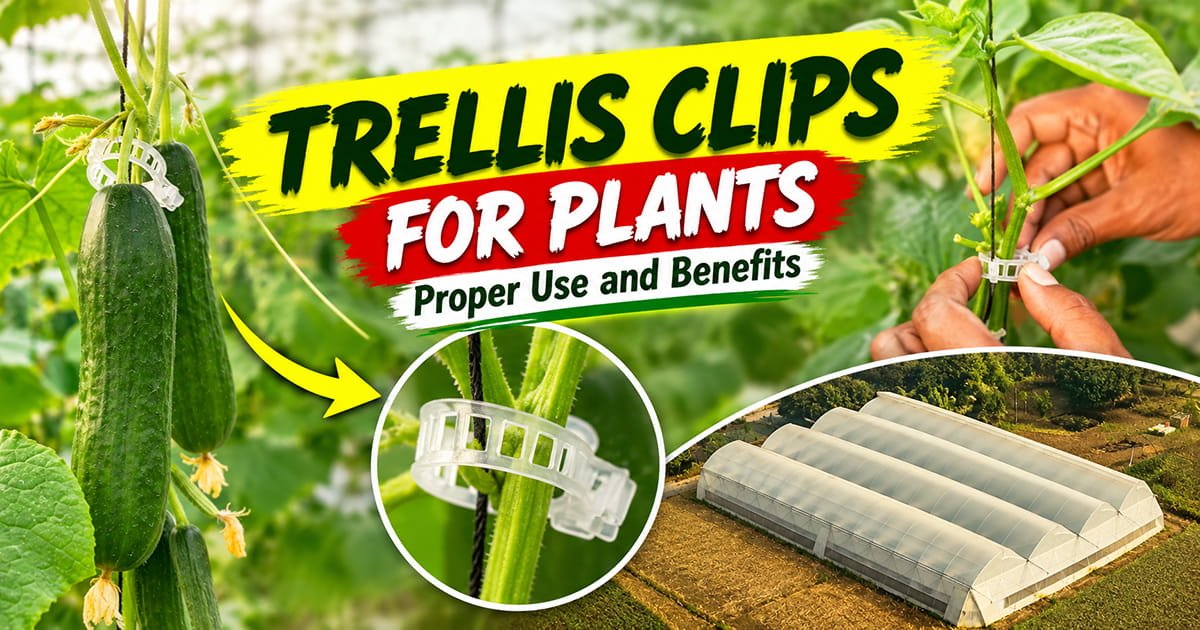
Trellis clips are clear plastic clips used to fasten plant stems to trellising twine. Each clip has a locking mechanism that holds the stem and supporting twine together, helping keep the plant supported during upward growth.
These plant support clips are suitable for cucumber, capsicum, and other crops grown with a trellising arrangement. Their strong grip helps maintain the connection between the plant and twine, while the simple locking design makes attachment quicker.
For farmers handling regular plant training, clips provide a convenient way to secure stems without making the attachment process complicated.
How to Use Trellis Clips for Plants Correctly
The most important part of using a trellis clip is choosing the correct position on the plant stem. In this trellising method, the clip is placed just below a node.
A node is the point on the stem where leaves or branches emerge. Identifying this point helps farmers position the clip correctly.
To attach the clip, bring the plant stem and supporting twine together. Position the clip immediately below the node and close it until the locking mechanism secures the stem and twine.
Placing the clip below the node makes it easier to lock and provides support at the intended position. The strong grip helps keep the plant connected to the twine during growth.
This placement method can be followed for cucumber, capsicum, and other suitable trellised crops. Rather than fastening clips at random positions, farmers should identify the node before attaching each clip.
How Many Trellis Clips Are Needed Per Plant?
In the trellising method discussed here, approximately 3 to 4 clips are used per plant.
The clips are attached at different positions along the stem as the plant grows upward. Each clip connects the plant to its supporting twine, helping maintain the required support.
This does not mean a clip must be attached at every node. The number of clips used is related to the plant's growth and support requirements.
The figure of 3 to 4 clips is specific to the method described here. It should not be considered a fixed requirement for every crop or trellising system.
Managing Trellis Clips as Plants Grow Upward
Plant support requirements change as the crop grows. A clip that is useful during an earlier stage of trellising may not be needed in the same position later.
In the method described here, the lower clips eventually become unnecessary as the plant continues growing upward. However, the plant must still have adequate support before any clip is removed or repositioned.
Farmers should therefore check the position and requirement of clips as part of regular trellising work. The purpose is to maintain suitable support as the plant develops rather than treating clip attachment as a one-time activity.
Trellis Clips for Cucumber, Capsicum and Other Crops
Plastic trellis clips are not limited to one crop. They can be used for cucumber, capsicum, and other plants grown with suitable trellising systems.
Cucumber: Trellis clips help attach cucumber stems to supporting twine during upward growth. The clip holds the stem and twine together, providing support as the plant develops.
Capsicum: In capsicum cultivation, the same type of plastic clip can be used to connect the plant stem to trellising twine. Its locking mechanism makes the attachment process straightforward.
Other trellised crops: These clips can also be used for other crops where a suitable twine-based plant support system is followed. Their application depends on the crop and its trellising arrangement.
Benefits of Using Plastic Trellis Clips
Plastic trellis clips offer several practical benefits during greenhouse plant training:
- Strong grip: Holds the plant stem and supporting twine securely together.
- Easy attachment: The locking mechanism makes clips simple to apply during trellising.
- Time and labour efficiency: Quick attachment can reduce the time required to secure plants to twine.
- Plant support: Helps maintain the connection between the growing plant and its trellising system.
- Multiple crop applications: Can be used for cucumber, capsicum, and other suitable trellised crops.
Conclusion
Trellis clips are a practical option for attaching plants to supporting twine in greenhouse cultivation. Their strong grip and simple locking mechanism make regular trellising work easier.
Correct placement is essential. In the method discussed here, clips are positioned just below a node, with approximately 3 to 4 clips used per plant. As the plant grows upward, the requirement for clips at lower positions may change.
Whether used for cucumber, capsicum, or other trellised crops, these small plastic clips can help farmers manage plant support more efficiently.
Planning a Polyhouse or Net House Project?
From planning your protected cultivation project to agronomy support after setup, AgriFirst helps farmers at every stage. Connect with AgriFirst to discuss your polyhouse or net house project and crop management requirements.