When Growth Means Changing Direction, Not Just Increasing Size
Every successful farming project eventually leads to another important decision—whether to continue with the same crop or explore a completely new opportunity. After spending two years managing coloured capsicum under protected cultivation, Rajeev Singh and his family reached exactly that point.
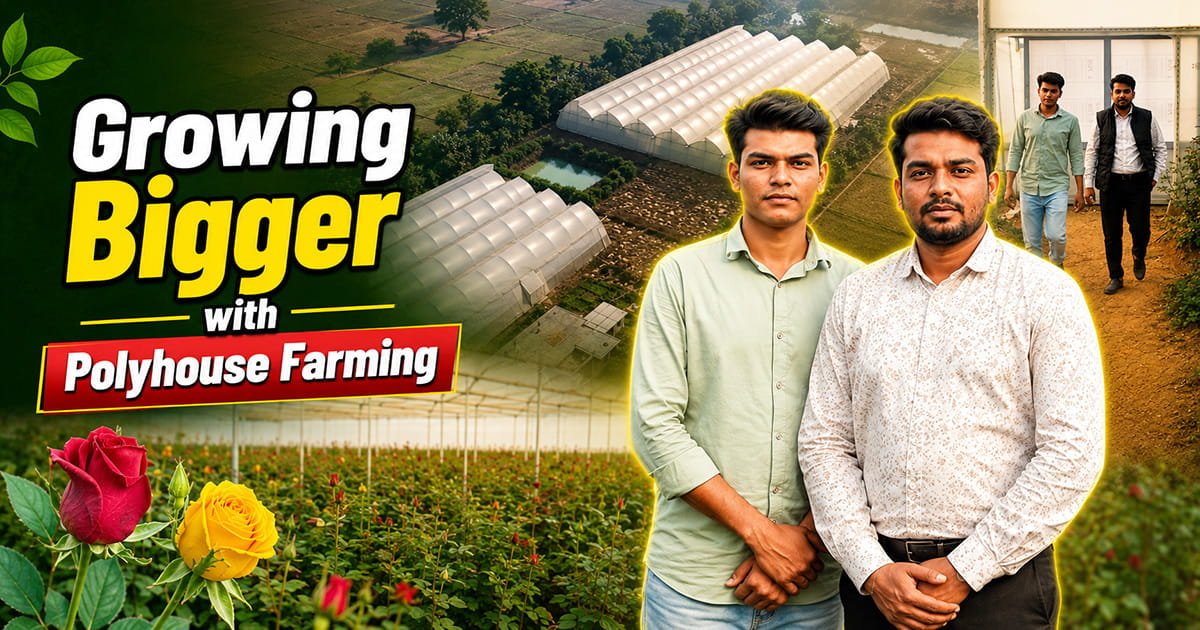
Instead of repeating what they had already achieved, the family decided to reshape their farming strategy. Their next project was designed not only to increase protected cultivation capacity but also to diversify into commercial floriculture. That decision led to the establishment of a new one-acre polyhouse dedicated to Dutch rose cultivation, creating a farming operation that now manages two different commercial crops under protected conditions.
Their second investment was built on a simple idea explained by Deepak Singh: expansion alone was not enough. The family also wanted to diversify their farming business by entering commercial floriculture through Dutch rose cultivation.
For growers exploring modern greenhouse and polyhouse farming, this experience offers an opportunity to understand how expansion decisions can be shaped by production performance, crop selection and long-term business planning rather than simply increasing cultivated area.
The Expansion Plan Started with a Different Objective
Deepak Singh, Rajeev's elder brother, explains that the family's next investment was never intended to be a simple extension of their existing project. By the time they began discussing expansion, they had already spent two years working in protected cultivation and had gained practical experience managing coloured capsicum inside a naturally ventilated polyhouse.
According to Deepak, increasing the protected cultivation area was only one part of the plan. The bigger objective was diversification. Rather than establishing another vegetable polyhouse, the family decided to enter commercial floriculture by growing Dutch roses. This approach allowed them to expand their farming business while introducing an entirely different crop with its own production cycle and market.
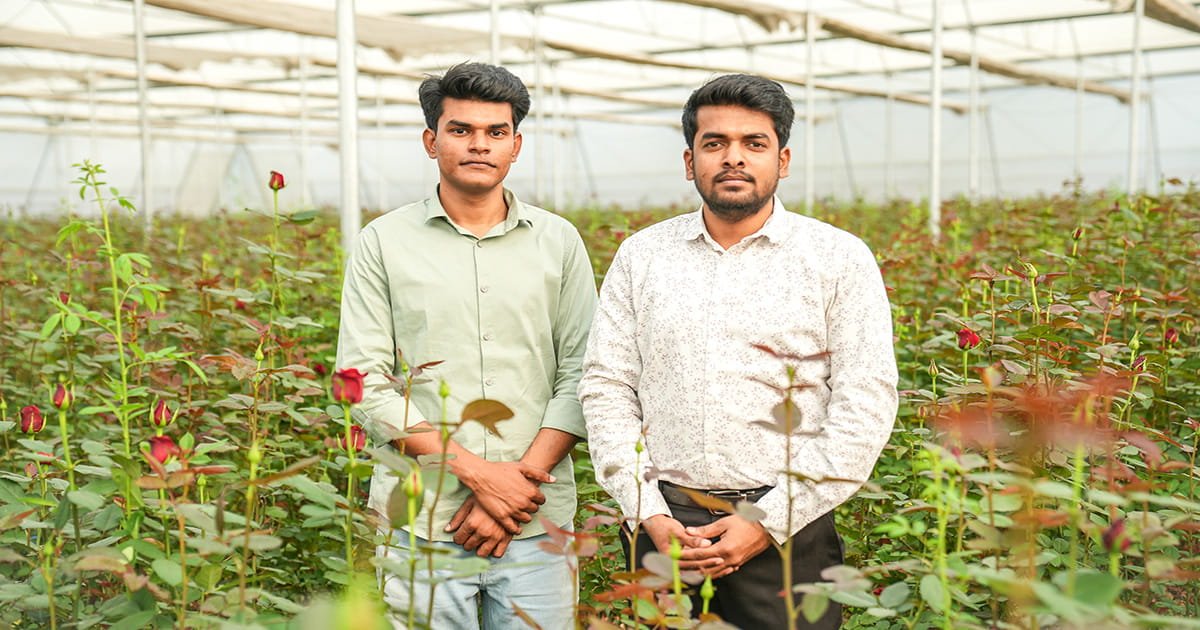
Before making another investment, the family first evaluated how their coloured capsicum crop had performed over two years of cultivation. Instead of changing direction immediately after their first project, the family evaluated the results of their existing crop before making another investment. Once they were satisfied with its performance, they moved ahead with a second commercial polyhouse focused on Dutch rose cultivation.
How Coloured Capsicum Influenced the Next Investment
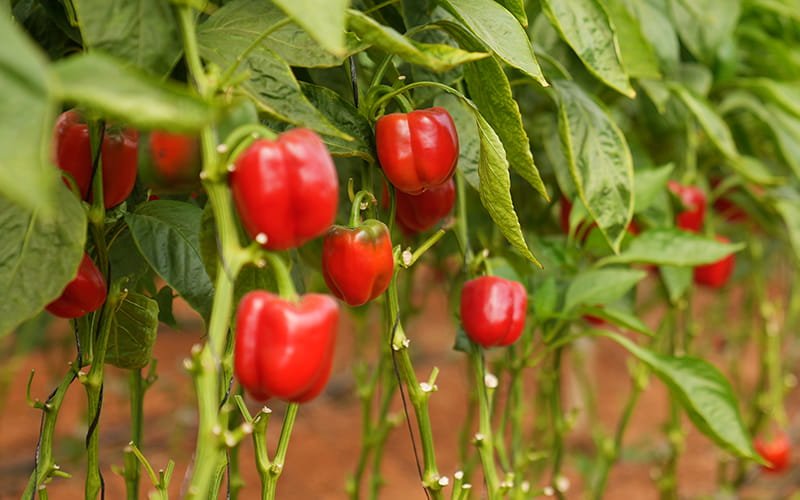
The results from coloured capsicum became the starting point for the family's next investment. Their first naturally ventilated polyhouse accommodated around 6,000 red and yellow coloured capsicum plants. Over two years of cultivation, the farm achieved an annual average production of approximately 12 to 13 tonnes, according to Deepak Singh.
Market prices varied throughout different harvesting periods. The average selling price generally remained between ₹120 and ₹140 per kilogram, while the overall average worked out to around ₹120–₹130 per kilogram. During periods of stronger demand, prices reached ₹250–₹300 per kilogram. At other times, market rates declined to around ₹60–₹70 per kilogram.
Deepak explains that receiving a good response from the coloured capsicum crop strengthened the family's decision to expand. Rather than increasing production of the same crop, they chose to diversify their protected cultivation activities by establishing a separate one-acre Dutch rose polyhouse, opening the door to commercial flower production alongside vegetable cultivation.
Choosing Dutch Roses Marked a New Chapter
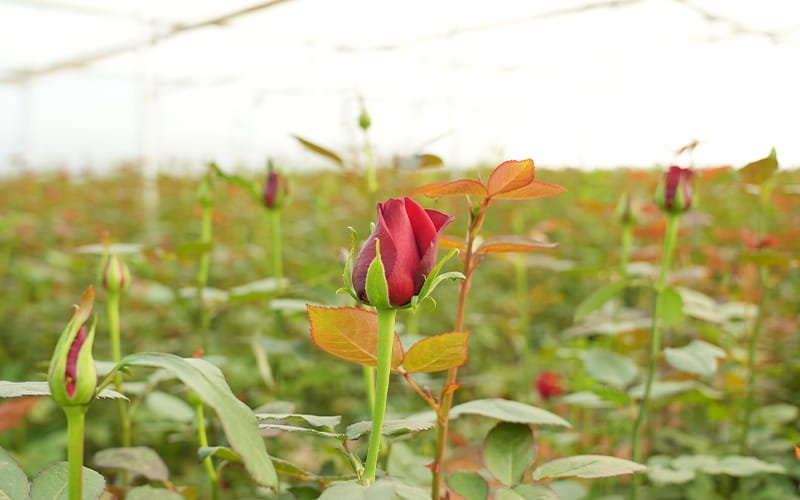
Once the family decided to expand, the next question was what to grow inside the new polyhouse. Instead of selecting another vegetable crop, they chose Dutch roses. According to Deepak Singh, the objective was not merely to increase cultivation area but to diversify their farming business by entering commercial floriculture after two years of protected cultivation experience.
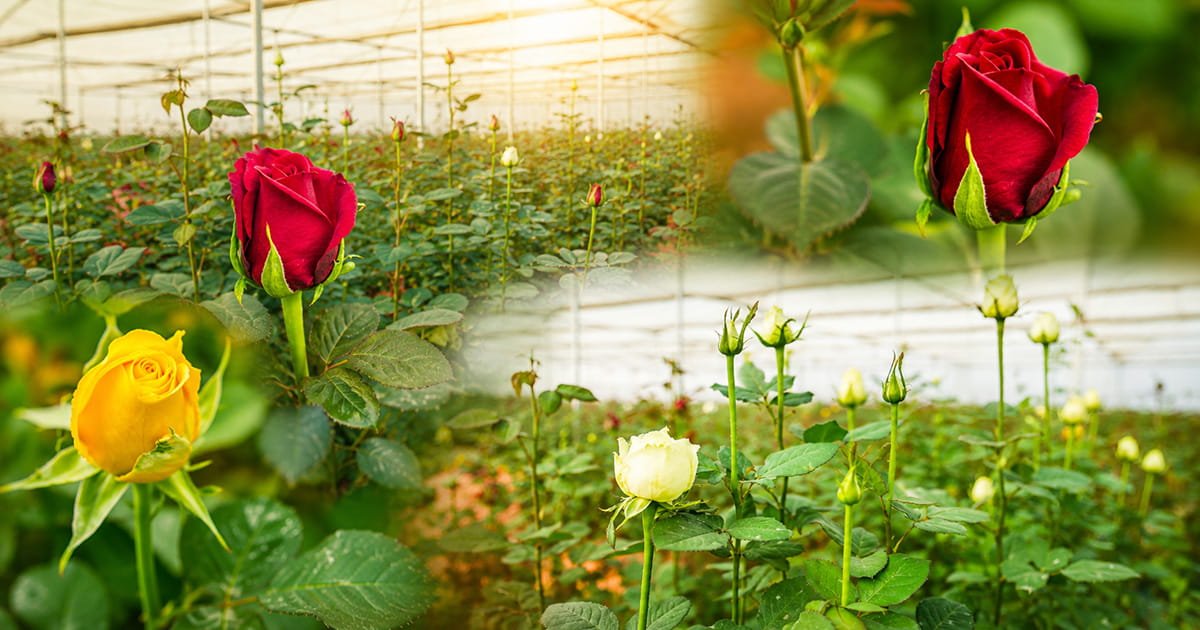
From that point onwards, one polyhouse remained dedicated to coloured capsicum while the newly constructed project focused entirely on Dutch roses. The first polyhouse continued producing coloured capsicum, while the second project was planned exclusively for Dutch rose cultivation. By introducing a completely different crop, the family expanded into another high-value segment of protected cultivation instead of depending on a single production system.
Establishing the One-Acre Dutch Rose Polyhouse
Rajeev Singh explains that construction of the new one-acre polyhouse was completed in June. Soon after the structure was ready, plantation work was carried out and completed by the 25th–26th of June. With the crop established, the focus shifted entirely towards preparing the plants for healthy growth before commercial harvesting could begin.
Once plantation was completed by 25–26 June, the family's attention shifted towards preparing the crop before commercial harvesting could begin.
The First Three Months Focused on Establishing the Crop
According to Rajeev Singh, harvesting did not begin immediately after plantation. The crop required approximately three months before the first commercial harvest. During this period, the family carried out the necessary cultural practices to help the plants develop properly inside the polyhouse.
Among the activities performed during this stage were bending and regular crop management. These operations continued throughout the crop establishment period until the plants entered commercial production. Once harvesting began, the polyhouse moved into its regular production cycle.
A Production Cycle Built Around Regular Flushes
Rajeev Singh explains that after production starts, Dutch rose harvesting follows a regular flush pattern. Each flush generally arrives after an interval of approximately 40 to 60 days, creating a structured harvesting schedule throughout the production period.
During every production cycle, the family harvests around 55,000 to 60,000 flower sticks. These figures reflect the output of their one-acre Dutch rose polyhouse once the crop reaches its regular harvesting stage. Consistent production across successive flushes has become an important part of managing the family's second protected cultivation project.
Understanding Dutch Rose Prices in Commercial Floriculture
Unlike many agricultural commodities, flower prices can vary significantly depending on demand. Rajeev Singh explains that Dutch rose prices continue to fluctuate throughout the marketing season, making market conditions an important factor once harvesting begins.
According to Rajeev, the farm has sold Dutch roses for as much as ₹300 per bunch. Since one bunch contains 20 flowers, the value of each flower stick generally works out to approximately ₹8 to ₹12. During favourable market conditions, individual flower sticks have also fetched around ₹15 each.
Managing Two Commercial Polyhouses on the Same Farm
Today, Rajeev Singh and his family operate two commercial polyhouses in Mirzapur. The first is a half-acre naturally ventilated polyhouse dedicated to coloured capsicum cultivation, while the second is a one-acre polyhouse developed exclusively for Dutch rose farming.
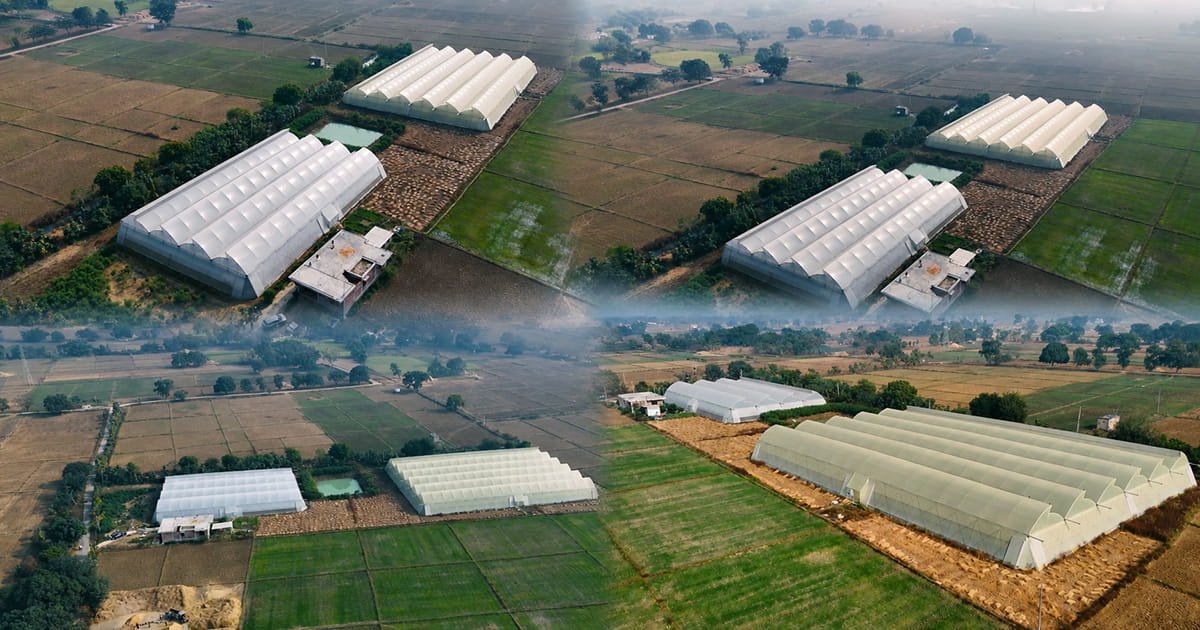
Instead of replacing one crop with another, the family expanded their farming operation by introducing a second protected cultivation project. The two projects now run alongside each other, with coloured capsicum continuing in the first polyhouse and Dutch roses cultivated in the second.
How AgriFirst Supported Both Polyhouse Projects
Deepak Singh shares that both of their commercial polyhouses were constructed by AgriFirst. Reflecting on their experience, he says the first project was completed with excellent construction quality and within the committed timeline. The subsidised polyhouse was established with support from the Horticulture Department (Udyan Vibhag) along with AgriFirst.
When the family decided to establish the second one-acre polyhouse, they again chose AgriFirst. According to Deepak, the project was completed professionally and on schedule, allowing plantation to begin on time and helping the family take advantage of the production season as planned.
Deepak says Rajeev's dedication over the last two years, together with AgriFirst's continuous support, helped everything progress smoothly and deliver encouraging results.
Readers interested in learning from similar protected cultivation journeys can explore more farmer success stories that showcase different approaches to commercial farming under protected conditions.
A Practical Message for Farmers Planning Expansion
Deepak Singh has one clear message for farmers interested in protected cultivation.
His advice is straightforward. Polyhouse farming demands dedication, commitment and consistent management. According to him, these qualities are essential for anyone planning to establish or expand a protected cultivation project, regardless of the crop they choose.
Growth Through Diversification, Not Duplication
Rajeev Singh's second commercial polyhouse represents a different stage of his farming journey. Instead of repeating an already successful model, the family expanded into Dutch rose cultivation while continuing their coloured capsicum project. This approach allowed them to diversify their protected cultivation business without moving away from the experience they had already built.
For Rajeev Singh and his family, expansion did not mean repeating what had already worked. It meant adding a completely new crop while continuing to strengthen the first project.
For farmers considering the next step in protected cultivation, every expansion should begin with careful planning, realistic expectations and a clear understanding of the crop they intend to grow. If you would like to explore modern protected cultivation solutions or discuss your own expansion plans, you can connect with the team through the AgriFirst Contact Page.