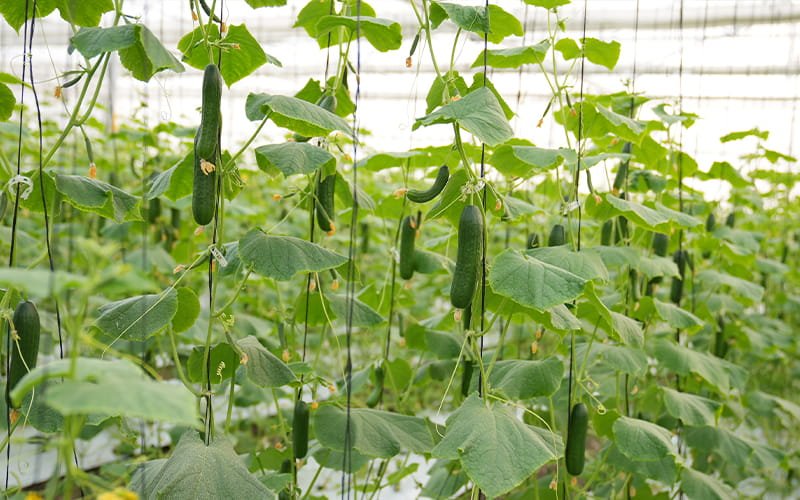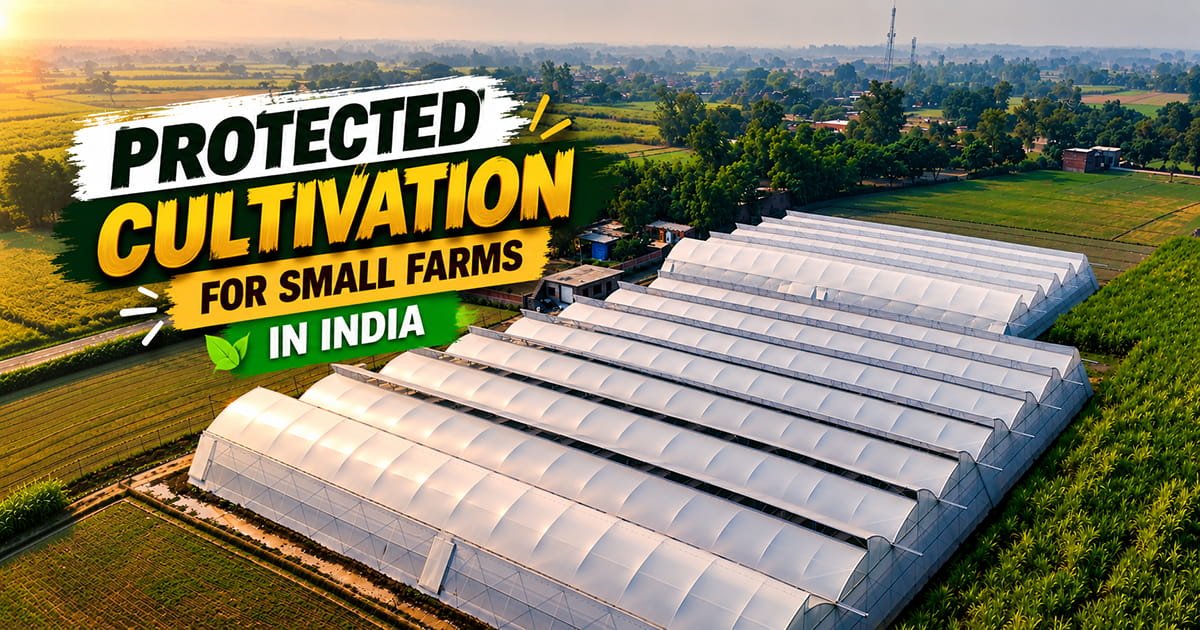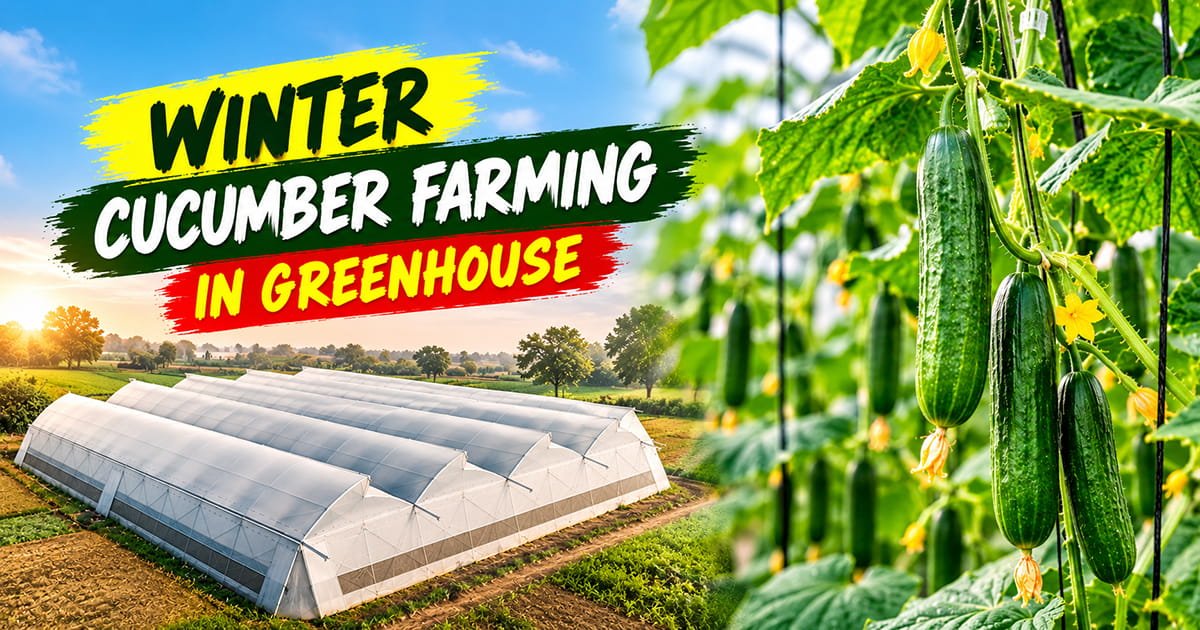
Winter cucumber farming in greenhouse conditions gives growers in North India an opportunity to cultivate cucumbers between October and March. Although the main cucumber growing season in the region begins around March and April, protected cultivation also allows farmers to grow cucumbers during winter. This creates an opportunity to earn good returns when the crop is managed properly.
Growing cucumbers during winter requires particular attention to irrigation, greenhouse humidity, leaf growth, fertigation, harvesting and trellising. Large cucumber leaves contribute to moisture accumulation, while falling night temperatures can lead to condensation on leaf surfaces. Cucumber vines also need proper support as they grow beyond the upper trellising wire.
For farmers growing cucumbers under greenhouse and polyhouse structures, understanding these crop management practices is essential for handling the challenges of winter cultivation.
Winter Cucumber Cultivation in North India
In North India, cucumber cultivation is generally associated with the March and April growing period. However, greenhouse cultivation makes it possible to grow cucumber crops from October through March, giving farmers another cultivation opportunity during the colder months.
The growing environment inside the greenhouse becomes especially important during winter. As night temperatures fall, moisture conditions change. Cucumber plants also develop large leaves and considerable vegetation, which influence humidity inside the structure.
Successful winter cucumber crop management depends on maintaining suitable irrigation, controlling excessive vegetation and supporting plant growth throughout the cultivation period. These practices become particularly relevant as temperatures decrease and cucumber plants continue developing.
Cucumber Irrigation Management During Winter
Proper cucumber irrigation management during winter means supplying water according to the plant's requirements rather than irrigating excessively. Too much water can create problems, particularly when greenhouse moisture conditions are already affected by colder night temperatures.
The main consideration is to maintain an optimum level of irrigation. Water should be supplied when the cucumber plants require it, without continuing unnecessary irrigation.
During winter, irrigation management is closely connected with humidity inside the greenhouse. The amount of water supplied, the vegetation maintained on the plants and the falling night temperature all influence moisture conditions.
Farmers should therefore pay attention to plant water requirements while managing the growing environment. Avoiding excessive irrigation is an important part of winter cucumber farming because water management affects more than the immediate water supply to the crop.
Managing Cucumber Leaves, Greenhouse Humidity and Moisture Condensation
Cucumber plants develop large leaves and considerable vegetation as they grow. This vegetation influences moisture conditions inside the greenhouse because leaves contribute to moisture movement into the surrounding air.
When excessive vegetation remains on the plants, moisture accumulation can increase. During winter, greenhouse temperatures fall at night, and moisture present in the air can condense on cucumber leaf surfaces.
Moisture collecting on leaves creates conditions in which disease problems may develop. For this reason, greenhouse humidity management should consider both irrigation and the amount of vegetation maintained on cucumber plants.
The connection between these factors is straightforward: excessive vegetation contributes to moisture accumulation, while falling night temperatures can cause that moisture to condense on leaves. Excessive irrigation can make moisture management more difficult.
Managing excessive leaf growth and maintaining optimum irrigation are therefore important practices for reducing humidity-related concerns during winter cucumber cultivation.
Cucumber Fertigation and Timely Harvesting During Winter
Along with irrigation and humidity management, proper cucumber fertigation is an important part of greenhouse crop management. Cucumber fruits develop rapidly, making continued attention to fertigation necessary throughout the growing period.
Farmers need to maintain proper fertigation while keeping irrigation aligned with plant requirements. Fertigation and water management should receive attention together, without supplying excessive water.
Why Timely Cucumber Harvesting Matters
Cucumber fruits grow quickly, so their development and size need regular attention. Once a fruit reaches its optimum size, it should be harvested rather than remaining on the plant beyond the intended harvesting stage.
Timely harvesting allows farmers to pick cucumber fruits at the appropriate size. Maintaining proper fertigation and harvesting fruits when they reach their optimum size are both important parts of managing the winter cucumber crop.
Cucumber Trellising in Greenhouse Cultivation
Cucumber trellising provides support to vines as they grow upward inside the greenhouse. Because cucumber vines continue increasing in length, growers need to manage their direction once they reach and extend beyond the upper trellising wire.
When a cucumber vine crosses the upper wire, it needs to be brought down carefully. Allowing the vine to bend directly over the supporting wire can affect its continued growth.
To manage the vine's direction, the two supporting wires are brought closer together. The cucumber vine is then guided from the inside towards the outside, allowing it to continue growing beyond the upper support without bending directly against the wire.
This trellising practice is particularly relevant when cucumber vines have already crossed the supporting wire before the winter season. The position of the vine and the point where it changes direction both require attention.
Why Cucumber Vines Should Not Bend Over Trellising Wires
Cucumber vines should not bend directly over the upper trellising wire because bending at this point can affect their future growth. Proper support is needed where the vine changes direction.
When a vine grows above the supporting wire, simply pulling it downward without supporting the bending point can create problems. The vine needs to be positioned carefully as it moves from the upper trellising area towards the outside.
The objective is to maintain support at the point where the vine changes direction. This helps prevent the vine from bending directly against the wire while allowing its continued growth to be managed.
Using Plant Support Clips for Cucumber Trellising
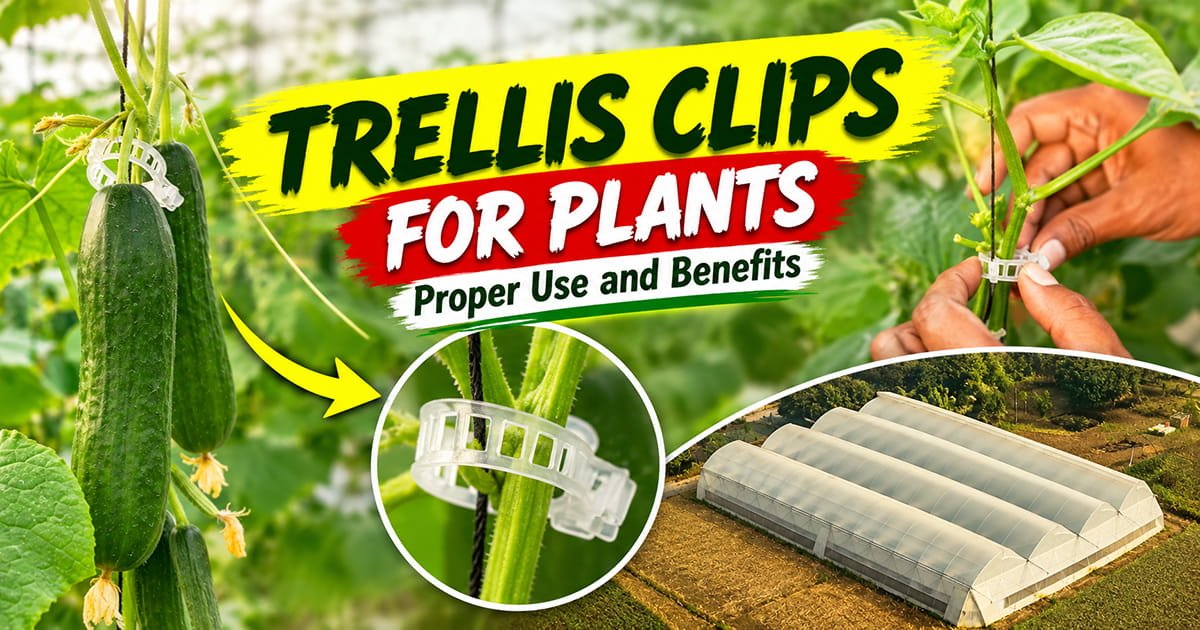
Plant support clips are used in cucumber trellising to support vines near the upper trellising wire. When a cucumber vine is guided outward after crossing the wire, a clip helps prevent bending at the point where its direction changes.
How Plant Support Clips Help Cucumber Vines
Once the cucumber vine reaches the upper trellising area, the two supporting wires are brought closer together. The vine is directed from the inside towards the outside, and a plant support clip is applied to support it near the wire.
The clip helps prevent the vine from bending directly over the supporting wire. This is important because bending at that point can affect future vine growth.
Using a plant support clip allows farmers to manage the vine's direction while maintaining support where it is needed. This makes clip placement an important consideration when cucumber vines extend beyond the upper trellising structure.
Conclusion
Winter cucumber farming in greenhouse conditions requires careful management of both the growing environment and the developing crop. Irrigation should follow plant requirements, while excessive vegetation and moisture accumulation need attention as night temperatures fall.
Proper fertigation, harvesting cucumbers at their optimum size and supporting vines as they cross the upper trellising wire are equally important. By focusing on these practices, farmers can manage the key challenges associated with winter cucumber cultivation in North India.
Planning a Polyhouse or Net House Project?
AgriFirst provides polyhouse and net house solutions along with agronomy support for protected cultivation. Whether you are planning a new greenhouse cucumber farming project or need agronomy support for an existing protected cultivation farm, our team can help you with your requirements.
Contact AgriFirst for Polyhouse Planning and Agronomy Support →