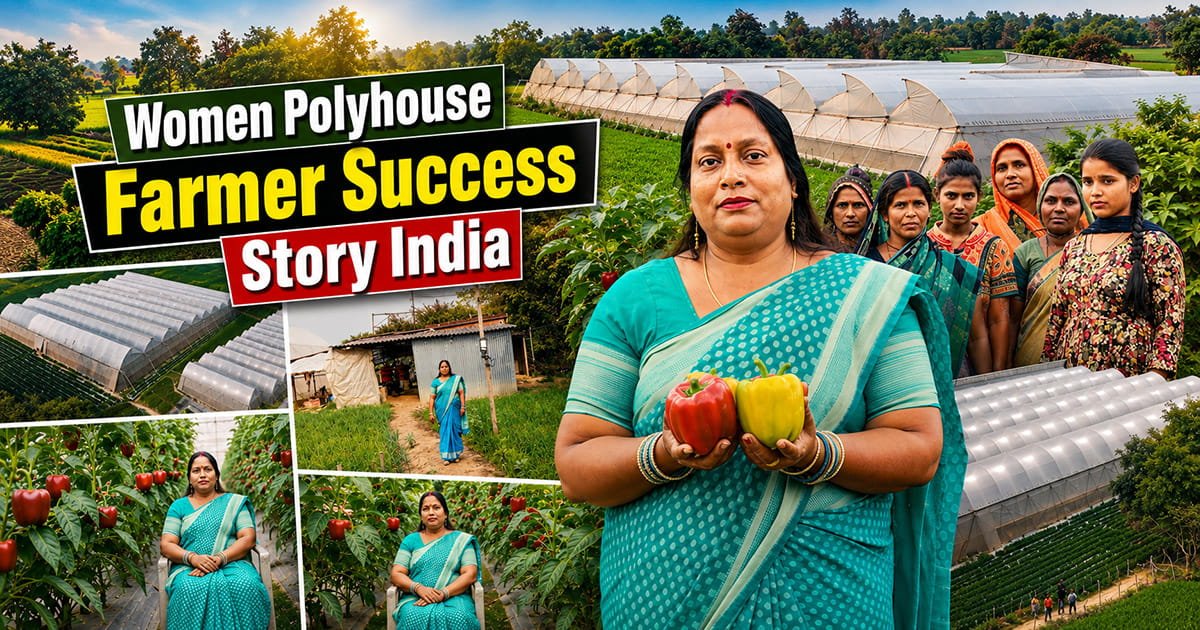
Reena Singh from Lucknow, Uttar Pradesh, is an M.A. and B.Ed. graduate whose curiosity about modern farming transformed her into one of India's recognised women in protected cultivation. After planning a career in teaching, marriage and family responsibilities took priority. Years later, while searching for meaningful work of her own, she discovered hi-tech farming through YouTube videos. That decision eventually led her to establish two one-acre polyhouses, cultivate Gerbera flowers and later red and yellow capsicum, and earn recognition from the Hon'ble Governor of Uttar Pradesh, Smt. Anandiben Patel, for her achievements in protected cultivation and for creating livelihood opportunities for women in her community.
Since establishing her polyhouses in 2018, Reena has worked closely with AgriFirst for technical guidance and agronomy support. From her first Gerbera crop to today's coloured capsicum cultivation, the relationship has continued for nearly a decade.
This women polyhouse farmer success story India is not centred on investment calculations or project economics. Instead, it follows the real journey of an educated woman who entered agriculture through continuous learning, practical experience, and scientific farming. Her story demonstrates how protected cultivation became not only a farming practice but also a platform for entrepreneurship, community development, and long-term livelihood creation.
"My goal was to build something of my own. While learning about farming, I realised protected cultivation offered an entirely different way of growing crops compared to traditional farming."
Who Is Reena Singh?
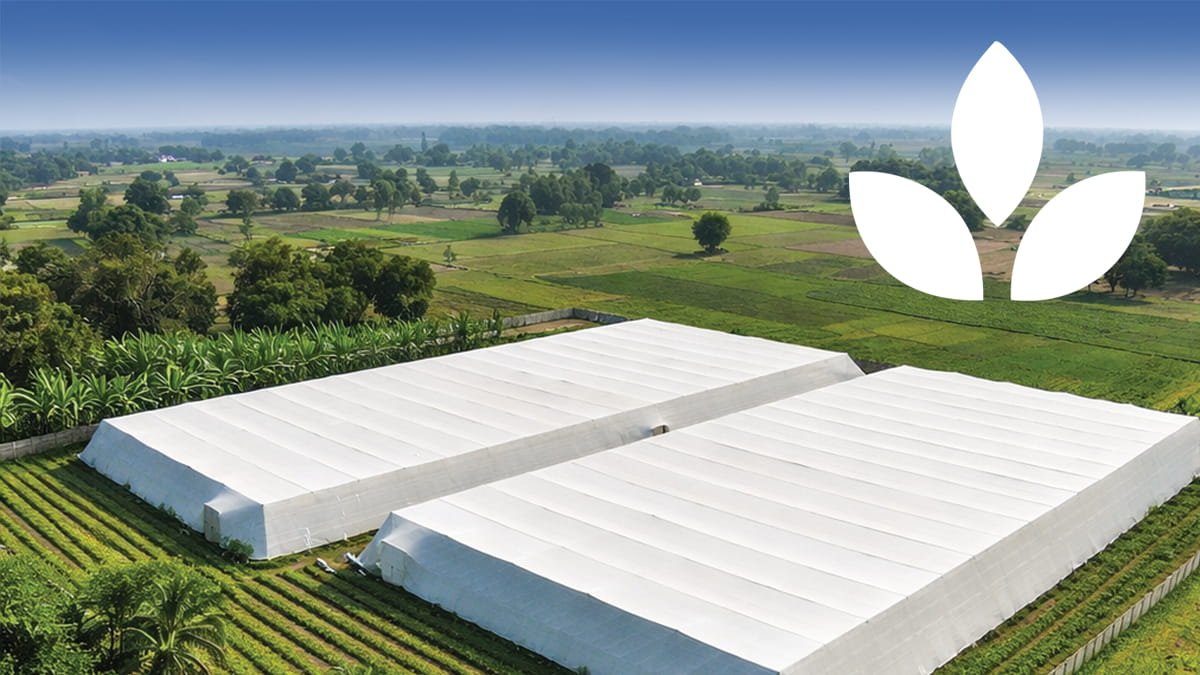
Reena Singh is a woman farmer from Lucknow, Uttar Pradesh, who manages two polyhouses covering a total of two acres. Today she cultivates red and yellow capsicum, while her first protected cultivation crop was Gerbera flowers. Alongside her polyhouse operation, she also grows strawberries, cucumbers, chilies, and green bell peppers in the open field, creating a diversified farming system.
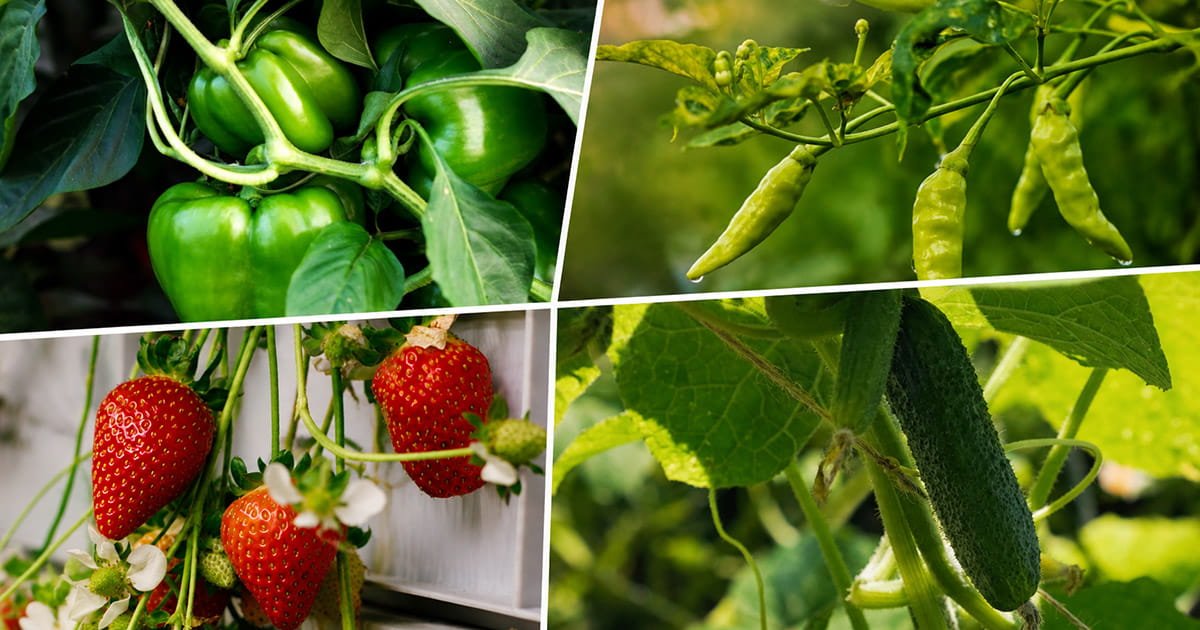
Her educational background is different from what many people expect in commercial agriculture. After completing her M.A. and B.Ed., she planned to become a teacher. At that stage, farming was not part of her career plan. However, her childhood memories of planting saplings with her father remained with her, quietly shaping an interest that would later influence one of the biggest decisions of her life.
After marriage and raising her children, Reena reached a stage where she wanted to create something independently. Rather than returning immediately to teaching, she began exploring new opportunities. During this period, she spent time watching educational farming videos, learning about modern agriculture, and understanding how protected cultivation differed from conventional farming.
Before taking her first step, Reena spent considerable time watching educational YouTube videos about protected cultivation, understanding crop management practices, and learning how modern farming differed from conventional agriculture.
How a Search for Something Meaningful Led to Protected Cultivation
Reena's entry into agriculture did not happen because she inherited a commercial farming business. It began with curiosity. She wanted to understand whether farming could become a structured profession rather than simply depending on seasonal practices. Through continuous learning, she discovered concepts such as protected cultivation, climate-controlled farming, and scientific crop management.
The more she learned, the more she realised that modern farming was evolving. Instead of relying entirely on unpredictable weather conditions, protected cultivation allows farmers to create a better growing environment where irrigation, nutrition, crop health, and overall management can be handled more systematically.
This approach appealed to her because it combined agriculture with planning, observation, and continuous learning—qualities she valued throughout her academic life. Rather than seeing farming as uncertain work, she began seeing it as a professional enterprise that rewarded knowledge, discipline, and consistent management.
Farmers interested in understanding different protected cultivation systems can explore AgriFirst's greenhouse and polyhouse solutions to learn about various structure options used for high-value crop cultivation.
Why Reena Chose Polyhouse Farming Over Conventional Farming
Before investing in protected cultivation, Reena compared it with traditional open-field farming. One difference stood out immediately. Open-field crops remain exposed to hot winds, cold weather, storms, rainfall, insects, and pest attacks. These factors can directly affect plant health and crop quality throughout the season.
Inside a polyhouse, however, the growing environment can be managed much more effectively. Crop nutrition, irrigation scheduling, plant protection, and routine monitoring become more structured, helping farmers reduce several environmental risks associated with conventional cultivation.
This practical advantage convinced Reena that protected cultivation offered a better long-term direction for her farming ambitions. Instead of simply growing crops, she wanted to build a farming enterprise based on planning, consistency, and continuous improvement.
Looking back, Reena remembers that the initial investment felt like a huge responsibility. In 2018, when the polyhouse project began, she often wondered whether such a significant investment would succeed. As the crops performed well year after year, those early doubts gradually turned into confidence, reinforcing her belief that careful planning and consistent management can make modern farming a sustainable profession.
"In open-field farming, weather becomes part of every decision. Inside a polyhouse, I found a system where crop management could be planned much more effectively."
For readers interested in understanding how protected cultivation is adopted for commercial-scale farming across different crops, AgriFirst's guide on commercial polyhouse farming provides additional background.
Her Journey at a Glance
| Stage | Milestone |
|---|---|
| Childhood | Developed an interest in plants while planting saplings with her father. |
| Education | Completed M.A. and B.Ed. with plans to pursue a teaching career. |
| Family Life | Focused on marriage and raising her children before looking for an independent career. |
| Learning Phase | Studied modern farming through YouTube and developed an interest in protected cultivation. |
| 2018 | Established two one-acre polyhouses and began Gerbera cultivation. |
| Next Phase | Transitioned from Gerbera flowers to red and yellow capsicum. |
| Recognition | Honoured by the Hon'ble Governor of Uttar Pradesh for achievements in protected cultivation and empowering women through agriculture. |
🌱 Did You Know?
Reena Singh originally planned to become a teacher after completing her M.A. and B.Ed. It was only after watching educational videos on modern farming and protected cultivation that she decided to establish her own polyhouse farming enterprise.
Building a Farming Enterprise One Step at a Time
Reena's story demonstrates that successful farming is rarely the result of a single decision. It evolved through continuous learning, practical experience, careful planning, and a willingness to adopt modern agricultural practices. Rather than entering farming with years of commercial experience, she built confidence gradually by understanding each stage before moving to the next.
That step-by-step approach laid the foundation for everything that followed—from successfully cultivating Gerbera flowers to later managing red and yellow capsicum under protected conditions. The next phase of her journey shows how those early decisions shaped a long-term farming enterprise.
Beginning Her Protected Cultivation Journey with Gerbera Flowers
Every successful farming enterprise has a starting point, and for Reena Singh, that beginning came in 2018 when she established her two one-acre polyhouses and selected Gerbera flowers as her first commercial crop. Rather than immediately choosing vegetables, she decided to begin with a high-value floriculture crop that would allow her to understand protected cultivation in depth.
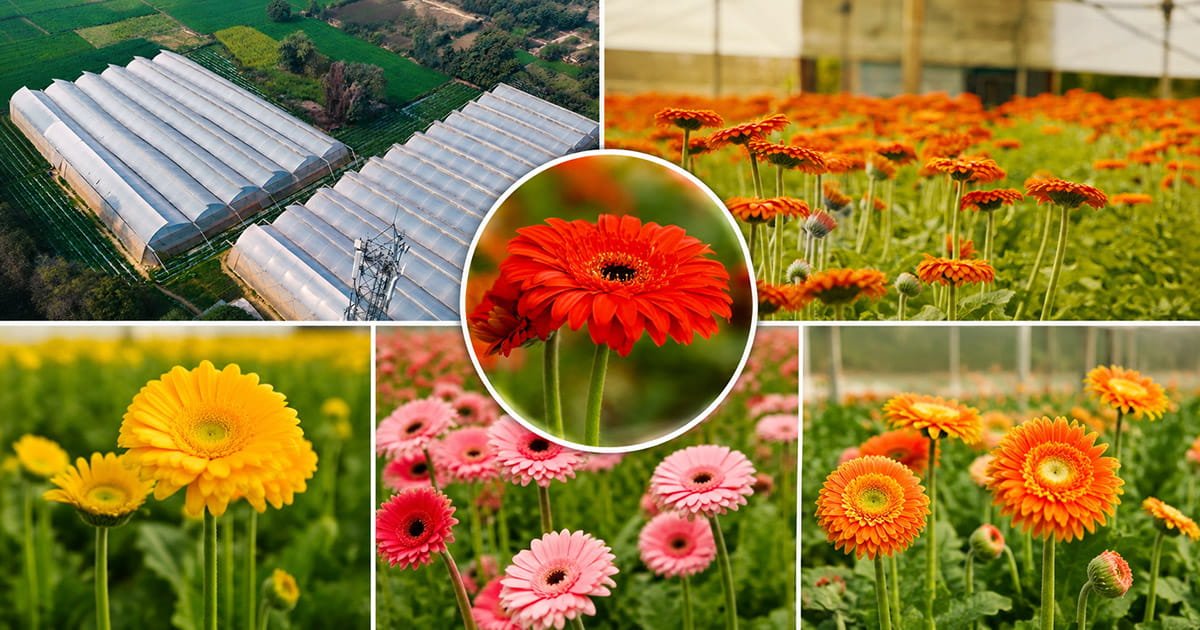
The decision reflected her learning-first approach. Since she was entering modern farming for the first time, she wanted to understand every aspect of crop management—from irrigation and nutrition to maintaining plant health inside a controlled growing environment. Looking back, she believes those early years with Gerbera built the confidence and practical knowledge that later helped her diversify into vegetable cultivation.
Although she had no professional farming background, she never viewed agriculture as something that could only be learned through generations of experience. Instead, she treated it like any other profession: observe carefully, continue learning, seek technical guidance whenever needed, and improve with experience.
"I never considered farming as something impossible to learn. Every season teaches you something new if you are willing to observe and improve."
Four to Five Years of Learning Through Gerbera Cultivation
Reena continued Gerbera cultivation for approximately four to five years. During this period, the crop performed well and became an important learning phase in her farming journey. More than the financial outcome, these years helped her understand how protected cultivation requires consistency, patience, and daily involvement.
According to her experience, approximately 25,000 Gerbera plants were planted in one acre. Around three months after planting, flowers started blooming. Once production stabilised, the farm produced nearly 2,000 flowers every day, resulting in approximately 6 lakh flowers in a year.
Based on Reena's own records, annual Gerbera sales reached around ₹18 lakh. Production expenses were approximately ₹5–6 lakh, leaving an estimated operating profit of ₹10–12 lakh. These figures reflect her own farming experience and demonstrate how successfully she managed the crop during those years.
Equally important, Gerbera cultivation gave her the confidence to manage labour, monitor crop health, schedule irrigation, and understand the importance of timely agronomic decisions. These practical skills later became valuable when she decided to change crops without changing the polyhouse infrastructure.
Why Reena Decided to Change Crops
After several successful years with Gerbera flowers, Reena felt it was the right time to explore a new opportunity. Instead of remaining with the same crop indefinitely, she wanted to diversify and understand another segment of protected cultivation. By then, she had already gained years of practical farming experience and was confident about managing a different crop inside the same polyhouse structures.
Her decision was based on experience rather than experimentation. She had already developed a strong understanding of crop care, fertigation, irrigation scheduling, disease observation, and routine farm management. This gave her confidence to transition from floriculture to vegetable cultivation while continuing to use the same protected cultivation infrastructure.
The transition also reflected an important lesson for modern farmers: a polyhouse is a long-term agricultural asset. With proper planning and crop selection, the same structure can support different crops over its working life instead of being limited to a single cultivation cycle.
Choosing Red and Yellow Capsicum as the Next Chapter
After completing her Gerbera phase, Reena selected red and yellow capsicum as her next protected cultivation crop. The change represented a natural progression rather than a complete shift in direction. She had already become familiar with managing crops inside a controlled environment, making it easier to adapt to a different cultivation system.
Today, both of her one-acre polyhouses are dedicated to coloured capsicum cultivation. According to Reena, the structures continue to perform well even after several years, demonstrating the importance of proper maintenance and regular crop management. Her experience also shows that successful protected cultivation depends not only on infrastructure but on consistent attention to every stage of the crop cycle.
"My first crop gave me confidence. Once I understood how protected cultivation works, I felt ready to move into vegetables and continue learning with every season."
A Farming Enterprise That Continues to Evolve
Even after shifting to coloured capsicum, Reena did not abandon crop diversification. Alongside her protected cultivation activities, she also manages open-field crops including strawberries, cucumbers, chilies, and green bell peppers. This balanced approach allows her to combine the advantages of controlled-environment farming with traditional cultivation practices on the same farm.
Rather than viewing farming as repeating the same crop year after year, she sees it as a continuous learning process. Every season brings new observations, new challenges, and new opportunities to improve. That mindset has helped her successfully manage protected cultivation for several years while continuing to expand her practical knowledge.
Farmers interested in seeing how protected cultivation has helped growers across different states and crops can explore more real-life experiences in the AgriFirst Farmer Success Stories section, where agricultural journeys from across India highlight different approaches to modern farming.
Growing Red and Yellow Capsicum with Practical Experience
After successfully cultivating Gerbera flowers for several years, Reena Singh entered the next chapter of her protected cultivation journey by growing red and yellow capsicum. The transition was not driven by trends alone. It was the result of years spent understanding how crops respond inside a polyhouse, how to monitor plant health, and how consistent management influences crop performance over an entire season.
Unlike her first year in farming, Reena now approached crop selection with practical confidence. She had already learned that every crop has different nutritional requirements, growth behaviour, labour needs, and market dynamics. Instead of treating farming as a one-time project, she began viewing it as a process of continuous learning where every season adds new experience.
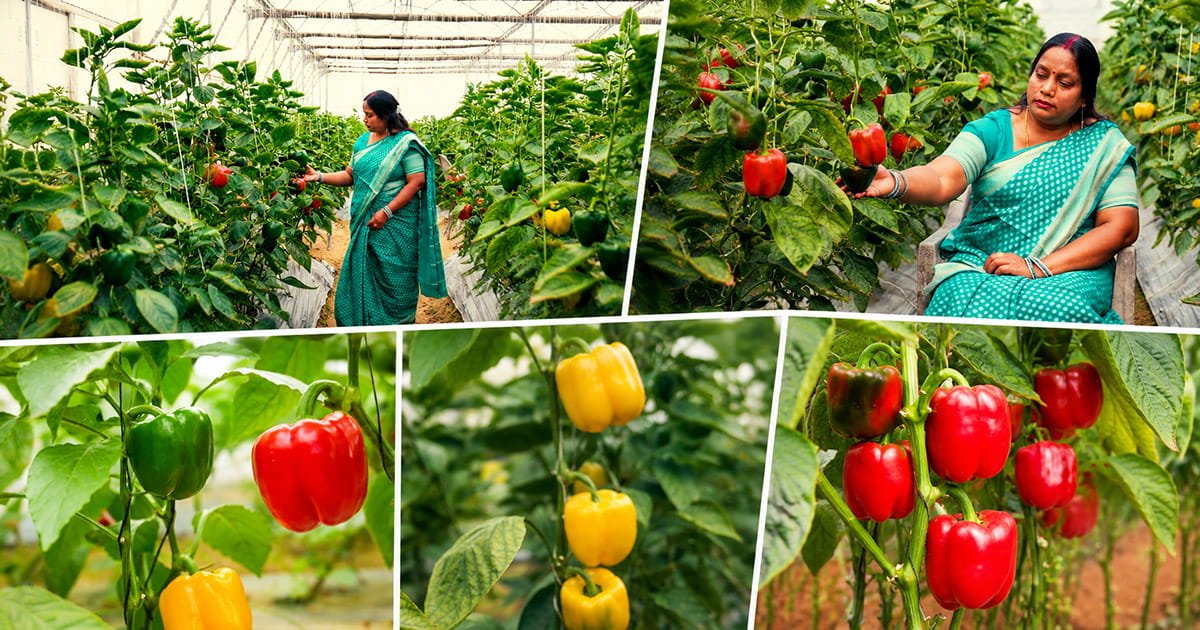
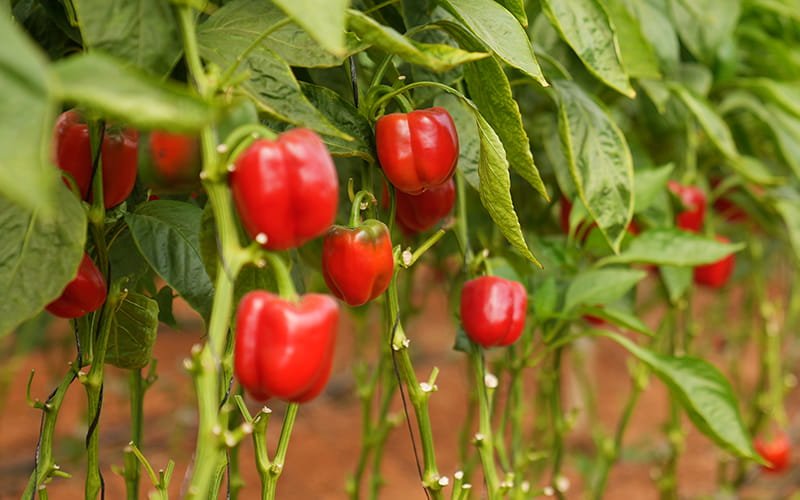
Today, both of her one-acre polyhouses are dedicated to coloured capsicum cultivation. According to her experience, approximately 10,000 plants are planted in one acre. Under proper crop management, each plant produces around 2 to 2.5 kilograms of fruit, resulting in an overall production of approximately 20 to 22 tonnes per acre. These figures are based entirely on her own farming experience.
"Every crop teaches you something different. The experience I gained from Gerbera helped me manage coloured capsicum with greater confidence."
Understanding the Reality of Agricultural Markets
One lesson Reena repeatedly highlights is that successful farming is not only about growing a healthy crop. Farmers also need to understand that agricultural markets change constantly. Prices can increase or decrease depending on demand, arrivals, seasonal conditions, and many other factors beyond the farmer's control.
According to her experience, the selling price of coloured capsicum has ranged from approximately ₹40 to ₹350 per kilogram. Instead of assuming that every harvest will receive the highest market price, she prefers to calculate her annual planning using an average price of around ₹100 per kilogram. This practical approach allows her to make farming decisions based on realistic expectations rather than temporary market peaks.
Using this average price, her annual sales are around ₹20–22 lakh. She estimates that approximately ₹5–6 lakh is spent on crop-related expenses, while around ₹15–16 lakh remains as operating profit. These numbers represent Reena Singh's own farming experience and should not be interpreted as expected results for every farm, as agricultural outcomes depend on many factors including crop management, growing conditions, and market prices.
The production and financial figures shared above are based solely on Reena Singh's personal farming experience. Farmers looking for a detailed explanation of project components and commercial calculations can read AgriFirst's 1 Acre NVPH Polyhouse Farming: Capsicum & Cucumber ROI guide for a complete technical breakdown.
"A farmer should always be prepared for changing market prices. Planning with an average selling price gives a much more realistic picture than depending only on the highest rate."
Gerbera and Coloured Capsicum: Two Different Chapters of the Same Journey
Although Gerbera flowers and coloured capsicum belong to different crop categories, Reena does not compare them as competitors. Instead, she considers them two important stages of the same farming journey. Gerbera helped her understand protected cultivation, while coloured capsicum allowed her to build on that experience and continue expanding her farming enterprise.
| Particular | Gerbera Flowers | Red & Yellow Capsicum |
|---|---|---|
| Crop Period | Started in 2018 and continued for around 4–5 years | Current crop |
| Plants per Acre | 25,000 | 10,000 |
| Production | Approximately 2,000 flowers per day Approximately 6 lakh flowers per year |
Approximately 20–22 tonnes |
| Annual Sales | ₹18 lakh | ₹20–22 lakh |
| Estimated Cultivation Expenses | ₹5–6 lakh | ₹5–6 lakh |
| Estimated Operating Profit | ₹10–12 lakh | ₹15–16 lakh |
Protected Cultivation and Open-Field Farming Can Complement Each Other
Even after building a successful protected cultivation enterprise, Reena did not stop open-field farming. Alongside her polyhouses, she continues to grow strawberries, cucumbers, chilies, and green bell peppers in open fields. This diversified approach helps her manage different crops while making the best use of her agricultural land.
At the same time, her experience has shown clear differences between the two systems. In open-field farming, crops remain exposed to changing weather conditions throughout the growing season. High temperatures, cold winds, storms, rainfall, insects, and pests can all affect crop health and production.
Inside the polyhouse, however, crop management becomes more controlled. According to Reena, this allows farmers to monitor plants more closely and respond more effectively whenever issues arise. Her preference for protected cultivation comes from years of practical farming experience rather than theory.
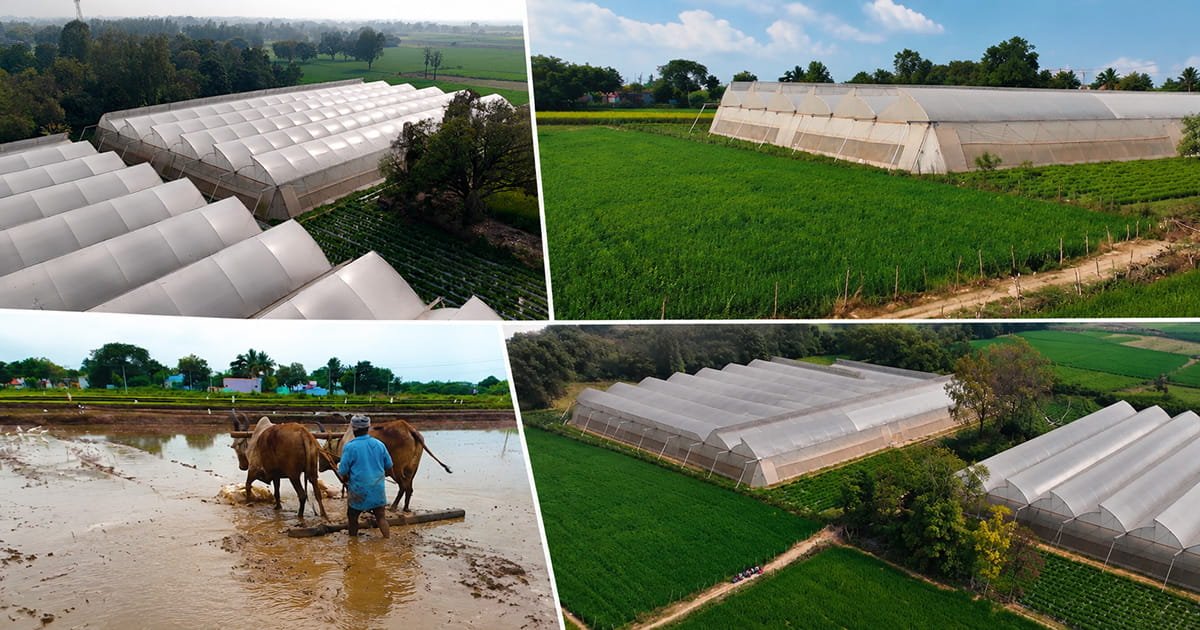
"In open fields, weather decides many things. Inside the polyhouse, the farmer has much better control over crop management."
For growers exploring different protected cultivation structures for various crops and farm sizes, AgriFirst also provides information on Shade Net House structures, which are suitable for selected crops and cultivation requirements.
AgriFirst's Long-Term Support in Reena Singh's Farming Journey
Reena Singh's association with AgriFirst has continued for around 8 to 9 years. According to her testimonial, the support did not end after the polyhouse was established. It continued through different crop stages, from Gerbera flowers to red and yellow capsicum.
Whenever her plants face disease pressure or any serious crop issue, she contacts AgriFirst for guidance. Their support includes phone-based advice, monthly visits, and in-person farm visits when the problem requires closer inspection.
This long-term support is important because protected cultivation is not only about installing a structure. Crop performance depends on timely observation, plant health management, nutrition planning, and practical advice during critical stages.
Even after nearly a decade, Reena Singh continues to receive technical support from AgriFirst whenever she faces a crop-related challenge. According to her, the relationship has gone far beyond the initial polyhouse installation. From routine agronomy guidance to addressing diseases and other field issues, the continued availability of experienced technical experts has given her confidence to manage every growing season more effectively.
"Even today, whenever our plants develop a disease or face any serious problem, we immediately contact AgriFirst. Their team guides us over the phone, conducts regular monthly visits, and personally visits the farm whenever the situation requires. Their support has remained consistent throughout our journey."
For farmers who want to understand how different growers have adopted protected cultivation, AgriFirst's Farmer Success Stories section shares more real-life experiences from the field.
Recognition from the Hon'ble Governor of Uttar Pradesh
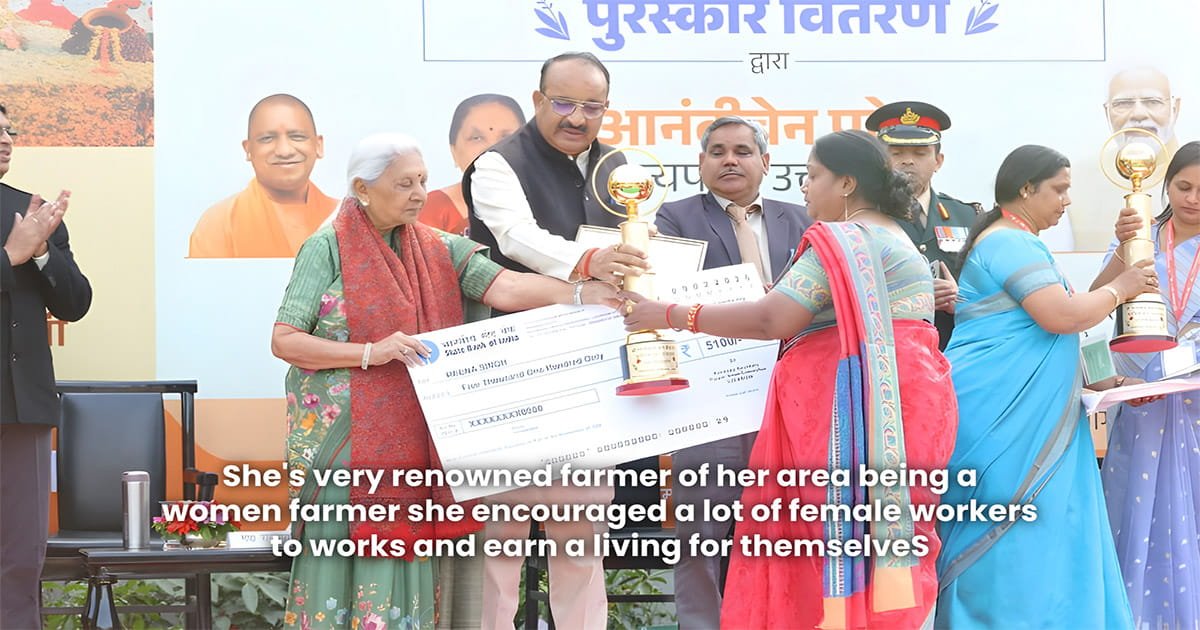
Reena Singh's achievements received state-level recognition when she was honoured by the Hon'ble Governor of Uttar Pradesh, Smt. Anandiben Patel, for her contribution to high-value protected cultivation and for empowering local women through agriculture. The recognition acknowledged not only her success in cultivating Gerbera flowers and coloured capsicum, but also her efforts in creating sustainable livelihood opportunities within her village.
This recognition adds an important dimension to her story. It shows that her farming journey was not limited to successful crop production. Her work also created opportunities for local women workers to earn an independent living through agriculture-related activities.
The award reflects years of consistent effort, learning, crop management, and community involvement. For a woman farmer from Uttar Pradesh, this recognition strengthens her position as a practical example of women-led modern agriculture.
The recognition celebrated not only successful Gerbera and coloured capsicum cultivation, but also Reena Singh's role in creating livelihood opportunities for women in her village.
A Woman Farmer Creating Livelihood Opportunities for Others
One of the strongest parts of Reena Singh's story is the impact beyond her own farm. By managing protected cultivation successfully, she also helped create work opportunities for women in her local community.
In many villages, women contribute to agriculture but are not always recognised as decision-makers or income creators. Reena's journey shows how women can move from participation to leadership when they receive the right knowledge, structure, and confidence.
Her work also connects with a larger shift in Indian agriculture, where educated women, homemakers, landowners, and rural entrepreneurs are exploring modern farming as a serious livelihood option. Reena's example is especially relevant for women who want to use available land productively while building something independent.
For readers exploring protected farming options, AgriFirst's Greenhouse and Polyhouse solutions page provides information on structure options used for high-value crops.
Investment Recovery Through Consistent Farm Management
Reena Singh believes that protected cultivation should be treated as a long-term farming asset, not a short-term experiment. According to her experience, when the polyhouse is managed properly, the initial investment can be recovered in approximately 3 to 4 years.
Her point is simple: the structure alone does not create success. A farmer must give time to crop observation, disease management, irrigation, nutrition, labour planning, and market understanding. For Reena, daily involvement and timely guidance played a major role in sustaining her farming journey.
Farmers who want to estimate their own project planning numbers can use the AgriFirst Polyhouse Calculator before taking the next step.
What Women and Youth Can Learn from Reena Singh
Reena’s message to women and young people is practical. She believes farming has challenges, but it can become a strong livelihood when a person is ready to work hard, learn continuously, and stay involved in crop management.
She also believes women should enter agriculture more confidently. In her view, women are moving forward in every field, and farming should not be an exception. Her own journey proves that education, family responsibilities, and farming entrepreneurship can exist together.
“Women are moving forward in every field. Farming also needs more women and youth who are ready to work hard and manage crops properly.”
A Story That Goes Beyond One Crop
Reena Singh’s journey is not limited to Gerbera flowers or coloured capsicum. It is a story of an educated woman who searched for meaningful work, learned modern farming, adopted protected cultivation, created opportunities for women workers, and built a farming enterprise with long-term commitment.
For readers who want to continue learning about modern farming, protected cultivation, and real farmer experiences, the AgriFirst Blogs section includes more resources and field-based insights.
To discuss protected cultivation options for your own land, you can connect with AgriFirst through the Contact Us page.
Conclusion: A Woman Who Chose Agriculture and Changed Her Future
Reena Singh's journey demonstrates that modern farming is not defined by family background or previous agricultural experience. An M.A. and B.Ed. graduate who once planned to become a teacher, she entered protected cultivation only after fulfilling her family responsibilities and searching for meaningful work that she could call her own. Through continuous learning, practical experience, and determination, she built a successful farming enterprise that has continued to grow for several years.
Her journey includes more than cultivating Gerbera flowers and red and yellow capsicum. It reflects thoughtful decision-making, willingness to embrace new technology, and the confidence to adopt scientific farming practices. Along the way, she also created employment opportunities for women in her community and earned recognition from the Hon'ble Governor of Uttar Pradesh, Smt. Anandiben Patel for her contribution to protected cultivation and rural empowerment.
Perhaps the strongest lesson from Reena's story is that successful farming is built season by season. Knowledge, observation, timely decisions, and consistent crop management matter just as much as the infrastructure itself. Her experience shows that when these elements come together, protected cultivation can become a long-term and sustainable agricultural enterprise.
"Every season teaches something new. When you continue learning, work consistently, and manage the crop carefully, farming becomes much more than a profession—it becomes a lifelong journey of growth."
Key Takeaways from Reena Singh's Journey
- ✅ An educational background outside agriculture does not prevent success in modern farming.
- ✅ Continuous learning and practical field experience can build confidence in protected cultivation.
- ✅ Starting with one successful crop can create the foundation for future diversification.
- ✅ Long-term crop performance depends on regular monitoring, scientific management, and timely technical guidance.
- ✅ Protected cultivation can create opportunities not only for farm families but also for local employment and women's participation in agriculture.
- ✅ Reena Singh's recognition by the Hon'ble Governor of Uttar Pradesh highlights the broader social impact that modern farming can create.
Thinking About Starting Your Own Protected Cultivation Journey?
Every farm is unique, and every farmer's journey begins with understanding the right structure, crop, and long-term approach. Whether you are exploring polyhouse farming for the first time or looking to understand protected cultivation in greater detail, learning from real farmer experiences can help you make more informed decisions.
To explore different protected cultivation solutions, visit AgriFirst's Greenhouse & Polyhouse section. You can also browse more Farmer Success Stories, estimate your project using the Polyhouse Calculator, or connect directly with the AgriFirst team through the Contact Us page to discuss your farming goals.