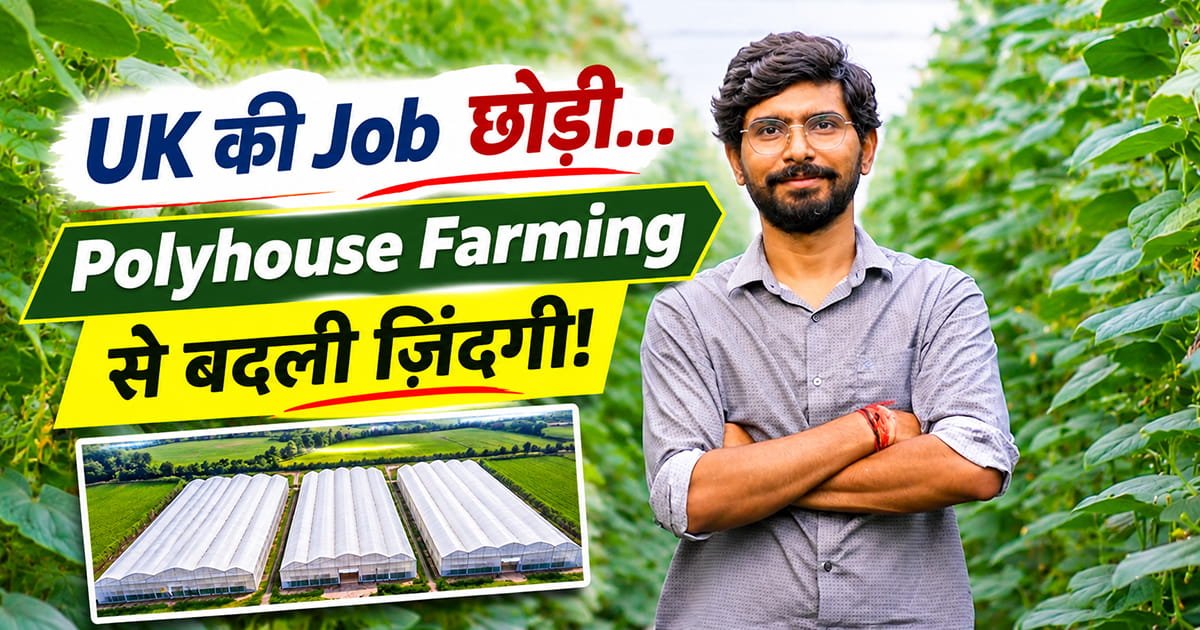
What would make someone leave a successful career in the UK and return to India to start farming? For Hitesh Pratik Singh, the decision began with a personal experience, a question about vegetable quality, and a desire to do something different.
Today, his polyhouse farming success story in Mirzapur, Uttar Pradesh, is taking shape through his first UK cucumber crop. At the time of his interview, Hitesh had already harvested 35 tons of cucumber from approximately three acres of polyhouse cultivation, with the crop around 35–45 days old.
But reaching this stage was not easy. From convincing his father and leveling uneven farmland to arranging electricity, irrigation, cold storage, and finding buyers, Hitesh faced challenges at almost every step.
His journey shows what it took to move from a career in technology to managing a polyhouse farming project, and how AgriFirst became part of that journey.
From a UK Career to Polyhouse Farming in Mirzapur
Before entering agriculture, Hitesh Pratik Singh had built his professional career in the IT sector.
He completed his B.Eng and M.Eng from an institute in Pune and worked with companies including Cognizant, Wipro, and Accenture. In 2016, he moved to the UK to pursue an MBA, which he completed at an institute in Leicester.
After completing his education, he continued working in the UK for approximately six years. In his interview, he also described his professional role as a senior data product analyst.
Agriculture had not been his family's profession for generations. Yet, despite his background in technology and his established career, Hitesh began considering a completely different direction.
The reason was connected to an experience during his time in the UK.
The Experience That Changed His Thinking About Farming
While living in the UK, Hitesh became seriously ill and was admitted to the Royal Infirmary Hospital for approximately one month.
According to his account, he associated his illness with a vegetable he had consumed. This experience made him question the quality of vegetables available to consumers.
He began thinking about the situation in India and whether he could take up vegetable cultivation as a new challenge.
Instead of treating farming as something outside his professional interests, he started exploring what could be done differently.
That thought eventually developed into his decision to explore polyhouse farming in India.
How Research in Prayagraj Strengthened His Farming Decision
During the Covid period, Hitesh was in India and began examining the demand for vegetables in Prayagraj, where he resides.
Drawing on his analytical background, he conducted a sample study involving approximately 50,000 people.
According to Hitesh, the responses indicated demand for premium and exotic vegetables. However, people were either unable to find these vegetables locally or were purchasing them at high prices.
He also observed that rotational cultivation of crops such as paddy and wheat was common in the surrounding areas.
These observations encouraged him to consider growing vegetables instead of continuing with the same crop rotation on his family's agricultural land.
What started as an idea during his stay in India gradually became a serious plan to establish a polyhouse farming project.
Convincing His Father Was the First Major Challenge
For Hitesh, one of the biggest challenges was not related to construction, crops, or investment. It was convincing his family.
He was moving away from an established professional career in the UK to enter a sector that his family had not actively pursued for three generations.
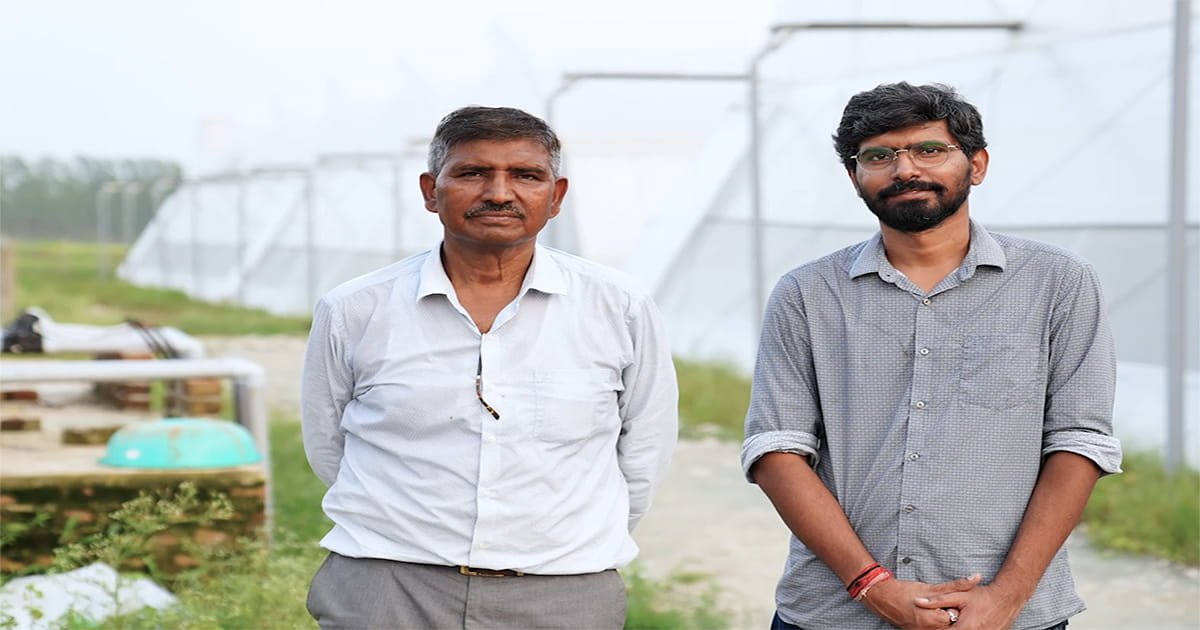
Although the family owned agricultural property, farming activities had generally been managed through arrangements such as adhiya and batiya, where cultivation was carried out on a sharing basis.
His father initially opposed the idea.
Hitesh continued discussing his plans and explaining why he believed farming could become a meaningful opportunity.
Eventually, he convinced his father to support the decision. With that challenge addressed, he began searching for a company that could help him establish the polyhouse structure.
Why Hitesh Chose AgriFirst for His Polyhouse Project
Once Hitesh decided to move forward, choosing the right company for his polyhouse setup became an important part of the process.
He searched online for polyhouse construction companies and came across AgriFirst. He also found that the company had an office in Lucknow, which was relatively close to his location.
His first conversation with the company was with Abhishek Bhatt.
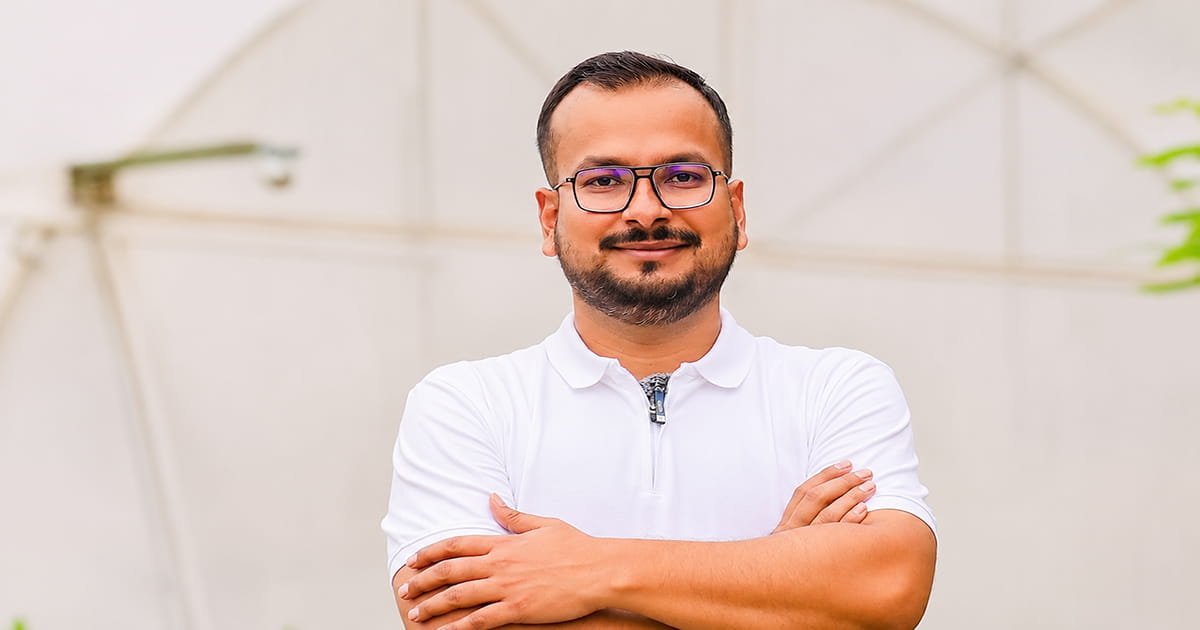
During their discussion, Abhishek explained the polyhouse setup process and the work involved in establishing the project.
Hitesh then visited the company and moved ahead with the setup.
According to his interview, the project process began in September 2025.
He later explained that several companies had contacted him, but he selected AgriFirst because he believed the company was delivering what it had promised.
Preparing Uneven Land for Polyhouse Construction
The next challenge was preparing the land near Lalganj in Mirzapur.
Hitesh described the farm's location as highly rural, with limited connectivity and difficulties in arranging resources.
The land itself was uneven. According to him, some sections were approximately 10 feet higher, while others were approximately 10 feet lower.
Before the polyhouse structure could be established, this difference in ground levels had to be addressed.
Land leveling alone took approximately one month.
Hitesh also had to coordinate people, equipment, and other resources while traveling from Prayagraj.
He explained that he had been commuting between Prayagraj and the farm for approximately eight months to manage the project and make it viable.
For someone entering farming from a technology background, arranging these activities became one of the most demanding parts of establishing the farm.
Building the Farm's Supporting Infrastructure
Polyhouse construction was only one part of Hitesh's project. He also had to address electricity, irrigation, and the storage of harvested produce.
These requirements were particularly challenging because of the farm's rural location.
25 kW Solar Power System
Electricity was one of the difficulties Hitesh identified during the project.
To address his farm's power requirements, he installed a solar system with a reported capacity of approximately 25 kilowatts.
48-Ton Cold Room
Hitesh also installed a 48-ton cold room at the farm.
His intention was to store harvested vegetables and help maintain their freshness before they reached customers.
Irrigation Borewell
Another important task was arranging water for irrigation.
Hitesh had a borewell installed at the farm, but he described the process of arranging drilling work in the rural location as another major challenge.
Together, these installations formed part of the infrastructure he developed while establishing his polyhouse farming project in Mirzapur.
First Polyhouse Crop: UK Cucumber Farming in Mirzapur
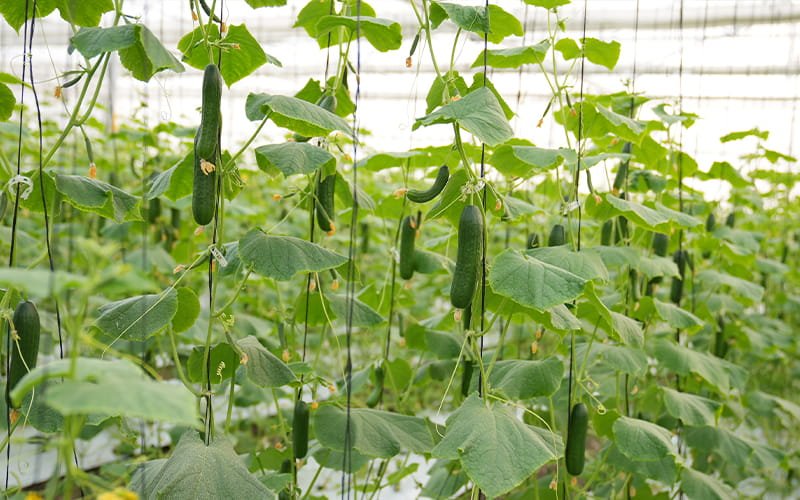
After completing the initial setup, Hitesh began cultivation with UK cucumber as his first crop.
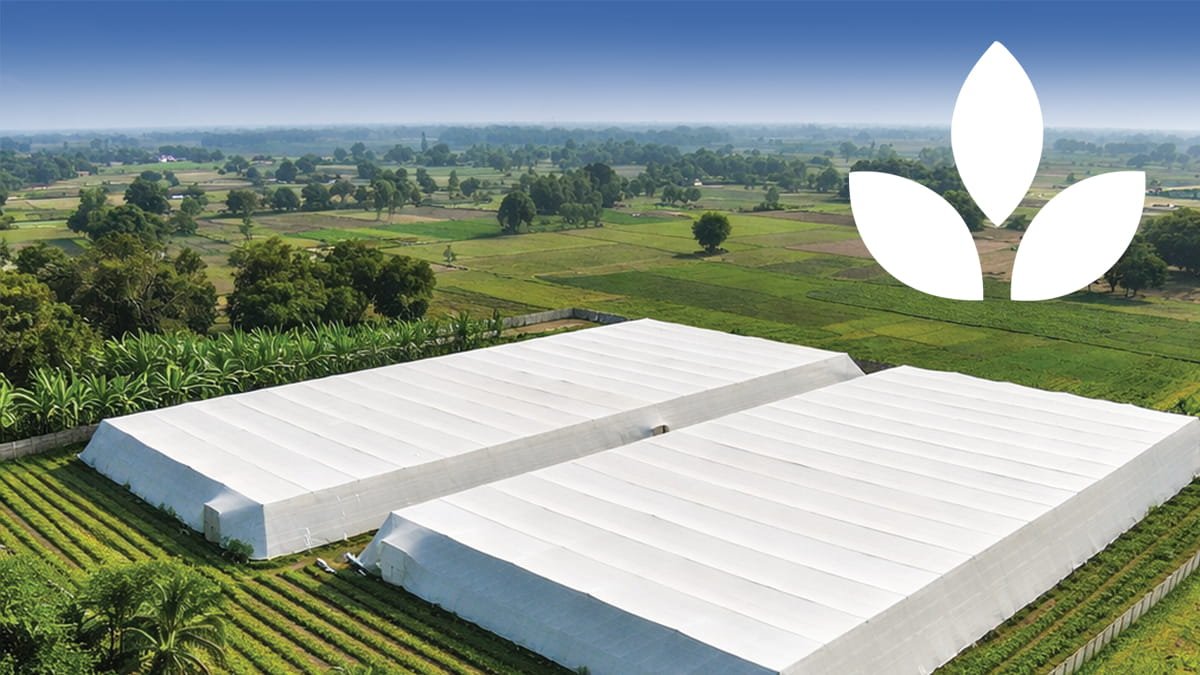
In the interview, he described the farm as covering almost 3.5 acres. While discussing crop production, he referred to approximately three acres under cultivation.
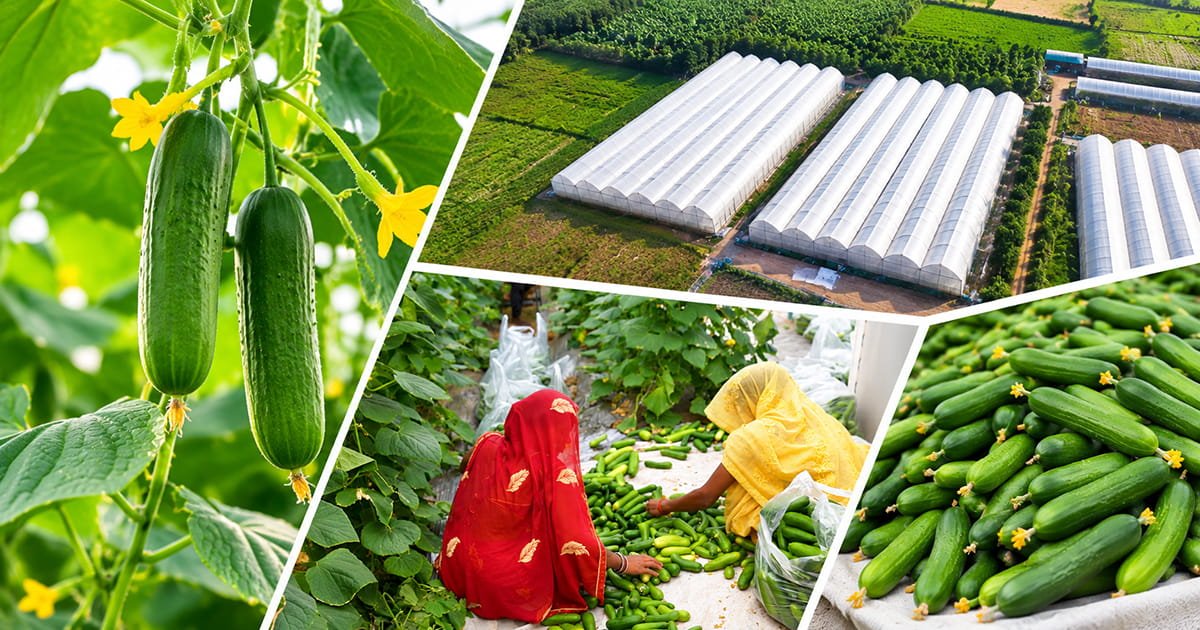
The land had previously been used for rotational cultivation of paddy and wheat.
Hitesh wanted to move away from that pattern and explore a different approach through polyhouse farming.
His first UK cucumber crop provided an early opportunity to evaluate the project after months of preparation, construction, and infrastructure development.
At the time of recording, the crop was approximately 35–45 days old, and harvesting had already begun.
35 Tons of UK Cucumber Harvested: His First Crop Results
One of the most significant developments in Hitesh Pratik Singh's polyhouse farming success story was the production achieved during his first cucumber crop.
According to his interview, he had harvested 35 tons of UK cucumber from approximately three acres while the crop was around 35–45 days old.
Hitesh's Reported UK Cucumber Crop Results
Location: Lalganj, Mirzapur, Uttar Pradesh
Crop: UK Cucumber
Cultivation Area Reported: Approximately 3 Acres
Crop Age: Approximately 35–45 Days
Harvest Achieved: 35 Tons
Average Selling Price Stated: ₹35
Projected Production: More Than 180 Tons
Expected Revenue: Approximately ₹60–65 Lakh
Note: These figures are based on Hitesh Pratik Singh's statements in the video interview. The 35-ton harvest is a reported achievement, while the 180-ton production and ₹60–65 lakh revenue figures are his projections, not confirmed final results.
Hitesh stated that he expected production to exceed 180 tons within approximately three months.
He also mentioned an average selling price of ₹35 and projected earnings of approximately ₹60–65 lakh from the crop.
These expectations reflect his outlook at the time of the interview. The confirmed production figure he reported was the 35 tons already harvested.
Marketing UK Cucumber Became Another Major Challenge
After establishing the farm and beginning cultivation, Hitesh encountered another important challenge: finding suitable markets for his produce.
He explained that the nearby markets of Prayagraj, Varanasi, and Mirzapur were not particularly suitable for the European cucumber he was growing.
According to his assessment, this type of cucumber was more commonly used in metro cities.
This created a marketing challenge even after the crop had begun producing.
Hitesh acknowledged that AgriFirst supported him with marketing during this stage of the project.
His experience highlights an important part of his journey: establishing a polyhouse and harvesting vegetables were not the only challenges. He also had to work on reaching markets where his crop could be sold.
Automation Inside Hitesh's Polyhouse Farm
Another feature Hitesh highlighted during the interview was the automation system installed at his farm.
He described the system as the heart of the farm.
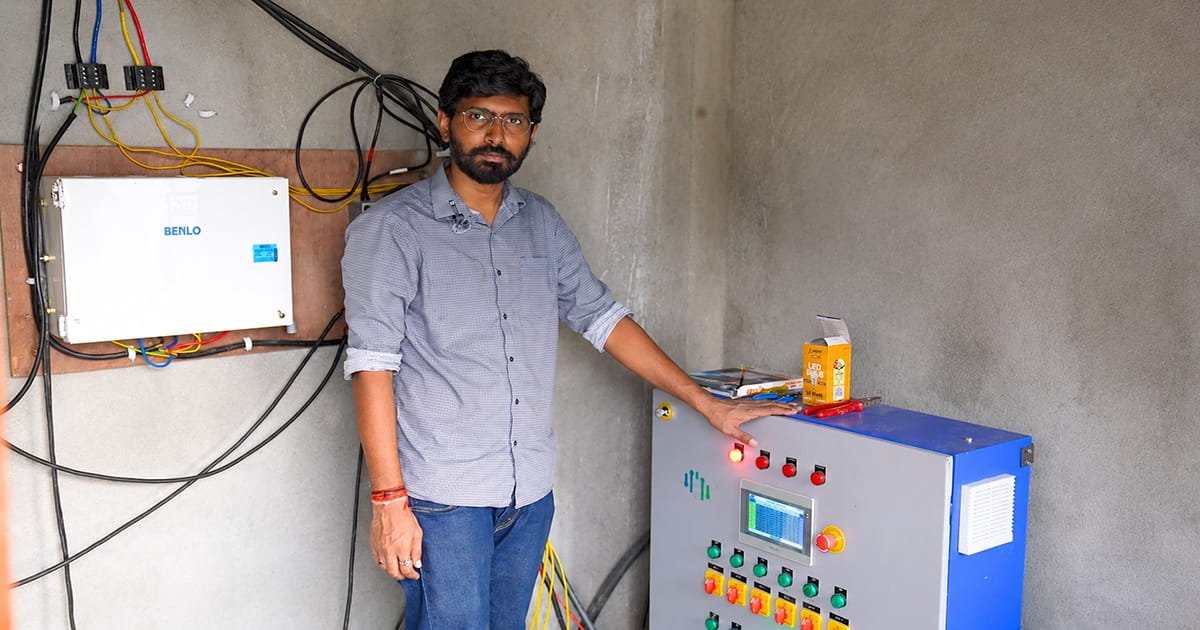
According to Hitesh, the automation controls the eco-drift and sprinkler fogger systems, with operations managed from a central point.
He explained that AgriFirst had recommended this automation system and that he found it highly beneficial after installation.
For Hitesh, who came from a technology and data analytics background, automation became one of the important components of his polyhouse farming setup.
AgriFirst's Agronomy Support After Polyhouse Construction
Hitesh's decision to choose AgriFirst was not based only on the polyhouse structure.
During his interview, he specifically highlighted the importance of the company's agronomy team.
He mentioned Peeyush Bhaiya while explaining how the team supports him when crop disease issues arise.
According to Hitesh, the agronomy team provides advice when problems are identified in the crop.
He considered this support one of the biggest reasons for choosing AgriFirst over other polyhouse companies he had explored.
He also expressed satisfaction with the company's ability to deliver on its commitments.
His account reflects the value he personally places on receiving guidance after the polyhouse structure has been installed.
Creating Employment for More Than 50 People
Beyond crop production, Hitesh's polyhouse farming project has also created employment opportunities at the farm.
He reported that approximately 50 or more people were working there.
According to his interview, most of these workers were women and girls above 18 years of age.
Hitesh also spoke about the difference in working conditions.
He explained that many workers had previously worked in open fields throughout the day. After joining his farm, they were working under the shade of the polyhouse.
In his view, the workers felt more comfortable in this environment.
For Hitesh, the project was therefore not only about growing UK cucumber. He also valued the employment generated and the working conditions experienced by people at the farm.
Hitesh's Future Vision: Polyhouse Farming Across 52 Acres
Hitesh does not see his current polyhouse project as the final stage of his farming journey.
His family owns a larger agricultural property measuring approximately 52 acres.
While the current setup covers approximately three acres, he wants to gradually expand polyhouse cultivation across the entire property.
He described this as a long-term vision that could take approximately 20–30 years.
His interest in expanding comes from the production potential, profit margins, and working conditions he believes polyhouse farming can offer.
However, the proposed 52-acre expansion remains his future plan. It is not part of the polyhouse area already established at the time of the interview.
His current focus has been on making the initial project viable while building toward that larger vision.
Why Hitesh Believes More People Should Consider Farming
One of the strongest messages from Hitesh's interview concerns how people view agriculture as a profession.
He questioned why farming is sometimes treated as a taboo, particularly when people from other professional backgrounds can also choose to enter the sector.
His own journey represents that change.
He moved from a comfortable professional career in the UK to the practical challenges of establishing and managing a farm in rural Uttar Pradesh.
He had to convince his family, prepare difficult land, arrange infrastructure, coordinate workers, and address marketing challenges.
Despite these difficulties, he remains committed to expanding his farming activities.
Hitesh believes farming has an important future in India and wants more people to consider its possibilities rather than dismissing it as a career.
What Makes Hitesh Pratik Singh's Polyhouse Farming Success Story Different?
Hitesh Pratik Singh's journey is not simply about growing cucumbers inside a polyhouse.
It is the story of a professional who questioned his existing career path, studied local vegetable demand, and decided to take responsibility for developing his family's agricultural land.
His experience includes several important milestones:
- Moving from a professional career in the UK into farming in Uttar Pradesh.
- Conducting a sample study involving approximately 50,000 people in Prayagraj.
- Convincing his family to support his farming plans.
- Beginning the polyhouse setup process with AgriFirst in September 2025.
- Overcoming land leveling, electricity, irrigation, and connectivity challenges.
- Installing a 25 kW solar system and a 48-ton cold room.
- Harvesting 35 tons of UK cucumber during the early stage of his first crop.
- Creating employment for approximately 50 or more people.
- Planning a long-term expansion across his family's 52-acre property.
Each milestone represents a different part of the journey he described in his interview.
The reported harvest is an important achievement, but the preparation, decisions, and challenges behind it are equally central to his story.
Final Thoughts: From a UK Career to a New Farming Journey
Hitesh Pratik Singh's polyhouse farming success story began with a personal experience and developed into a project that required months of preparation and continuous involvement.
From researching vegetable demand in Prayagraj to establishing a polyhouse near Lalganj, his journey involved decisions that were unfamiliar to his previous professional life.
At the time of his interview, his first UK cucumber crop had produced a reported harvest of 35 tons. He was also working toward larger production goals and a long-term vision for expanding polyhouse cultivation across his family's land.
Throughout the journey, Hitesh acknowledged AgriFirst's involvement in the setup process, marketing support, automation recommendations, and agronomy guidance.
His experience reflects a central belief he expressed during the interview: farming deserves to be taken seriously as a profession, and people should be willing to explore its future.
Planning Your Own Polyhouse Farming Project?
Hitesh Pratik Singh's journey highlights the importance of choosing the right team for a polyhouse farming project. At AgriFirst, we work with farmers through polyhouse setup and agronomy support. Explore more farmer experiences or connect with our team to discuss your plans.
Contact AgriFirst Explore Farmer Success Stories