Economics in Cucumber Polyhouse: Setup Cost, Operating Expenses, Production & Net Returns Per Acre
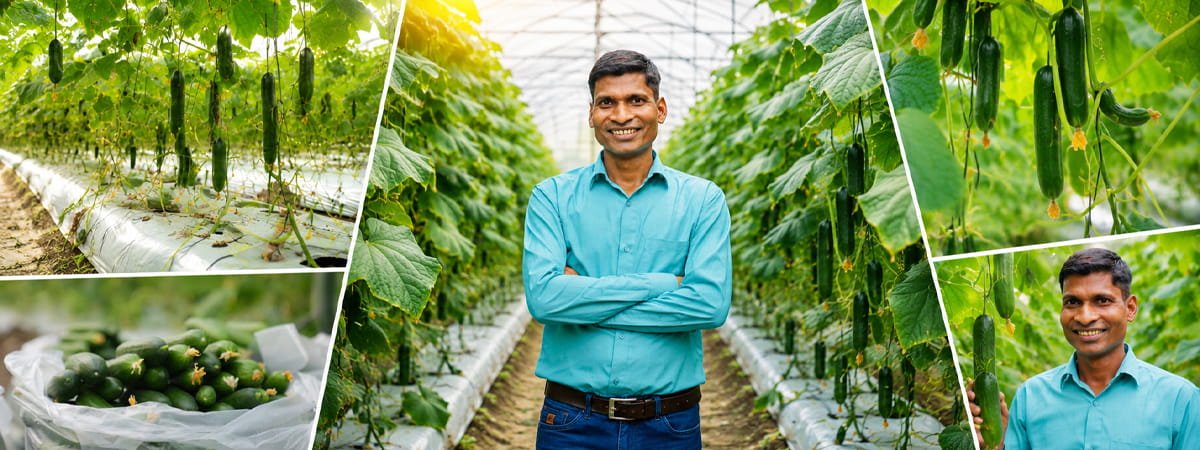
Cucumber cultivation under protected conditions has become an important approach for growers looking to optimize crop production while protecting plants from adverse weather conditions. A cucumber polyhouse is specially designed for growing cucumber and helps create an environment suitable for crop growth and development.
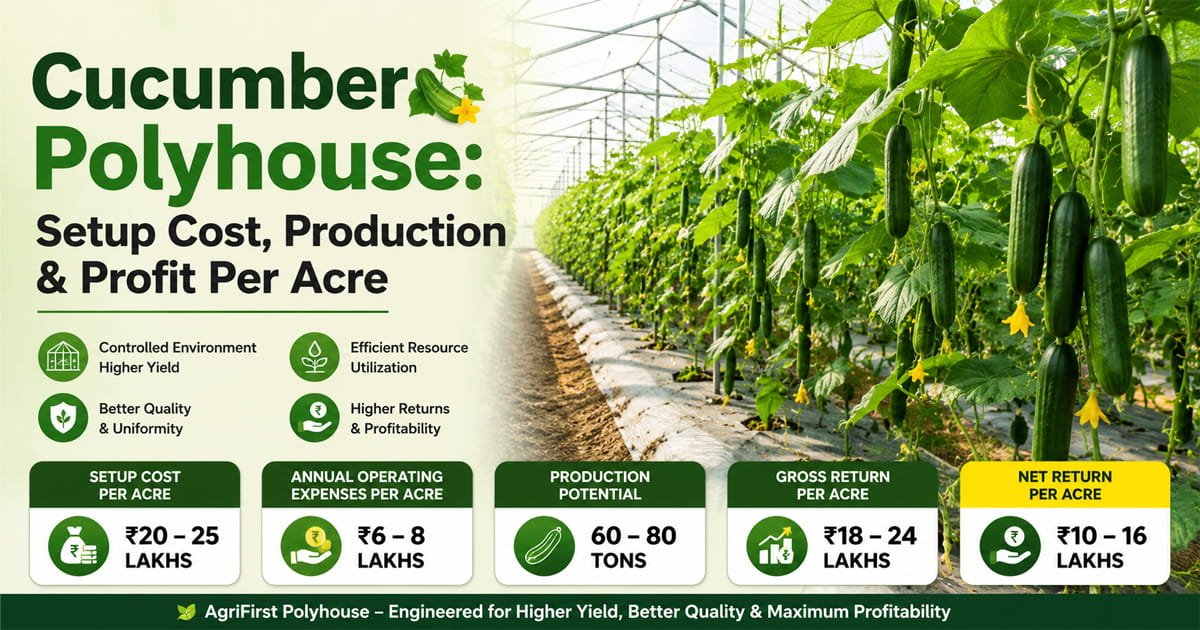
Understanding the economics of cucumber cultivation is an important step before starting a protected cultivation project. This includes evaluating setup costs, operating expenses, production potential, crop requirements, suitable regions for cultivation, structural advantages, and expected returns.
This guide provides detailed information on cucumber polyhouse economics, helping growers understand the investment and operational aspects associated with cucumber cultivation under protected conditions. Farmers evaluating projects often explore commercial polyhouse farming, polyhouse cost in India, polyhouse subsidy opportunities, and agronomy support services before starting cultivation.
What Information Can You Expect to Find?
- Cost of the Polyhouse Setup Per Acre
- Expenses in Operations of the Polyhouse
- Maximum Production in the Polyhouse
- Starting Your Own Polyhouse
- Crop Requirements
- Geographic Compatibility
- Operating Expenses & Net Returns
- Structure Advantages
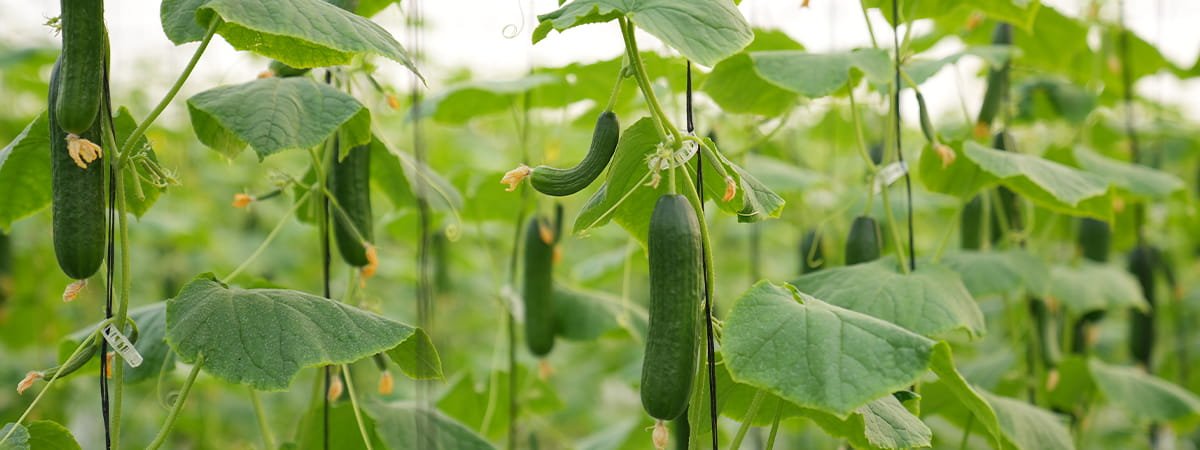
Crop Requirements
Cucumbers are semi-tropical plants that thrive in warm weather with high temperatures, humidity, and light intensity. They require a minimum of 15°C for development but are sensitive to frost and cold, which can affect crop growth severely.
The ideal daily average air temperature for cucumbers is 15–24°C, with suitable nighttime and daytime temperatures supporting healthy vegetative growth, flowering, fruit setting, and fruit development.
These growing requirements make protected cultivation an important cultivation method for cucumber production. Growers exploring commercial polyhouse farming often evaluate crop suitability and environmental requirements before starting cultivation. Many also review polyhouse design considerations and protected cultivation systems when planning their projects.
Geographic Compatibility
Cucumbers are cultivated in almost all parts of India, thriving in different seasons across various regions.
Major states include:
- Rajasthan
- Gujarat
- Haryana
- Uttar Pradesh
- Madhya Pradesh
- Bihar
- Chhattisgarh
- Jharkhand
In western, northern, and central India, cucumbers are a primary summer vegetable. In North India, production usually peaks during the summer months. Farmers planning cucumber cultivation often assess regional suitability alongside requirements related to polyhouse construction and protected farming infrastructure.
Annual Operating Expenses & Net Return
Cucumber polyhouses are engineered to maximize light exposure and control humidity through strategic orientation and gutter length, enhancing cross ventilation in row direction. Trellising systems are specially designed for maximum load-bearing capacity.
During winter, heat retention is achieved by closing all side vents. The structure also protects crops from rain and storms, safeguarding their large, vulnerable leaves. Growers comparing different cultivation systems may also evaluate greenhouse farming solutions and polyhouse farming projects while planning commercial production.
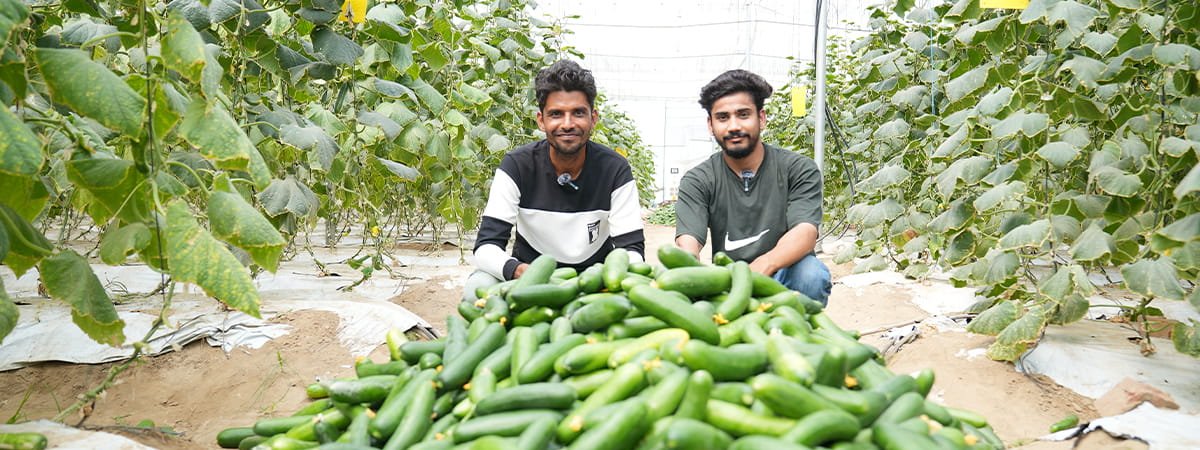
Crop Cycle 1 (January to April)
| Particulars | Amount | Information |
|---|---|---|
| Field Preparation | ₹30,000.00 | FYM, tillage, basal fertilizers, bed making & others |
| Labour* | ₹1,50,000.00 | 4 resources for crop management and harvesting |
| 12,000 Seeds | ₹90,000.00 | Seeds with nursery preparation |
| Fertilizers | ₹80,000.00 | Approximate fertilizer cost |
| Pesticides | ₹35,000.00 | Fungicide, insecticide, acaricide and others if required |
| Other Expenses | ₹20,000.00 | Farm expense, electricity bill and others |
| Total Operating Expense | ₹4,30,000.00 |
Production & Returns – Crop Cycle 1
- Production per plant: 4.0 kg
- Total production: 48,000 kg
- Gross return: ₹12,00,000.00
- Net return from cucumber cultivation: ₹7,95,000 per acre on Crop Cycle 1
Crop Cycle 2 (September to December)
| Particulars | Amount | Information |
|---|---|---|
| Field Preparation | ₹50,000.00 | FYM, tillage, basal fertilizers, bed making & others |
| Labour* | ₹1,20,000.00 | 4 resources for crop management and harvesting |
| 12,000 Seeds | ₹78,000.00 | Seeds with nursery preparation |
| Fertilizers | ₹75,000.00 | Approximate fertilizer cost |
| Pesticides | ₹40,000.00 | Fungicide, insecticide, acaricide and others if required |
| Other Expenses | ₹20,000.00 | Farm expense, electricity bill and others |
| Total Operating Expense | ₹3,83,000.00 |
Production & Returns – Crop Cycle 2
- Production per plant: 3.0 kg
- Total production: 36,000 kg
- Gross return: ₹7,92,000.00
- Net return from cucumber cultivation: ₹4,09,000 per acre on Crop Cycle 2
Note: These prices are based on specific conditions and may vary depending on location, weather, variety, labour availability, input cost, market price and management practices.
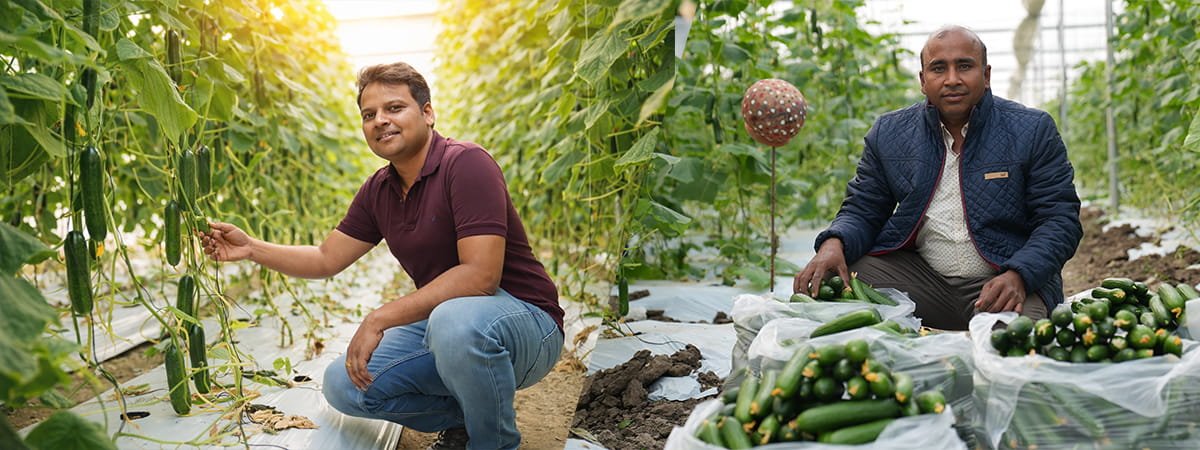
Why Grow Cucumber in a Polyhouse?
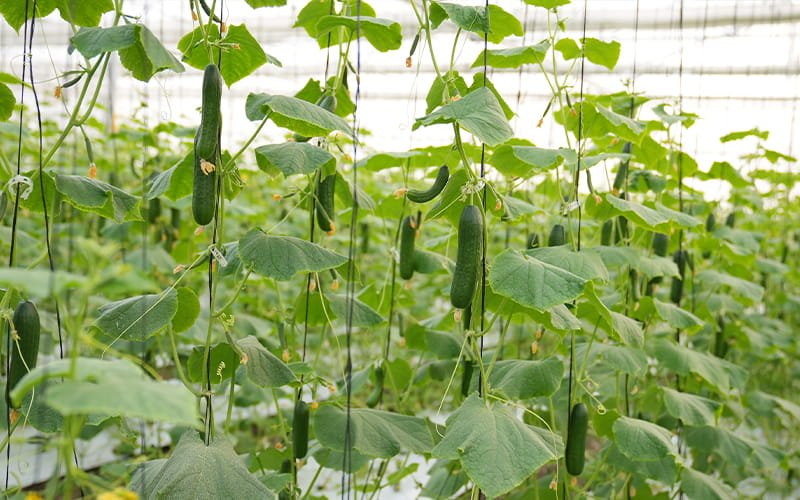
Cucumber is one of the most profitable vegetable crops grown under protected cultivation. A polyhouse creates a controlled environment that protects the crop from adverse weather conditions and helps maintain optimum growing conditions throughout the cultivation period.
Compared to open-field farming, cucumber polyhouse cultivation offers higher productivity, better fruit quality, improved water-use efficiency, and protection against excessive rainfall, strong winds, and temperature fluctuations. The protected structure also reduces pest pressure and enables farmers to adopt scientific crop management practices.
Another major advantage is the ability to produce cucumbers during off-season periods when market prices may be more favorable. With proper agronomic practices and infrastructure, farmers can achieve consistent yields and improve farm profitability through commercial cucumber production.
Planting Density and Crop Management
Plant population and crop management practices directly influence cucumber yield and fruit quality. In a typical one-acre polyhouse, approximately 12,000 cucumber plants can be established depending on the variety, spacing, and cultivation method adopted by the grower.
Proper spacing helps improve air circulation, light penetration, and nutrient utilization while reducing disease incidence. Most commercial growers use vertical trellising systems to support plant growth, maximize space utilization, and simplify harvesting operations.
Regular pruning, removal of old leaves, training of vines, and timely harvesting are important crop management activities. These practices help maintain plant vigor, improve fruit quality, and support continuous production throughout the crop cycle.
Irrigation and Fertigation Management
Efficient irrigation management is essential because cucumber plants require a continuous supply of moisture during their growth period. Drip irrigation is widely used in polyhouse cultivation as it delivers water directly to the root zone and minimizes wastage.
Fertigation involves supplying water-soluble fertilizers through the drip irrigation system. This method improves nutrient absorption efficiency and allows precise application of nutrients according to crop growth stages.
Balanced application of nitrogen, phosphorus, potassium, calcium, magnesium, and micronutrients supports healthy vegetative growth, flowering, fruit setting, and overall productivity. Proper fertigation schedules can significantly improve yield and fruit quality while reducing input losses.
Risks and Factors Affecting Profitability
Although cucumber polyhouse cultivation offers attractive returns, profitability depends on several factors. Market prices, climatic conditions, labour availability, input costs, and crop management practices all influence overall farm income.
Pest infestations, disease outbreaks, nutrient deficiencies, poor irrigation water quality, and improper environmental control may negatively affect crop performance. Regular monitoring and timely corrective measures are therefore necessary.
Farmers should also consider transportation expenses, market access, electricity costs, and maintenance requirements while calculating expected returns. Proper planning and technical guidance can help minimize risks and improve long-term profitability.
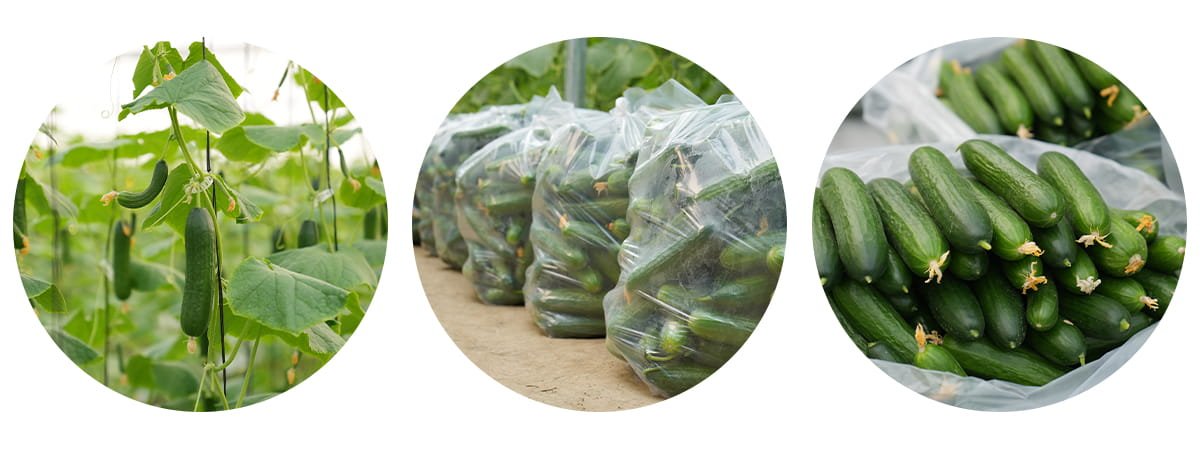
Open Field vs Polyhouse Cucumber Cultivation
Cucumber cultivation can be done in open fields as well as under protected structures. However, polyhouse cultivation provides better control over temperature, humidity, irrigation, fertigation, pest pressure, and crop quality. This makes it more suitable for commercial farmers looking for consistent production and better market value.
| Parameter | Open Field Cultivation | Polyhouse Cultivation |
|---|---|---|
| Environmental Control | Limited | Better temperature, humidity and crop protection |
| Crop Protection | Exposed to rain, wind, heat and pests | Protected from adverse weather and pest entry |
| Fruit Quality | May vary due to weather conditions | More uniform size, colour and quality |
| Water Use Efficiency | Moderate to low | Higher due to drip irrigation and fertigation |
| Market Price Potential | Mostly regular market price | Better price potential due to quality and off-season supply |
Cucumber Yield Per Plant in Polyhouse
Yield per plant is one of the most important factors in cucumber polyhouse economics. In a well-managed cucumber polyhouse, production may range from 3 kg to 4 kg per plant depending on the season, variety, climate, fertigation schedule, pest management, and overall crop care.
In the economics mentioned above, 12,000 plants per acre are considered. Based on this planting density, Crop Cycle 1 gives approximately 48,000 kg production, while Crop Cycle 2 gives approximately 36,000 kg production per acre.
| Crop Cycle | Plants Per Acre | Yield Per Plant | Total Production |
|---|---|---|---|
| Cycle 1 | 12,000 Plants | 4 kg | 48,000 kg |
| Cycle 2 | 12,000 Plants | 3 kg | 36,000 kg |
Cucumber Polyhouse Crop Calendar
A proper crop calendar helps farmers plan nursery preparation, transplanting, fertigation, harvesting, labour deployment, and market supply. In cucumber polyhouse cultivation, two major crop cycles can be planned depending on local climate and market conditions.
| Activity | Cycle 1 | Cycle 2 |
|---|---|---|
| Nursery Preparation | December | August |
| Transplanting | January | September |
| First Harvest | 35–45 days after transplanting | 35–45 days after transplanting |
| Main Harvesting Period | February to April | October to December |
Break-Even and ROI Analysis
Break-even and ROI analysis help farmers understand how long it may take to recover the investment made in a cucumber polyhouse project. Based on the figures mentioned above, the approximate total net return from two crop cycles is ₹12,04,000 per acre.
| Particulars | Approximate Value |
|---|---|
| Net Return from Cycle 1 | ₹7,95,000 |
| Net Return from Cycle 2 | ₹4,09,000 |
| Total Annual Net Return | ₹12,04,000 |
| Approximate Investment after Subsidy | ₹20,42,431* |
| Approximate Payback Period | Around 2 years* |
The actual payback period may vary depending on market prices, yield, subsidy approval, construction cost, crop management, local climate, labour cost, and marketing arrangements.
Common Mistakes in Cucumber Polyhouse Farming
Cucumber polyhouse farming requires proper planning and technical crop management. Many farmers face lower profitability when basic agronomic practices, structure planning, irrigation, and market linkage are not managed properly.
- Starting cultivation without proper crop planning and market assessment
- Using poor-quality seeds or unsuitable varieties for protected cultivation
- Maintaining improper spacing, pruning, and trellising practices
- Over-irrigation or under-irrigation due to poor water management
- Improper fertigation schedule and unbalanced nutrient application
- Ignoring pest and disease monitoring during early crop stages
- Not maintaining hygiene inside the polyhouse
- Depending only on local mandis without exploring premium buyers or direct market linkages
- Choosing low-quality structure design that may not support long-term commercial cultivation
Proper agronomy support, quality infrastructure, regular monitoring, and timely decision-making can help reduce these risks and improve the profitability of cucumber polyhouse cultivation.
Benefits of AgriFirst Polyhouse
Reliable & Robust Designed Structure
Team of experienced engineers have created designs according to Indian requirements and export markets.
Customer Education for Plant Growing
For years, our strength has been rooted in a balanced approach of educating while fostering trust and expertise.
Life-time Agronomy Support
Free agronomy support to all customers from highly experienced agronomists with 20+ years of experience. AgriFirst also assists growers through polyhouse project consultancy and hi-tech polyhouse solutions for commercial cultivation projects.
Government Subsidy for Cucumber Polyhouse Farming
The Government of India promotes protected cultivation through various horticulture development programs designed to encourage farmers to adopt modern farming technologies. Cucumber polyhouse farming projects may be eligible for financial assistance under applicable protected cultivation and horticulture development schemes.
Subsidy support can significantly reduce the initial investment required for polyhouse construction and related infrastructure. The availability of subsidy, eligibility criteria, project size limitations, and application procedures may vary depending on the state, farmer category, and prevailing government guidelines.
Farmers planning commercial cucumber cultivation under protected conditions are encouraged to verify the latest subsidy provisions, documentation requirements, and approval procedures with the concerned horticulture department before initiating the project.
Farmers may also explore protected cultivation support available under the Mission for Integrated Development of Horticulture (MIDH), which promotes modern horticulture infrastructure and protected cultivation projects across India.
Important: Subsidy availability, financial assistance amounts, and eligibility conditions are subject to change as per government policies and applicable guidelines. Farmers should verify the latest information from the concerned authorities before making investment decisions.
Cost of 1 Acre Polyhouse
The prices below are for a 1-acre polyhouse structure in India. Prices may vary based on specific requirements and location.
| Size of the Unit | 1 Acre (4092 sq.m.) |
| Foundation Pipe | Included |
| Covering Plastic | Included |
| Secondary Layer Shade Net Manual Mechanism | Included |
| Shade Net for Top Vent | Included |
| Insect Net on Four Sides | Included |
| Bottom Skirting on Four Sides | Included |
| Manual Rollup Curtain | Included |
| Double Door Entry System | Included |
| Trellising | Included |
| Structure Installation | Included |
| Ex-factory Price per Sq. Metre | ₹1060 / Sq. Metre |
| Ex-factory Price per Sq. Metre with GST @18% | ₹1250 / Sq. Metre |
| Total Investment Cost without Subsidy | ₹51,00,000* |
| NHB Subsidy | ₹28,00,000* |
| Total Investment Cost with Subsidy | ₹23,00,000* |
Total Cost for 1 Acre Polyhouse Structure in India
₹23,00,000* approximately
For official information regarding horticulture subsidy programs, growers may refer to the National Horticulture Board (NHB).
Conclusion
Cucumber polyhouse cultivation offers growers an opportunity to produce high-quality crops under protected conditions while managing environmental challenges. Understanding setup costs, operating expenses, production potential, and expected returns helps farmers evaluate the feasibility of commercial cultivation.
With proper planning, suitable infrastructure, scientific crop management, and expert agronomy support, cucumber polyhouse farming can become a productive and sustainable agricultural enterprise.
Disclaimer
- These are tentative prices and may change as per location, working conditions, project requirements and farmer-specific situations.
- The subsidy will be provided according to NHB guidelines, and terms and conditions apply.
- Production, market price and net returns may vary depending on climate, crop management, variety, labour, input cost and market demand.
To know the calculations based on your land location and weather conditions, connect with AgriFirst experts.