
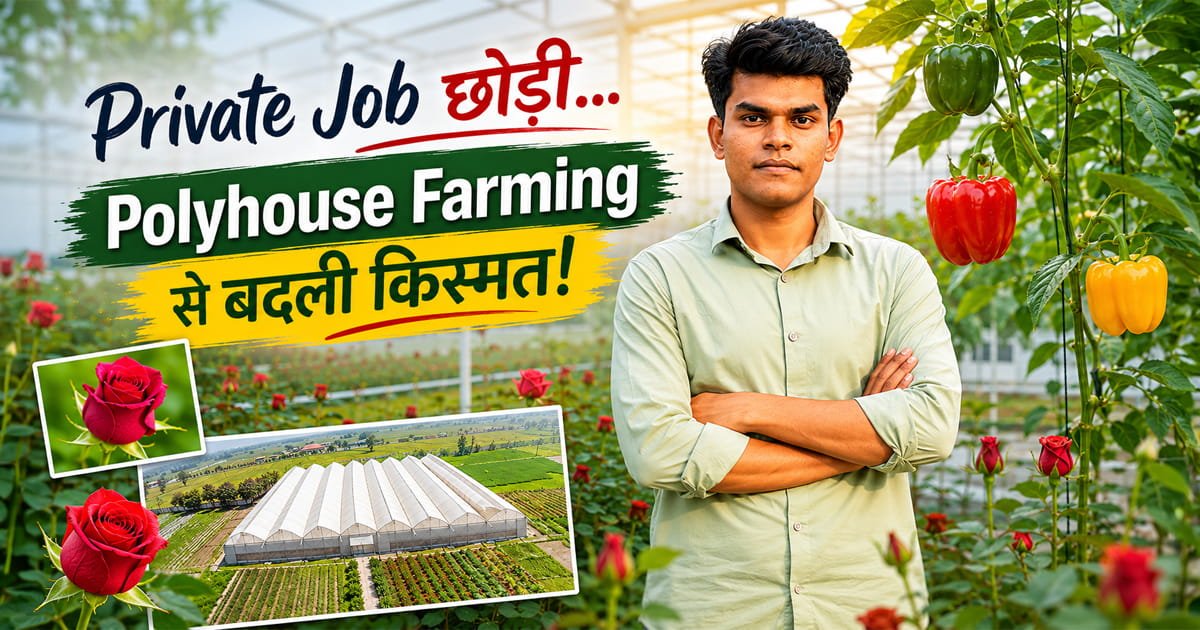
From Food Technology Graduate to Modern Farmer in Mirzapur
In Mirzapur, Uttar Pradesh, where farming has traditionally revolved around wheat and paddy cultivation, a young graduate decided to take a completely different route. Instead of continuing in a private-sector job, Rajeev Singh returned home with a vision to transform agriculture through modern protected cultivation.
Today, Rajeev’s hi-tech polyhouse stands as an example of how educated youth are redefining Indian farming through technology, scientific crop management, and long-term planning. His journey with Agrifirst reflects the growing shift toward profitable and sustainable agriculture in India.
Leaving a Job to Build Something of His Own
Rajeev Singh completed his B.Tech in Food Technology in 2020 and later moved to Lucknow for employment opportunities. Like many graduates, he hoped to build a secure future through a stable job. He joined Chini Nigam and started working professionally, but over time, he realised that the job was not giving him the long-term satisfaction he wanted.
“The job did not give me the satisfaction I was looking for. I always wanted to do something of my own,” Rajeev explains.
Back in Mirzapur, his family had always been connected to traditional farming. For years, they cultivated crops like wheat and paddy through conventional open-field agriculture. His father, Dhananjay Singh, a retired bank officer, initially believed Rajeev should continue preparing for private or government jobs.
However, Rajeev had already started thinking differently. Instead of depending on uncertain job opportunities, he wanted to build a modern agricultural business on his own farmland.
That decision became the starting point of his polyhouse farming journey.
Discovering the Potential of Polyhouse Farming
While living in Lucknow, Rajeev had observed several farmers successfully operating polyhouse projects. Unlike traditional farming, these farms looked systematic, highly productive, and technologically advanced.
After returning home, he started researching protected cultivation in detail. The more he studied modern farming methods, the more convinced he became that polyhouse farming could completely transform agricultural income.
“I saw that farmers growing crops inside polyhouses were getting better production, better crop quality, and more stable income even from smaller land areas,” Rajeev says.
Initially, convincing the family was not easy. His father had spent years believing that farming carried too much uncertainty. But after seeing Rajeev’s dedication and detailed research, the family decided to support him completely.
“My son proposed the idea of installing a polyhouse last year. Initially we were unsure, but after understanding the potential, we supported him fully,” says Dhananjay Singh.
Six months ago, the Singh family officially entered the world of protected cultivation.
Why Rajeev Chose Agrifirst
Before making any investment, Rajeev visited multiple polyhouse projects and studied different infrastructure companies carefully. He understood that success in protected cultivation depends heavily on structure quality, film durability, technical guidance, and long-term support.
For Rajeev, this was not simply about installing a farming structure. It was a long-term business decision that would shape his future.
“When I visited different projects, I realised that polyhouse structure quality, film durability, and maintenance support matter a lot in protected cultivation,” Rajeev explains.
After comparing several companies, he decided to move forward with Agrifirst because of its farmer-focused support system.
What impressed him most was the company’s quick technical response and long-term involvement with farmers even after project completion.
“I chose Agrifirst because their field support, technical guidance, and maintenance support were very responsive. Whenever farmers need help, their team responds quickly,” he says.
Unlike companies that only focus on installation, Agrifirst continued supporting the family throughout the early farming phase. That trust gave Rajeev confidence to invest in hi-tech protected cultivation.
Building a Hi-Tech Polyhouse in Mirzapur
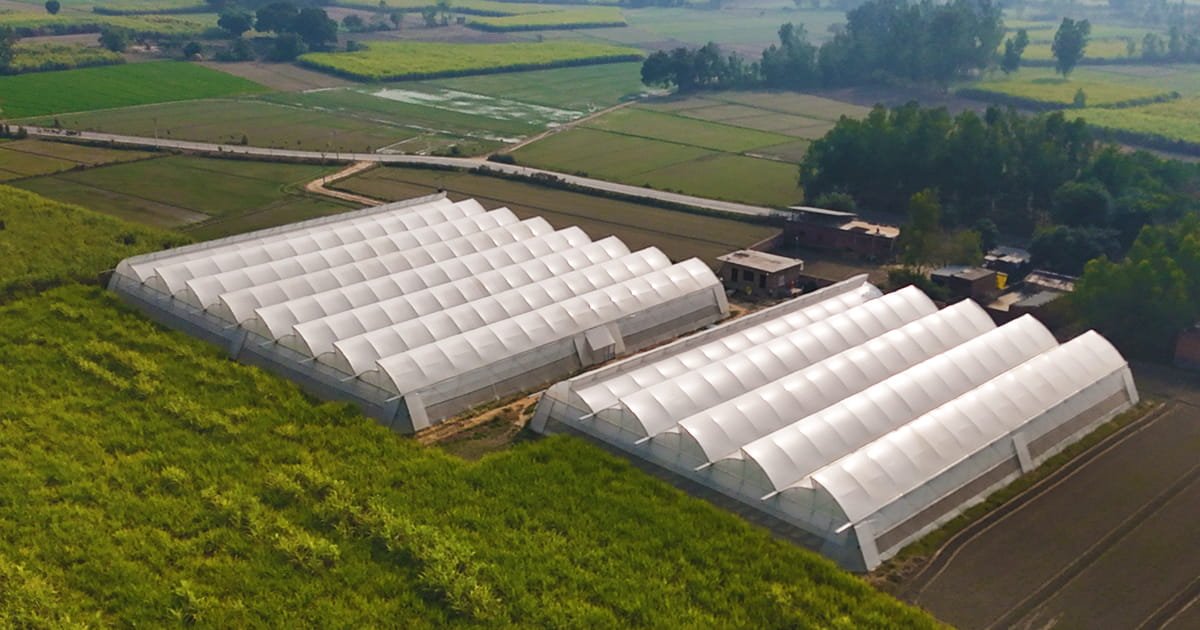
After completing the required documentation and approvals through the District Horticulture Department, Rajeev started construction of his protected farming project.
The polyhouse was completed within just one month.
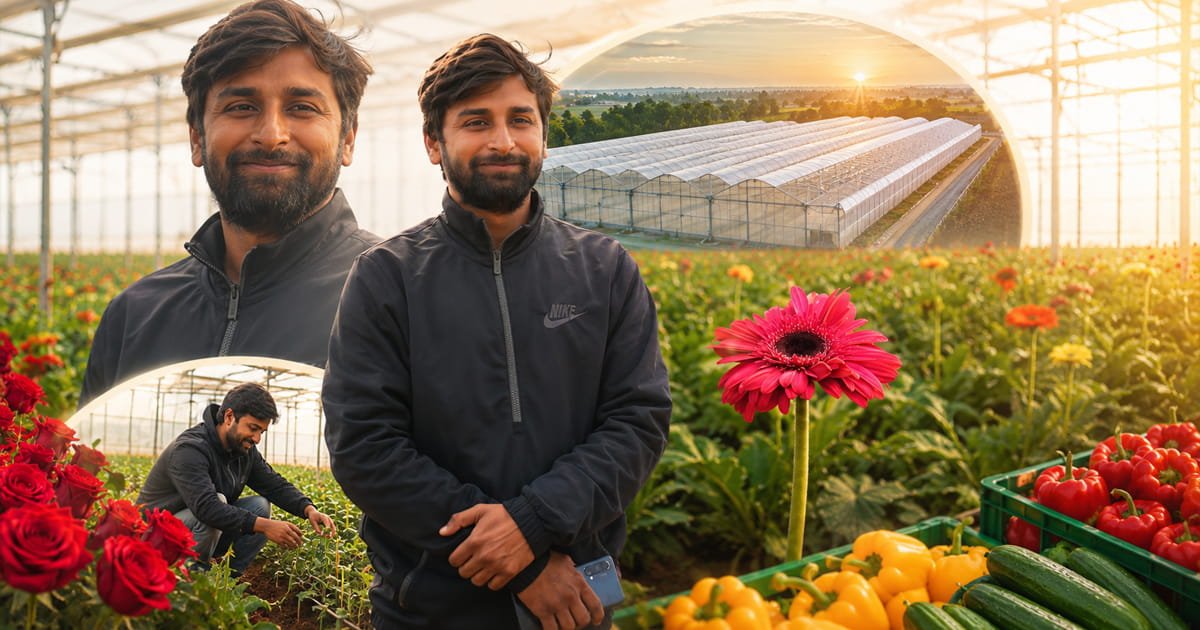
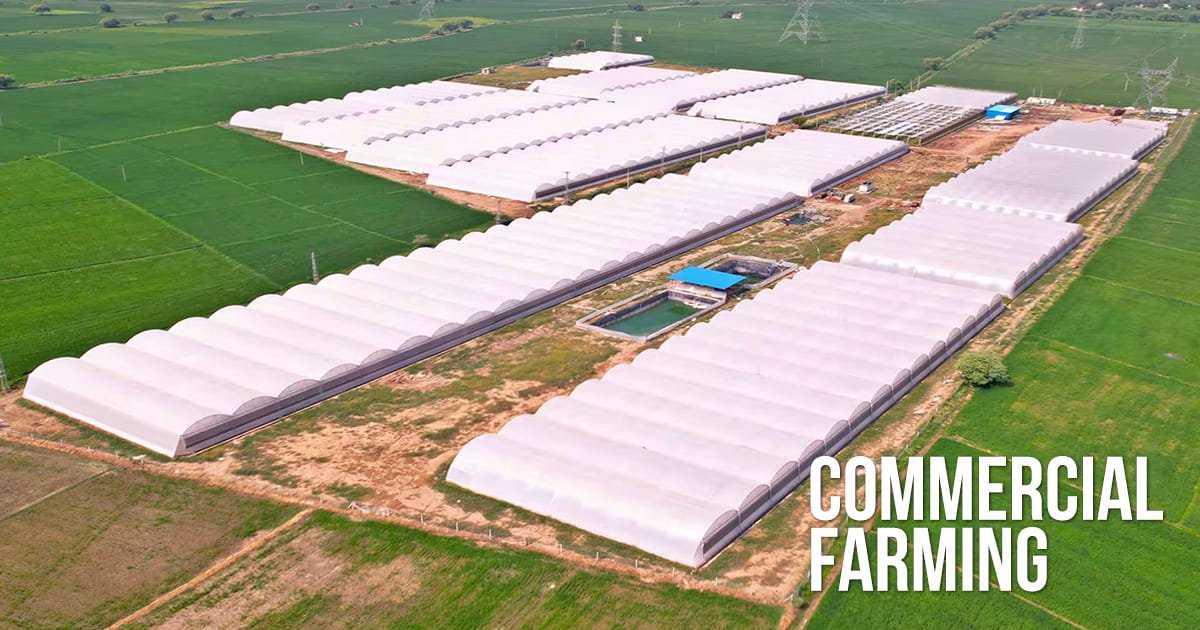
The project covered nearly 2000 square meters and included advanced climate-control systems such as foggers and sprinklers designed for improved environmental management inside the structure.
The complete project investment reached approximately ₹27 lakhs.
“The original approved project amount was around ₹20.6 lakhs, but I wanted a hi-tech setup with foggers and sprinklers for better climate control, so the total cost increased,” Rajeev explains.
Within six months, the family received approximately ₹10 lakhs subsidy under the government support scheme, which significantly reduced the financial burden.
For the Singh family, this project became one of the biggest transformations in their farming journey.
Polyhouse Project Cost Breakdown: Where the ₹27 Lakh Went
For other young farmers and educated graduates considering a similar project, here is a transparent look at how Rajeev's ₹27 lakh investment was structured. To put this in industry context: a standard commercial polyhouse in India typically costs around ₹50 lakh per acre, with the NHM offering approximately ₹22 lakh subsidy per acre and the NHB scheme offering up to ₹28 lakh subsidy per acre. Rajeev's half-acre project (2,000 sq m), built at ₹27 lakh total with a ₹10 lakh NHM subsidy, sits squarely within these benchmarks.
| Component | Amount |
|---|---|
| Originally approved project (polyhouse structure, drip irrigation, fertigation, site work) | ~₹20,60,000 |
| Hi-tech upgrade — foggers, sprinklers & climate-control system (added by choice) | ~₹6,40,000 |
| Total Project Investment | ~₹27,00,000 |
| Less: Government Subsidy (UP Horticulture / NHM) | −₹10,00,000 |
| Net Investment (After Subsidy) | ~₹17,00,000 |
The base project of ~₹20.6 lakh covered the polyhouse structure and standard systems approved under the District Horticulture Department’s commercial polyhouse scheme. The ₹6.4 lakh hi-tech add-on — foggers, sprinklers, and supporting climate-control infrastructure — was Rajeev’s own choice, designed to keep crop quality stable during Mirzapur’s hot summer months when polyhouse temperatures can otherwise spike to damaging levels.
The ₹10 lakh capital subsidy Rajeev received came through the National Horticulture Mission (NHM) — channelled through the UP Horticulture Department under the broader MIDH framework. For a half-acre polyhouse at the standard NHM benchmark of ~₹22 lakh subsidy per acre, the expected subsidy was ~₹11 lakh; Rajeev received ₹10 lakh, which aligns closely with that benchmark.
This single component reduced his out-of-pocket spend by 37%, which is the key reason polyhouse farming in India remains accessible to first-generation educated growers without crore-level family capital.
Learning Modern Farming from Scratch
Since this was Rajeev’s first year in protected cultivation, everything was new. Unlike traditional farming, polyhouse cultivation requires scientific crop planning, plant training, environmental control, and precise fertigation management.
Rajeev started learning advanced farming techniques such as:
- Clipping and pruning
- Crowning management
- Plant cutting techniques
- Fertigation planning
- Climate control management
- Crop monitoring systems
“It’s my first year, so I am still learning many things. But with time and experience, I know I will improve more,” he says confidently.
The learning process became much easier because of Agrifirst’s agronomy support system.
According to Rajeev, Agronomist Piyush from Agrifirst regularly visits the farm two to three times every month and provides guidance whenever required.
“If we face any problem, we simply send photos or videos on WhatsApp and the team immediately guides us about the solution,” Rajeev says.
This responsive support system helped him manage crop-related concerns confidently during the initial phase.
Strong Production Results in the First 6 Months
Even within the first six months, Rajeev started achieving encouraging results through protected cultivation.
In December alone, the farm produced nearly 5 tons of crop production. According to Rajeev, another 6–7 tons of production is expected within the next four to five months.
For a first-year grower, these results significantly strengthened his confidence in modern farming.
“The biggest difference I noticed is that even in a smaller area, protected cultivation gives much higher production compared to open farming,” Rajeev explains.
He also noticed major improvements in crop quality because the polyhouse protected crops from unseasonal rain, extreme climate changes, and environmental stress.
“In open farming, weather changes can damage the crop very quickly. But inside the polyhouse, climate conditions can be controlled, production remains stable, and crop quality improves,” he adds.
Government Schemes & Subsidies Available to Polyhouse Farmers in Uttar Pradesh
One of the reasons Rajeev's project became financially viable is the layered government support available to commercial polyhouse farmers in UP. Educated youth considering a similar move should understand exactly which schemes apply and how to access them.
The primary funding framework is the Mission for Integrated Development of Horticulture (MIDH) — the Government of India's umbrella programme that covers polyhouses, drip irrigation, fertigation, post-harvest infrastructure, and high-value crop cultivation. Within MIDH, two parallel schemes apply to commercial polyhouses:
- NHM (National Horticulture Mission) — provides approximately ₹22 lakh subsidy per acre on polyhouse construction. This is the scheme Rajeev availed via the UP Horticulture Department.
- NHB (National Horticulture Board) — runs a separate commercial polyhouse scheme that provides approximately ₹28 lakh subsidy per acre. NHB applications are channelled through scheduled banks and typically suit larger commercial projects.
State-level top-ups add another 10–15% subsidy in UP for marginal farmers, women applicants, and SC/ST beneficiaries. The current cost norms, scheme guidelines, and application format are published periodically on the official MIDH, NHB, and state horticulture department portals.
For the bank loan component, most polyhouse farmers in UP route their term loans through scheduled commercial banks empanelled under the NABARD agri-credit framework. These loans carry subsidised interest rates under the Agriculture Infrastructure Fund (AIF), bringing effective rates down to roughly 6–7% per annum — substantially lower than market commercial rates.
The stacked benefit looks like this: for a 1-acre polyhouse costing ~₹50 lakh, an NHM subsidy of ~₹22 lakh (or ~₹28 lakh under NHB) + 3% interest subvention via AIF + potential state top-up can bring the farmer's effective own contribution down to ~₹22–28 lakh. That's a transformative difference for first-generation farmers.
Traditional Farming vs Protected Cultivation
For years, the Singh family cultivated wheat and paddy using conventional farming methods. Like many farmers across Uttar Pradesh, they faced several common challenges:
- Dependence on monsoon rainfall
- Unpredictable climate conditions
- Lower productivity
- Unstable market prices
- Limited profit margins
- High farming risks
After experiencing protected cultivation firsthand, Rajeev now sees agriculture from a completely different perspective.
According to him, polyhouse farming creates strong income opportunities even for small farmers because higher production can be achieved from limited land areas.
“In protected cultivation, income potential becomes much higher because quality and production both improve,” he says.
He strongly believes modern agriculture can create new opportunities for educated youth who want to build independent careers instead of depending entirely on jobs.
Agrifirst’s Agronomy and Maintenance Support
One of the biggest reasons behind Rajeev’s confidence is the continuous support he receives from Agrifirst even after installation.
“It has been six months since the polyhouse was installed, and whenever we need agronomy or maintenance support, it is available with just one phone call,” says Rajeev.
From regular farm visits to instant WhatsApp guidance, Agrifirst’s support system helped him feel secure throughout the early farming phase.
His father, Dhananjay Singh, also appreciates the reliability of the technical guidance.
“In modern farming, proper guidance is very important. Agrifirst supported us continuously whenever we needed help,” he says.
For first-time growers, this type of support becomes extremely important because many farmers enter protected cultivation without previous experience.
Rajeev believes that even people who do not come from agricultural backgrounds can succeed if they receive proper training and technical support.
Planning Future Expansion
Encouraged by the positive results, Rajeev is already planning future expansion.
Although this is only the first year of operations, the increasing confidence, stable production, and market opportunities have motivated him to think bigger.
“I am planning to expand this polyhouse in the coming years,” Rajeev says.
For him, agriculture is no longer limited to traditional farming. It has become a technology-driven business focused on planning, quality production, and market understanding.
He strongly believes that if farmers produce high-quality crops consistently, market demand will naturally follow.
“People say this type of farming is too advanced or difficult, but those things are wrong. If you produce good-quality crops, buyers will definitely come and you will get good payment,” he explains.
What Year 2 and Year 3 Could Look Like for Rajeev
Rajeev is currently in Year 1 of a multi-year compounding curve. Most polyhouse farmers don’t hit their peak earning years until Year 3, and understanding this trajectory is critical for anyone evaluating polyhouse farming as a long-term business.
Year 1 (the current year — learning phase): Output is real but not yet optimised. Input costs are slightly higher than they need to be because fertigation calibration, IPM (Integrated Pest Management), and crop calendar timing are still being fine-tuned. Roughly 30–40% of cash flow goes into the bank loan EMI. Net retained income at this stage is typically 30–50% of what the polyhouse will eventually generate.
Year 2 (optimisation phase): Yields climb 20–30% as Rajeev tightens his crop calendar, reduces input wastage, and starts building direct supply relationships with organised buyers (supermarkets, food processors, regional aggregators) instead of selling everything through the local mandi. EMI obligation stays flat, but input efficiency improvements alone can lift net retained income by 60–80% versus Year 1.
Year 3 onwards (steady-state phase): The capital subsidy is fully credited back to the loan account, dropping principal substantially and reducing the EMI burden by close to 40%. Combined with peak crop performance and locked-in buyer contracts, this is the phase where the polyhouse stops behaving like a project and starts behaving like a steady income-producing asset.
The key insight Rajeev already understands: don’t evaluate polyhouse farming by Year 1 numbers. The model is built to compound — and the year the subsidy disbursement and operational rhythm both arrive is the inflection point most first-time growers don’t see coming.
A Message to Youth and Farmers
Today, Rajeev Singh’s story represents a major transformation happening across Indian agriculture.
Young educated farmers are increasingly adopting protected cultivation, greenhouse farming, and hi-tech agriculture instead of depending entirely on traditional employment opportunities.
His journey proves that with proper research, the right infrastructure partner, and continuous learning, farming can become a highly profitable and sustainable business.
“Youth have a very good opportunity in this sector. Even with a smaller land area, people can start and grow successfully,” Rajeev says.
For the Singh family, the polyhouse became much more than a farming structure. It became a symbol of confidence, independence, growth, and long-term opportunity.
And throughout this entire journey, Agrifirst remained a trusted partner helping them move confidently into the future of modern agriculture.
Conclusion
Rajeev Singh’s transformation from a Food Technology graduate working in Lucknow to a successful modern farmer in Mirzapur highlights the growing potential of protected cultivation in India.
His journey proves that agriculture today is no longer limited to traditional methods. With the right technology, expert guidance, and farmer-focused support, even first-generation growers can build profitable and sustainable agricultural businesses.
From climate-controlled infrastructure and technical guidance to agronomy expertise and maintenance support, Agrifirst helped Rajeev and his family confidently transition into hi-tech farming.
As more young farmers begin exploring protected cultivation, stories like Rajeev’s demonstrate one important truth:
Modern agriculture is not just the future of farming — it is the future of rural entrepreneurship in India.



Share your thoughts