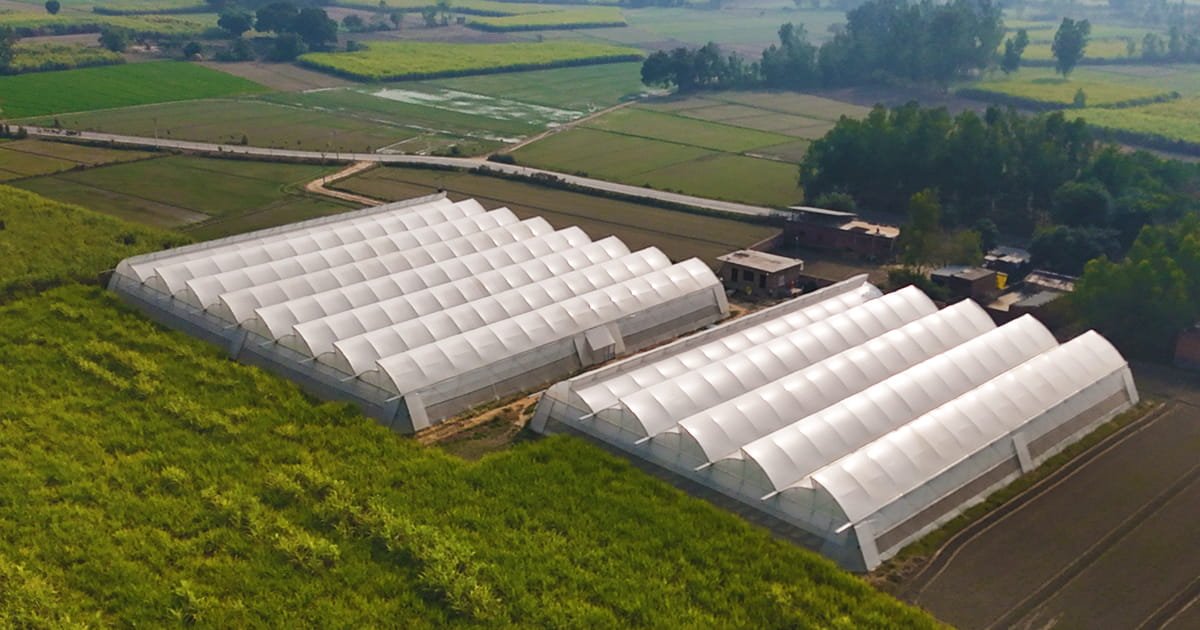
If you're planning to invest in a polyhouse and claim the NHB polyhouse subsidy, this 2026 guide is the only resource you need. We'll cover the exact subsidy numbers, eligibility, structure types that qualify, the complete 11-step application process, required documents, realistic timelines, common rejection reasons most consultants don't talk about, and the state-level top-up subsidies stacked on top of NHB.
By the end, you'll know exactly what to build, what to grow, how much money you can claim back from the government, and how to avoid the mistakes that get most applications rejected.
⚠️ Important Note (2026)
All subsidies, cost norms, and project requirements mentioned in this guide are subject to revision under the latest NHB/MIDH guidelines. The numbers in this article reflect the November 2025 cost-norm update. Always verify the current cost norms on the official NHB website before finalising your DPR.
What is the NHB Polyhouse Subsidy?
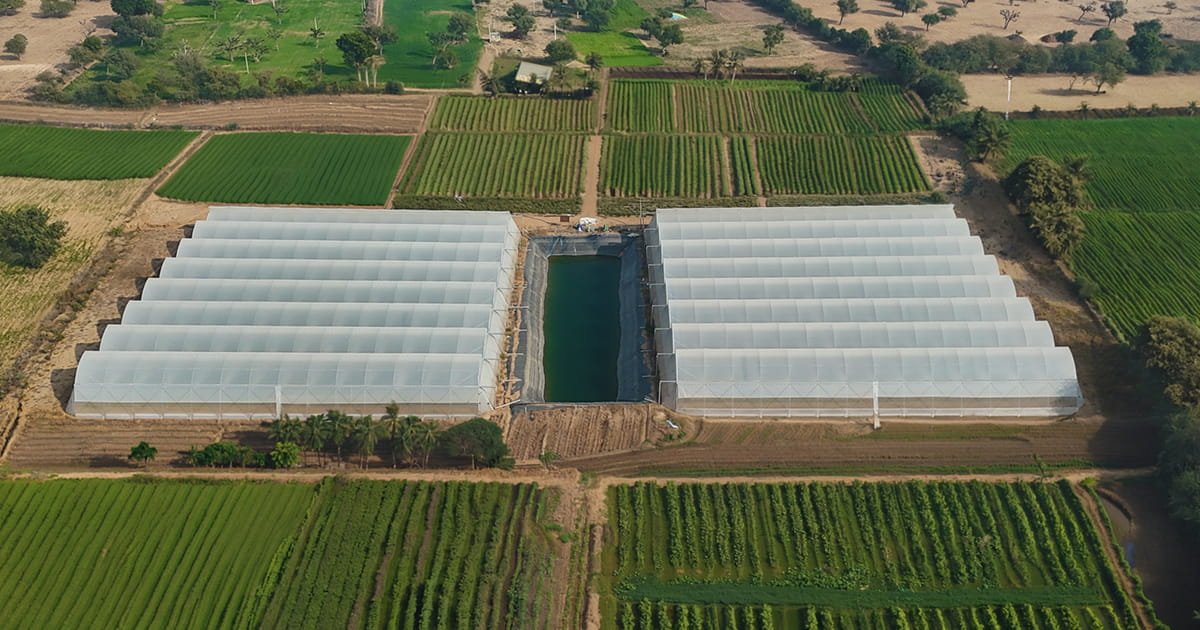
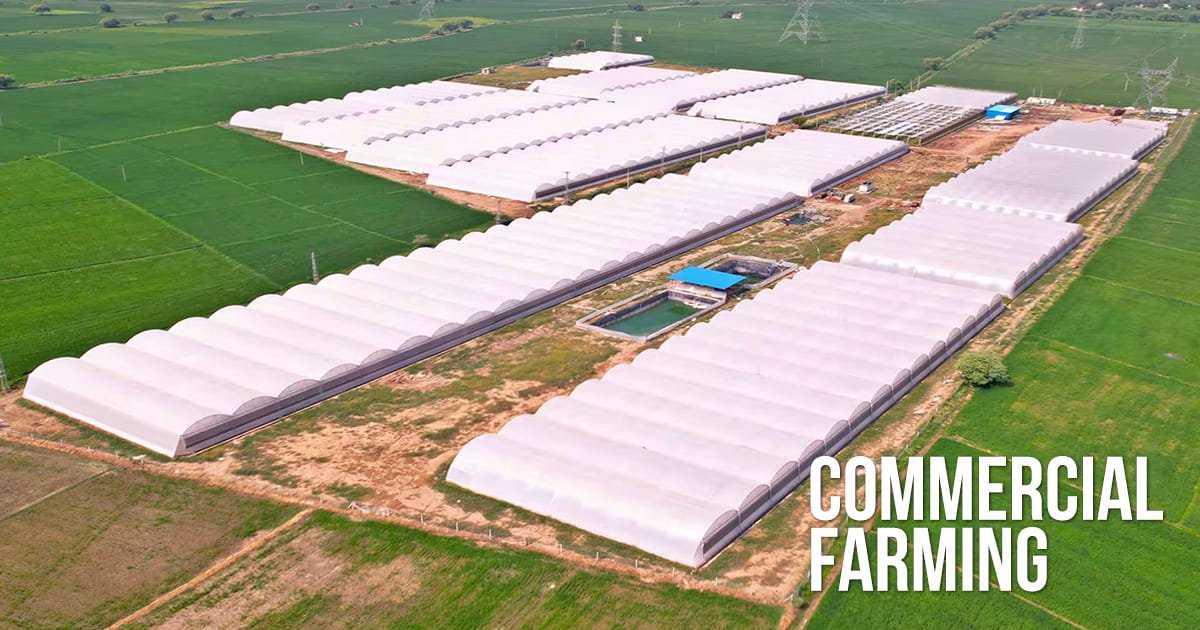
The NHB polyhouse subsidy is a capital investment subsidy administered by the National Horticulture Board (NHB) under the Ministry of Agriculture & Farmers Welfare. It is part of the wider Mission for Integrated Development of Horticulture (MIDH) framework. The scheme supports farmers, agri-entrepreneurs, and companies who set up protected cultivation infrastructure — polyhouses, greenhouses, shade net houses, and supporting irrigation/fertigation systems.
In simple terms: build a polyhouse, file the right paperwork, get up to 50% of your project cost back from the government as a back-ended credit to your bank loan account.
Why the Government Supports Polyhouse Farming
Protected cultivation is one of the few agricultural interventions with measurable returns on every metric the government cares about — yield per acre, water efficiency, farmer income, and export readiness. That's why NHB treats commercial polyhouse projects as a priority sector. Key government objectives:
- Double farmer income by enabling 3–4× higher yields on the same land
- Reduce water use by 40–60% via drip + fertigation
- Climate-resilient agriculture — protect crops from unseasonal rain, frost, hail, and heatwaves
- Export competitiveness — produce export-grade quality consistently
- Reduce pesticide load by 50–80% through physical barriers and IPM
NHB Polyhouse Subsidy: Key Numbers at a Glance (2026)
| Parameter | Detail |
|---|---|
| Subsidy Rate | 50% of admissible project cost |
| Maximum Subsidy | ₹1 Crore per project |
| Minimum Project Area | 2,500 sq.m (0.25 ha) |
| Maximum Project Area | No cap — but subsidy is capped at ₹1 Cr |
| Disbursement | Back-ended, in 2 tranches after inspection |
| Lock-in / Hold Period | 5 years minimum operation |
| Mode of Application | Through scheduled bank — DPR-based |
Who Can Apply for the NHB Polyhouse Subsidy?
NHB's eligibility list is broader than most people assume. You qualify if you fall into one of these categories:
- Individual farmers — landowners or registered tenants with 99-year lease
- Group of farmers / Farmer Producer Organisations (FPOs)
- Companies, partnership firms, LLPs, proprietorships registered under Indian law
- Cooperative societies and self-help groups
- NGOs and trusts working in horticulture
- Agri-startups with a clear commercial cultivation plan
Non-eligibility: Speculative land-banking firms, government departments, and projects on leased land with less than 7 years tenure remaining are generally not approved.
Polyhouse Types That Qualify for NHB Subsidy
NHB approves three protected cultivation structures. Each has its own cost norm and best-fit use case:
| Structure | Cost Norm (₹/sq.m) | Best For |
|---|---|---|
| Naturally Ventilated Polyhouse (NVPH) | ₹935 / sq.m | North/Central India, mild summers — most popular for commercial use |
| Fan & Pad Polyhouse | ₹1,650 / sq.m | Hot/dry climates, high-value imports, year-round precision cropping |
| Shade Net House | ₹710 / sq.m | Entry-level horticulture, nurseries, leafy vegetables, floriculture |
Eligible Crops Under NHB Subsidy
Not every crop qualifies. NHB approves protected cultivation only for high-value horticulture where the per-acre economics justify the investment:
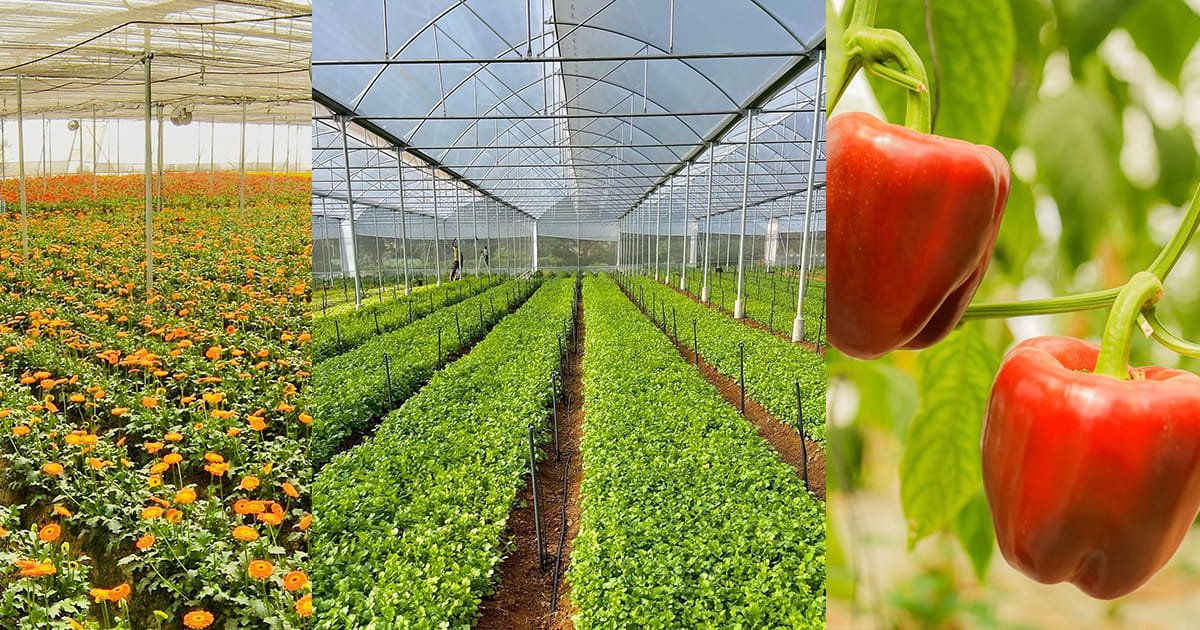
🌶️ Vegetables
Coloured capsicum, cherry tomatoes, seedless cucumber, exotic leafy greens (lettuce, kale, basil), broccoli, zucchini
🌹 Flowers
Roses, gerbera, carnation, chrysanthemum, lily, anthurium, orchids
🍓 Fruits
Strawberries, blueberries, exotic melons
NHB Cost Norms 2026: Complete Breakdown
The NHB subsidy is calculated on admissible cost, not actual cost. If your project cost exceeds the notified norm, the excess is treated as your contribution. Here are the current cost norms:
| Component | Admissible Cost | Subsidy @ 50% |
|---|---|---|
| NVPH structure | ₹935 / sq.m | ₹467.50 / sq.m |
| Fan & Pad Polyhouse | ₹1,650 / sq.m | ₹825 / sq.m |
| Shade Net House | ₹710 / sq.m | ₹355 / sq.m |
| Drip irrigation system | ₹81,250 / ha | ₹40,625 / ha |
| Fertigation unit | ₹2.5 L / ha | ₹1.25 L / ha |
| Vegetable cultivation (input) | ₹140 / sq.m | ₹70 / sq.m |
| Flower cultivation (input) | ₹610 / sq.m | ₹305 / sq.m |
The 11-Step NHB Subsidy Application Process
This is the full end-to-end roadmap from idea to subsidy disbursement. Most consultants summarise it in 5–6 steps and gloss over the messy middle. Here's the real workflow:
- Site & soil assessment — water test, soil test, agro-climatic suitability check. NHB approves only sites with clean water and suitable soil.
- Choose structure & crop mix — match polyhouse type to climate and crop to market. This single decision determines profitability.
- Prepare a bankable DPR — Detailed Project Report covering land details, project cost, revenue projections, cash-flow, and break-even analysis. This is the most important document in the entire application.
- Collect KYC + land documents — see the checklist below.
- Approach scheduled bank or NABARD — submit DPR for term loan sanction. NHB applications are routed through the bank, not directly.
- Bank appraisal & sanction — typically 4–8 weeks. Sanction letter is your green light to file with NHB.
- NHB online application — file the DPR + sanction letter on the official NHB portal. Pay ₹5,000 application fee.
- NHB technical appraisal — typically 6–8 weeks. NHB officials review your DPR and may visit the site.
- Construction begins — after bank's first loan disbursement to your vendor (e.g., Agrifirst). Structure typically takes 45–90 days.
- Plantation & portal confirmation — first crop cycle planted; status updated on NHB portal.
- Joint inspection & subsidy disbursement — NHB + bank conduct joint physical inspection. On approval, subsidy is credited back-ended to your loan account in two tranches.
Documents You'll Need for the NHB Polyhouse Subsidy
📋 Personal & KYC
- PAN card
- Aadhaar
- Passport-size photographs
- Bank statements (last 6 months)
- ITR for last 2 years
🏡 Land & Site
- Land ownership documents (7/12 or equivalent)
- Mutation entry
- Soil test report
- Water test report
- Site map & layout
📊 Project & Financial
- NHB-format Detailed Project Report (DPR)
- Vendor quotation
- Bank loan sanction letter
- Crop calendar & revenue projection
- Insurance proposal
Realistic Timeline: How Long Does NHB Subsidy Actually Take?
| Phase | Duration |
|---|---|
| Site & soil assessment + DPR prep | 3–4 weeks |
| Bank loan sanction | 4–8 weeks |
| NHB technical appraisal | 6–8 weeks |
| Polyhouse construction | 45–90 days |
| Plantation + inspection | 3–4 weeks |
| Total elapsed time | 6–9 months |
Common Reasons NHB Polyhouse Subsidy Applications Get Rejected
This is the section every other guide skips. After years of filing applications, here are the real rejection causes you must avoid:
- Generic, copy-paste DPR — DPRs that don't match local conditions and ground realities are flagged immediately.
- Wrong crop selection — proposing a crop that doesn't suit your zone (e.g., gerbera in coastal humid belt) is a common rejection cause.
- Water test failure — high EC, salinity, or low water table without a borewell + reservoir plan disqualifies the site.
- Disputed land titles — any encumbrance, family dispute, or recent transaction without clean mutation gets the file held up indefinitely.
- Cost-norm violations — quoting unverified vendor rates or inflating component costs.
- Wrong vendor selection — using non-empanelled or unproven polyhouse contractors raises red flags during inspection.
- Skipping insurance — NHB inspections check that the polyhouse and crop are insured. Missing this delays disbursement.
- Premature claims — applying for tranche disbursement before plantation is portal-confirmed.
State Top-Up Subsidies (Stack These With NHB)
Most farmers don't realise that state horticulture departments offer additional subsidies on top of NHB. Stacked correctly, your effective cash outlay can drop by another 10–20%:
| State | Additional Top-Up | Notes |
|---|---|---|
| Uttar Pradesh | 10–15% | Higher for SC/ST & women farmers |
| Madhya Pradesh | 15–20% | Stronger benefit for tribal districts |
| Maharashtra | 10–15% | MAHADBT portal-based |
| Rajasthan | 15–20% | Strong support for protected cultivation |
| Punjab | 10% | Diversification-focused |
| Karnataka, Tamil Nadu, Gujarat | 5–15% | Varies by sub-scheme |
Note: State subsidies change annually. Always verify current rates with your state horticulture department.
Worked Example: How the Numbers Actually Play Out on a 1-Acre Polyhouse
📐 Project Specs
Area: 4,000 sq.m (≈ 1 acre) NVPH
Crop: Coloured capsicum
A ₹44.3 lakh project effectively becomes a ~₹15.5 lakh out-of-pocket investment — and the income from it is 100% tax-free under Section 10(1).
How Agrifirst Helps With NHB Polyhouse Subsidy
Filing for the NHB subsidy on your own is technically possible, but the rejection rate for first-time applicants is high. Agrifirst has filed hundreds of bankable DPRs and walks farmers through every step — site assessment, NHB-format DPR, bank coordination, NHB portal filing, construction, inspection support, and post-construction agronomy. Our end-to-end model is designed so that your subsidy actually lands in your account, not stuck in a perpetual queue.
Get Started
Book a free NHB subsidy consultation with Agrifirst
We'll assess your land, walk you through the right structure for your budget, and prepare a bankable DPR that maximises your subsidy claim.
Talk to an Agrifirst Expert →




Share your thoughts