
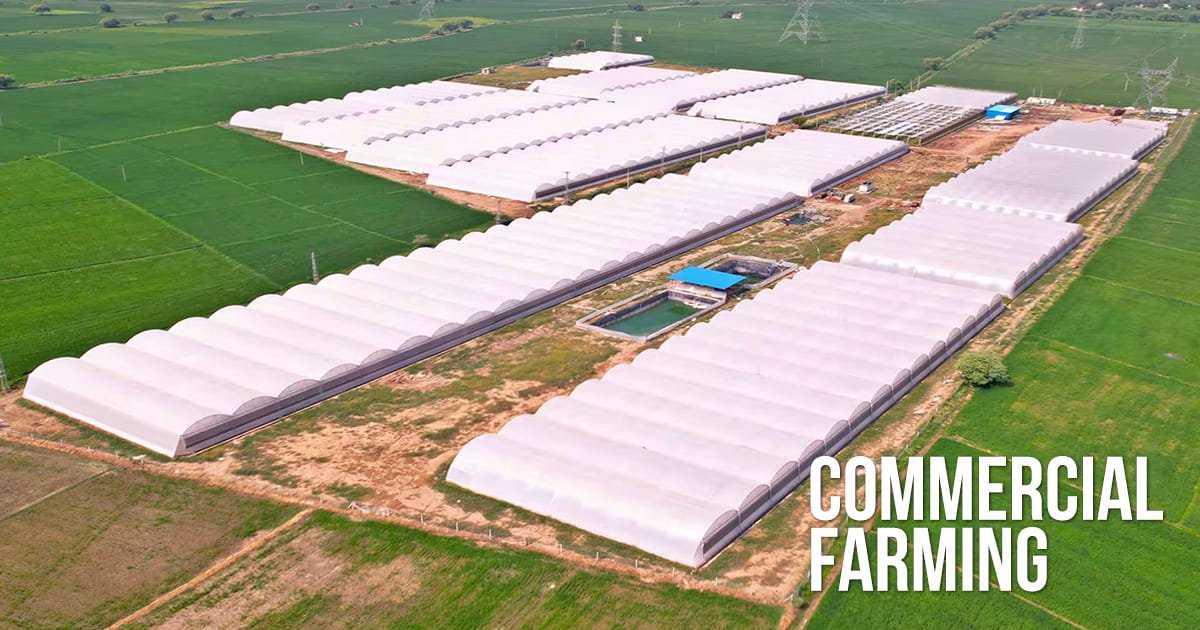
10-acre commercial polyhouse farming has quietly become India's most predictable agri-business — an asset class that combines real-estate-grade investment, factory-grade output, and 100% tax-free income under Section 10(1) of the Income Tax Act. For investors and progressive farmers alike, a commercial NVPH (Naturally Ventilated Poly House) project of 10 acres or more turns idle agricultural land into a cash machine that pays itself back in roughly three years and runs profitably for 15–25 years.
This guide breaks down everything you need to know before committing capital — total investment, government subsidies you actually qualify for, year-on-year income projections, which crops earn premium prices, and what end-to-end support looks like at this scale.
What Is Commercial Polyhouse Farming?
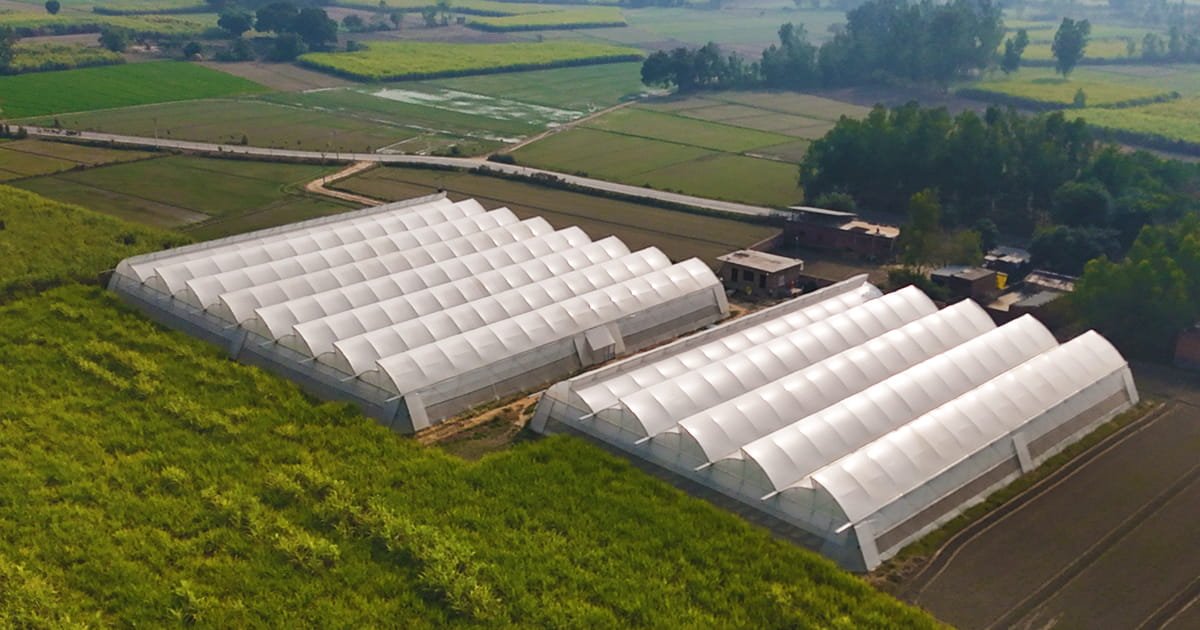
A polyhouse is a GI (galvanised iron) framed structure covered with UV-stabilised polyethylene film that creates a protected micro-climate for crops. The Naturally Ventilated Poly House (NVPH) variant uses ridge and side vents to regulate temperature and humidity passively — no fans, no power-hungry climate control. This makes it the most economical and operationally efficient design for Indian conditions.
At a commercial scale of 10 acres or more, polyhouse farming stops being a hobby project and becomes a genuine agri-business: you supply contracted volumes to supermarkets, food processors, and export houses at premium, contracted prices — not the volatile open-mandi rate.
Why 10 Acres — Not Less?
- Bulk supply contracts — organised buyers won't sign for less than 10-acre output.
- Economies of scale — fixed costs (management, cold storage, equipment) spread across 10 acres reduce per-unit cost by 60–70%.
- Maximum subsidy eligibility — NHB's commercial slab is built for larger area projects.
- Bankable project — banks and NBFCs readily finance 10-acre proposals with structured cash-flow models.
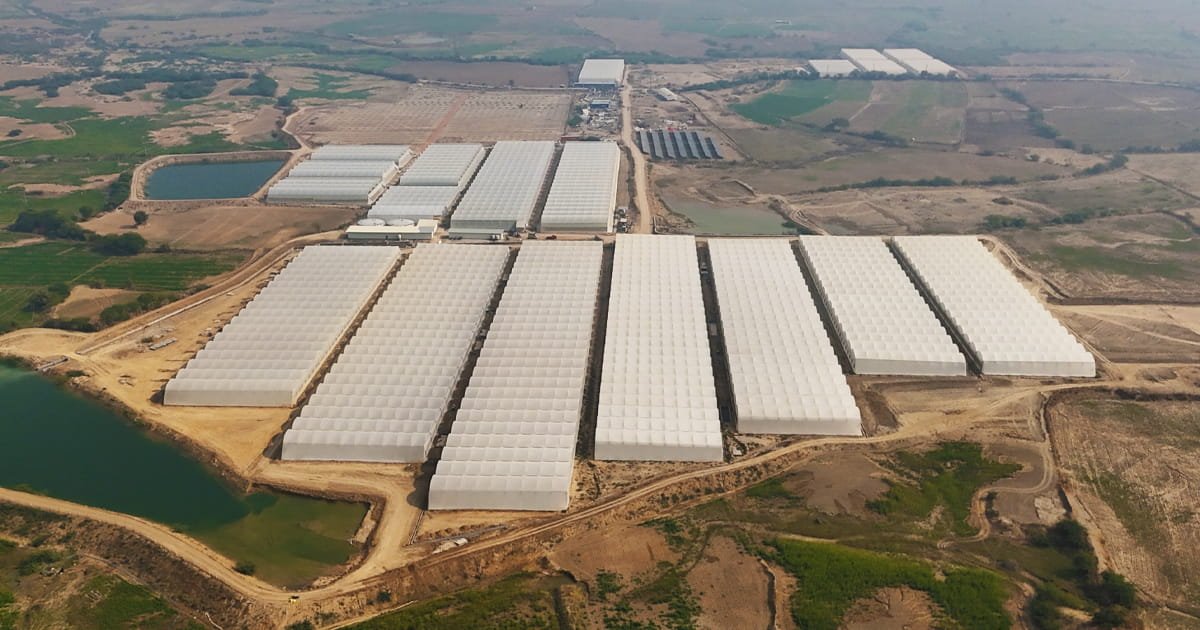
Investment Breakdown: What Does a 10-Acre Commercial Polyhouse Actually Cost?
Indicative 10-acre commercial polyhouse farming investment in North/Central India sits around ₹5.5 crore. This is a turnkey number — the structure, films, and core systems your land needs to be production-ready on day one. Costs vary by state, design specification, and site conditions, but the composition stays roughly the same:
| Component | Approx. Share |
|---|---|
| GI Frame Polyhouse Structure | 55–60% |
| UV-stabilised Poly Film + Shade Nets | 10–12% |
| Drip Irrigation + Fertigation System | 12–15% |
| Water Reservoir + Pump House | 6–8% |
| Site Development + Foundation | 8–10% |
Government Subsidies & Schemes: Bringing Your Effective Investment Down
Commercial polyhouse farming is one of the most heavily-supported segments in Indian agriculture. Stacked correctly, government schemes can reduce your effective cash outlay to under ₹3 crore on a ₹5.5 crore project.
1. NHB Subsidy (MIDH Scheme)
Up to 50% of project cost, capped at ₹1 crore per project. Covers structure, drip irrigation, and fertigation. Released in two tranches after technical inspection.
2. NABARD Soft Loan
Agricultural term loans at subsidised rates (4–7% p.a.) with 7–10 year tenure and a moratorium period. Eligible amounts: ₹50 lakh to ₹5 crore.
3. Agriculture Infrastructure Fund (AIF)
3% interest subvention on bank loans up to ₹2 crore, bringing effective rates to ~6% p.a. for ancillary infrastructure like cold storage and pack-houses.
4. State Horticulture Top-Up
UP, MP, Maharashtra, Rajasthan, Punjab and other states layer an additional 10–20% subsidy over and above NHB for commercial projects.
Annual Income & ROI: The Numbers That Matter
A well-managed 10-acre commercial polyhouse generates ₹1.5 to ₹2 crore in net annual income, delivering 25–35% annual ROI after subsidy. Most projects achieve full capital recovery in three years and run profitably for another 15–22 years on the same structure.
| Metric | Figure |
|---|---|
| Total Setup Investment | ₹5.5 Crore |
| NHB Subsidy (capped) | Up to ₹1 Crore |
| Annual Income | ₹1.5 – 2 Crore |
| Annual ROI (post-subsidy) | 25–35% |
| Full Capital Recovery | 3 Years |
| Structure Lifespan | 15–25 Years |
| Income Tax | 100% Tax-Free |
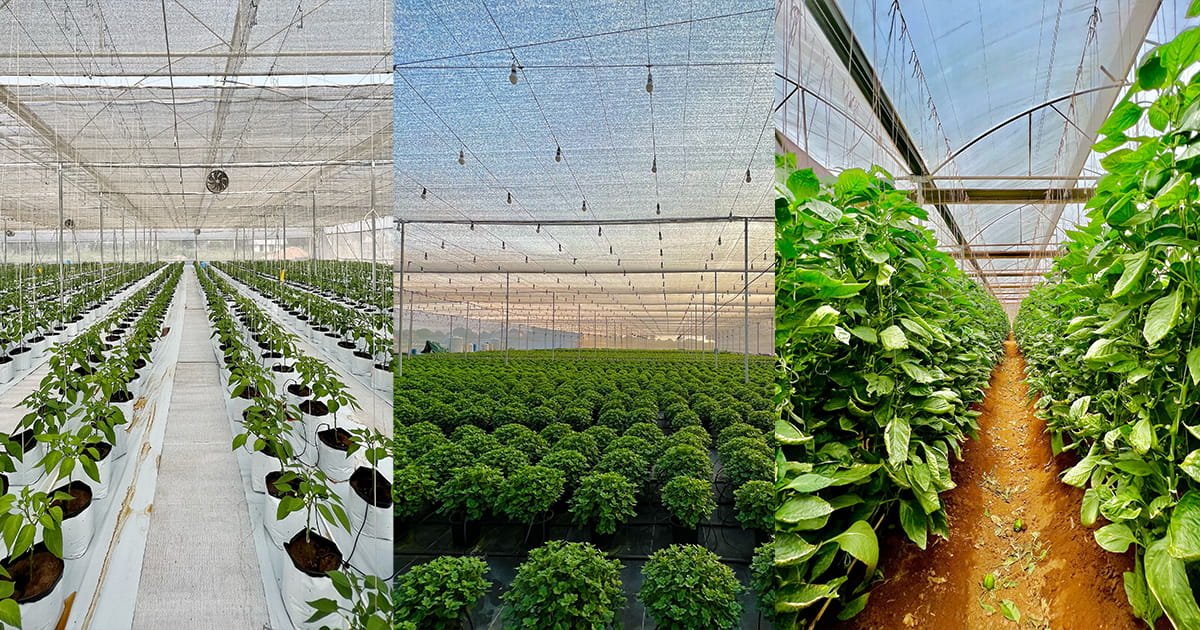
High-Value Crops for a 10-Acre Commercial Polyhouse
The crops that make a commercial polyhouse profitable are not the commodities you'd grow in open fields. These are premium-priced varieties that open-field farming cannot reliably produce:
- Coloured Capsicum (red, yellow, orange) — ₹80–150/kg, 3–4 cycles/year
- Cherry Tomatoes — ₹60–120/kg, premium retail & processing
- Seedless Cucumber (Dutch variety) — ₹40–80/kg, export-grade
- Strawberries — ₹150–400/kg, premium fresh and export
- Roses, Gerbera, Carnation — ₹5–20 per stem, year-round demand
- Exotic Leafy Greens (lettuce, kale, basil, broccoli) — ₹50–120/kg
Crop selection is the single biggest determinant of project profitability — wrong crop choice is the #1 reason commercial polyhouse projects underperform. An experienced agronomy partner matches your crop mix to your local climate, water quality, market proximity, and buyer demand.
Commercial Polyhouse vs. Traditional Open-Field Farming
| Parameter | Open Field | Commercial Polyhouse |
|---|---|---|
| Harvest cycles / year | 1–2 | 3–4 |
| Yield per acre | Baseline | 3–5× higher |
| Water consumption | 100% (flood) | 40–60% less |
| Crop pricing | Commodity rate | 3–10× premium |
| Income tax | Slab-based | 100% exempt |
| Government subsidy | Minimal | Up to 50% |
End-to-End Support: What You Actually Need to Start
Building a successful 10-acre commercial polyhouse is not a construction project — it's an agri-business launch. The setup phase alone touches site assessment, polyhouse design, NHB-bankable Detailed Project Report (DPR) preparation, turn-key construction, and irrigation engineering. The grow phase requires precision fertigation, IoT climate monitoring, and weekly agronomist visits. The sell phase is where most independent projects falter — connecting to organised buyers (supermarket chains, food companies, export agents) requires a network that takes years to build.
Working with an experienced partner like Agrifirst consolidates all three phases into a single relationship — design, construction, subsidy filing, crop planning, ongoing agronomy, and market linkage under one roof.
Is Commercial Polyhouse Farming Right for You?
Commercial polyhouse farming fits one of three profiles best — landowning farmers ready to professionalise their operation, corporate or HNI investors seeking tax-efficient agri-assets, and returning NRIs deploying India-based capital. If you own 10+ acres in a horticulture-friendly state, have access to clean water, and can commit to a three-year ROI horizon, this is among the most predictable wealth-creation paths Indian agriculture offers right now.




Share your thoughts