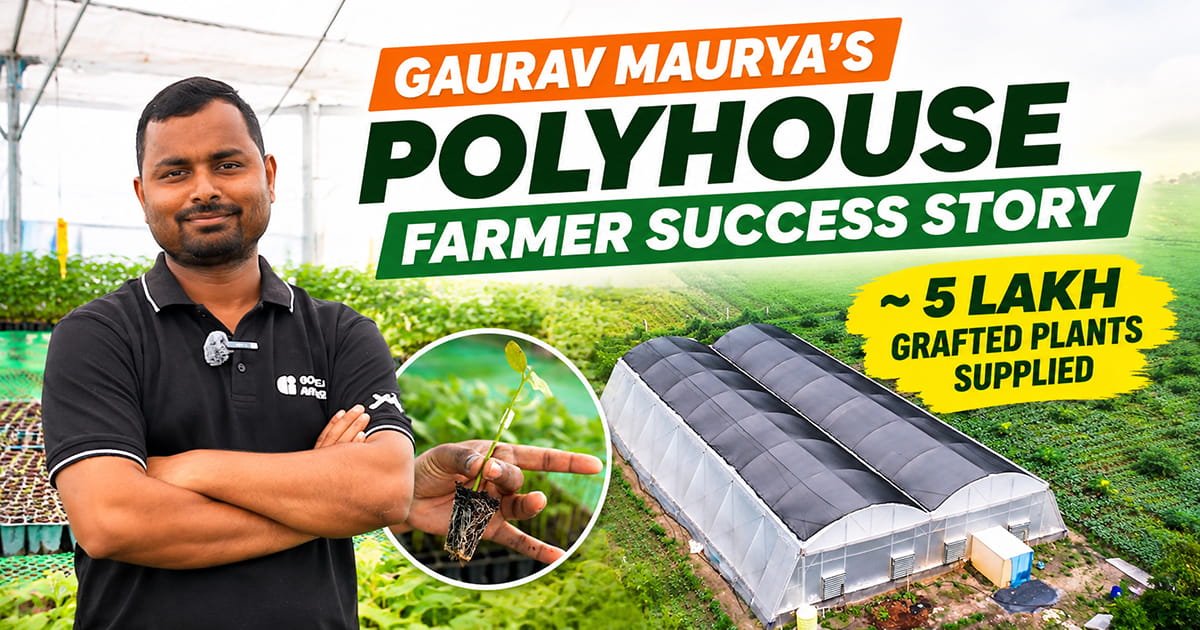
When Gaurav Maurya started working in agriculture in 2021, his family was facing financial difficulties. He needed to find a way to generate income, but he could not have known how far his journey would take him.
Today, Gaurav operates a grafting nursery farm in Kakrahi, Sonbhadra, Uttar Pradesh. What began with an Agri Junction seed store eventually developed into a grafting nursery business, supported by a polyhouse structure installed by AgriFirst.
His journey has involved financial uncertainty, technical problems, damaged nursery plants, and the challenge of learning how to manage a larger operation.
Yet those experiences became an important part of his progress. According to Gaurav, his nursery prepared and supplied approximately 5,00,000 grafted plants to farmers last year.
His story is not simply about establishing a polyhouse. It is about learning a specialised farming activity, recovering from losses, and gradually building a nursery business that now receives more plant orders than his existing structure can fully accommodate.
A Farming Journey That Began With Financial Difficulties
Gaurav Maurya comes from Kakrahi in Sonbhadra district, Uttar Pradesh. Agriculture was already part of his family background, as his father practised traditional farming.
However, Gaurav felt that continuing with the existing farming approach would not provide the kind of setup he wanted to develop for the future.
In 2021, financial responsibilities at home became increasingly difficult to manage. The family was facing a serious income problem, and Gaurav needed to explore another way of earning.
That situation led him to Agri Junction.
He started an Agri Junction seed store, which became his first successful step into an agriculture-related business.
Although the seed store was working, Gaurav continued looking for opportunities within the agricultural sector.
After approximately one year, he began working with grafting.
This decision would eventually change the direction of his business.
How Gaurav Discovered the Opportunity in Grafting Nursery Farming
Gaurav was not entirely unfamiliar with grafting when he entered the business.
During his B.Sc. education, he had studied and developed an understanding of the grafting technique. Later, when he became involved in farming, he received further information about the subject.
He also observed that the vegetable market offered opportunities for grafted plants.
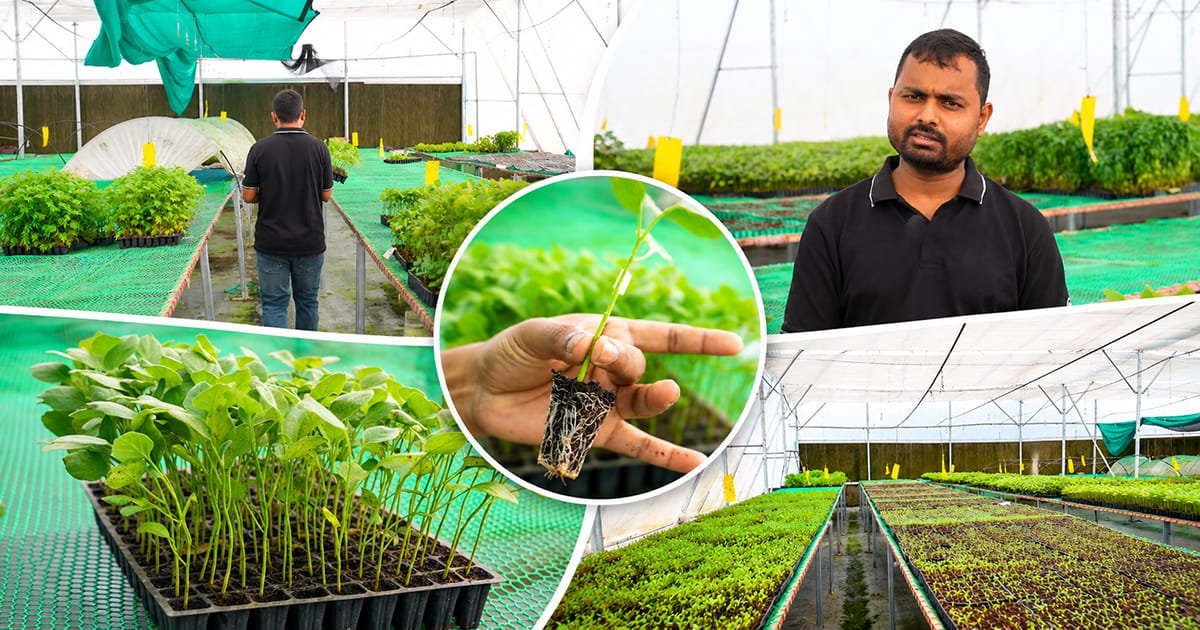
With this understanding, he decided to begin grafting and supplying plants to farmers.
His initial grafting work was successful.
Gradually, he noticed that more people were becoming interested in grafted plants. The increasing enquiries and demand suggested that there was a larger market for this activity in his area.
Instead of immediately investing in a large structure, Gaurav began with arrangements he could make himself.
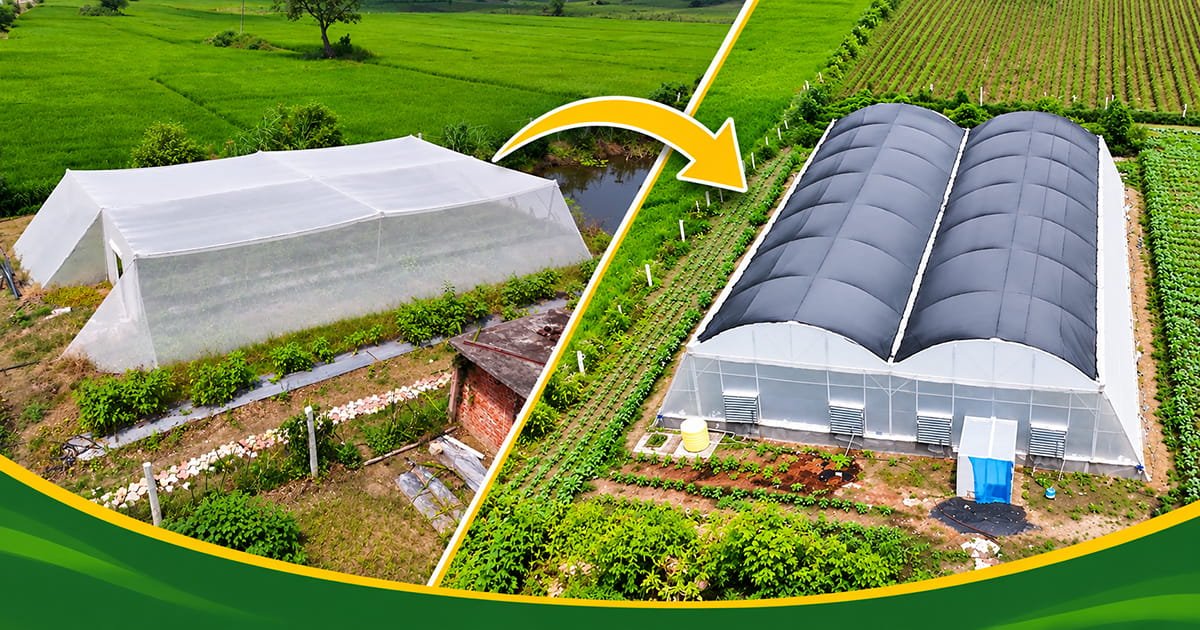
Using locally managed, makeshift arrangements, he constructed a Net House and started carrying out grafting activities inside it.
He continued working in that setup for approximately one year.
During this period, he gained practical experience and observed that the demand for plants was continuing to grow.
The experience helped him recognise that he needed a larger nursery setup to support his work.
From a Makeshift Net House to an AgriFirst Polyhouse
As Gaurav's grafting nursery business developed, the limitations of his existing setup became more apparent.
He was receiving demand for grafted plants and wanted to expand beyond the makeshift Net House he had initially constructed.
Before deciding on a new structure, he sought information from people who already had experience with polyhouses.
One of those people was his friend Rajeev.
Rajeev had a two-acre Naturally Ventilated Poly House setup. Gaurav visited him, observed the structure, and discussed polyhouse construction and structural quality.
Rajeev suggested that if Gaurav was going to make a substantial investment, he should consider choosing an AgriFirst structure.
Gaurav also spoke with other people about available structures.
Based on those discussions and what he had observed, he developed confidence in AgriFirst's structural quality.
He subsequently chose AgriFirst for his larger nursery setup.
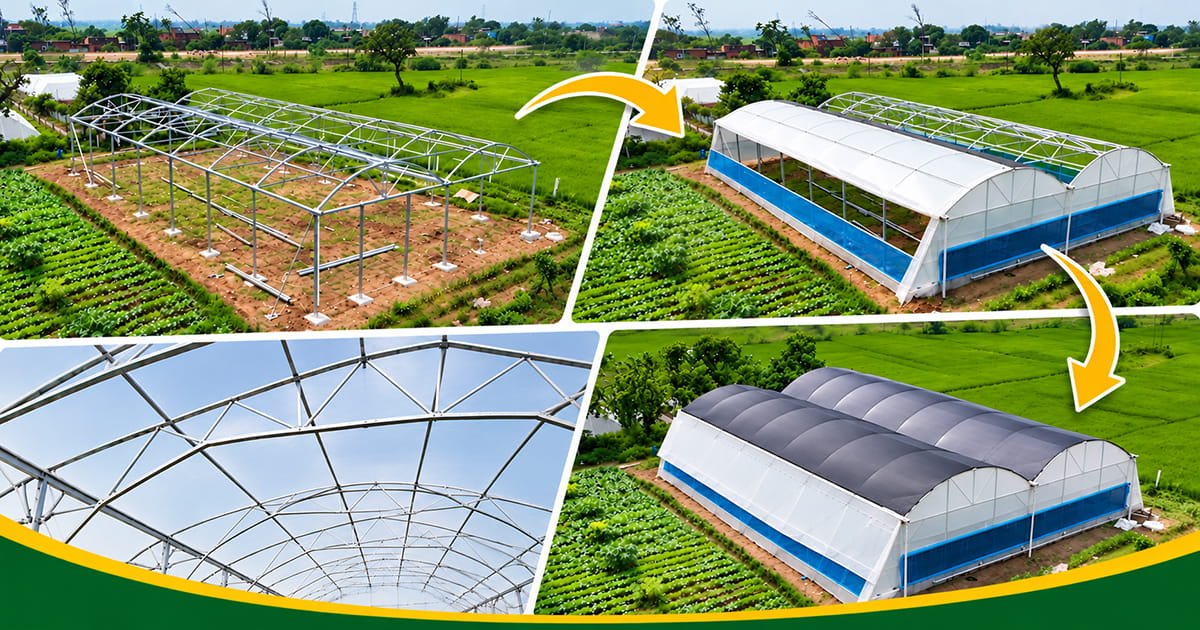
Through AgriFirst, Gaurav installed a Fan Pad System Poly House for his grafting nursery operations.
According to Gaurav, the polyhouse was constructed and ready approximately one month after the application.
He also described the service he received during the process as very good.
For Gaurav, choosing the structure was an important business decision. He was investing in a larger setup while still developing his experience in nursery management.
Managing the Financial Challenges of Polyhouse Construction
Expanding the nursery required money, and arranging that investment was not easy for Gaurav.
At the time of setting up the polyhouse, he faced financial difficulties.
To proceed with the project, he took a loan from a bank.
He also received assistance from officers of the horticulture department.
In his account, Gaurav explains that the company made an arrangement concerning the portion of the payment associated with the expected subsidy.
He describes an arrangement involving a cheque, under which the relevant payment to the company would be made when the subsidy was received.
At the time of his account, Gaurav said that his subsidy was expected and that the corresponding payment would go to the company.
He expressed appreciation for the help provided by the horticulture department officers during this process.
However, arranging the investment was only one part of the challenge.
Gaurav was also worried about whether the nursery would become successful enough to justify the money he was putting into it.
Before construction, he repeatedly questioned whether the investment would work or whether he might suffer losses.
These concerns created considerable anxiety.
He had committed to a larger nursery operation, but its future performance was still uncertain.
Over time, as he gained experience and began generating income more effectively, he became more confident about the business.
The Early Nursery Mistakes That Caused Financial Losses
Although Gaurav had gained experience with grafting, managing the nursery inside the new polyhouse brought additional challenges.
One of the most difficult periods came during his initial nursery operations.
In the first shift of nursery production, he placed the nursery plants very close to the ground.
As a result, the roots became connected to the soil below.
This created a serious problem for the nursery, and Gaurav says that the entire nursery was spoiled.
He also encountered problems related to EC (Electrical Conductivity) in the coco peat.
These difficulties caused further nursery damage and substantial financial losses.
For someone who had already invested considerable money in the polyhouse, the experience was discouraging.
Gaurav began questioning whether the nursery business was going to be profitable at all.
He had entered the activity because he saw an opportunity, but the initial losses made him reconsider the situation.
His experience illustrates an important part of his journey: having a polyhouse structure did not mean that he immediately knew how to manage every aspect of nursery production.
He still needed to learn from the problems he was encountering.
Rather than abandoning the business, Gaurav decided to make improvements.
How AgriFirst's Agronomy Support Helped Him Improve
After facing losses in his nursery, Gaurav sought technical assistance.
He contacted Peeyush Sir for agronomy support.
According to Gaurav, Peeyush provided technical information about operating the polyhouse and managing the system.
This guidance helped him address the problems he had been experiencing.
Gaurav continued making improvements and learning from his work.
He explains that, gradually, he developed a better understanding of how to operate the nursery.
With time, he became more capable of managing the system and carrying out nursery production.
He also began noticing better growth in the nursery compared with the earlier period.
This improvement was especially meaningful because his initial experience had involved damaged plants and financial losses.
For Gaurav, the technical guidance was part of a longer learning process.
He did not describe his progress as something that happened immediately. Instead, he emphasised that he continued learning and improving his work over time.
His experience reflects the role that practical understanding and agronomy guidance played in developing his nursery operation.
AgriFirst Success Story Highlight
After facing nursery losses related to root contact with the ground and EC problems in coco peat, Gaurav sought agronomy guidance from Peeyush Sir. He credits the technical information and his continued learning with helping him improve his nursery operations.
Nearly 5 Lakh Grafted Plants Supplied to Farmers in One Year
As Gaurav gained experience, his nursery business began developing further.
One of the most significant achievements he shared was the number of grafted plants prepared and supplied to farmers.
According to Gaurav, his nursery prepared and supplied approximately 5,00,000 grafted plants during the previous year.
For someone who had experienced serious nursery losses during the early stages, reaching this level of production and supply represented substantial progress.
His nursery prepares several types of grafted vegetable plants.
These include:
- Grafted Capsicum (Shimla Mirch)
- Grafted Brinjal (Baigan)
- Grafted Tomato
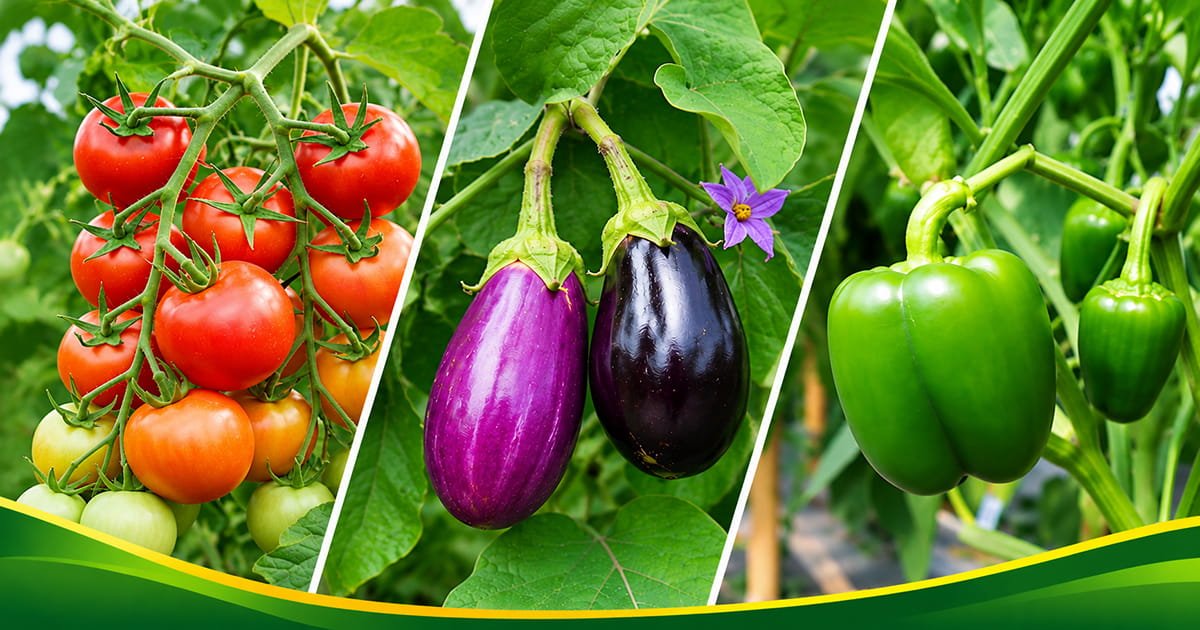
These are the crops Gaurav specifically identifies as part of his nursery's grafting activities.
He supplies the prepared plants to farmers.
Gaurav also explains that the business has increased his sources of income.
In his experience, he is now able to earn good money from the nursery while operating within a relatively small area.
He does not provide a specific annual revenue or profit figure, but he describes the income generated by the nursery positively.
The number of plants supplied is therefore an important reported achievement, while the financial outcome remains part of his personal account rather than a quantified return on investment.
Making Grafted Vegetable Plants Available to Sonbhadra Farmers
Gaurav's nursery has also changed how some farmers in his area obtain grafted vegetable plants.
According to him, farmers in Sonbhadra previously brought such plants from distant locations, including Chhattisgarh.
With his nursery operating in Uttar Pradesh, these plants have started becoming available closer to the farmers who need them.
Gaurav considers this an important development for his area.
He describes the nursery as a new initiative for farmers in Sonbhadra and says that they can now obtain good plants from his nursery at the required times.
His business therefore serves two purposes in his own account.
It has created an additional income source for him, while also supplying grafted vegetable plants to other farmers.
As demand increased, however, Gaurav encountered a different challenge.
His nursery was beginning to receive more plant orders than he could fully accommodate within the existing setup.
From Worrying About Filling the Polyhouse to Facing More Demand
When Gaurav first had the AgriFirst polyhouse constructed, he was concerned about its size.
The structure seemed large to him at the time.
He wondered whether he would be able to fill it completely with nursery plants.
That concern was understandable in the context of his journey. He was expanding an operation while still learning how to manage nursery production.
However, as orders for grafted plants began arriving, the situation changed.
Gaurav says that the existing structure now feels insufficient for the demand he receives.
He is currently unable to fulfil all the plant demand through the available nursery space.
This change is one of the most striking parts of his experience.
Initially, he was uncertain whether he could make full use of the polyhouse. Later, he found himself needing additional space to accommodate orders.
For Gaurav, this increasing demand has become the reason to consider another stage of expansion.
Gaurav's Next Plan: A 1-Acre Naturally Ventilated Poly House
With his existing nursery receiving more orders than it can fully handle, Gaurav has started planning another structure.
He says that he has decided to construct a one-acre Naturally Ventilated Poly House next to his current setup.
At the time of the video account, he planned to build this additional structure the following year.
His intention is to use the Naturally Ventilated Poly House for preparing nursery plants.
The grafting process itself would continue inside the existing Fan Pad System.
This proposed arrangement reflects how Gaurav wants to organise the next stage of his nursery business.
It is important to distinguish this plan from his existing operations.
The Fan Pad System Poly House is already part of his working nursery. The additional one-acre Naturally Ventilated Poly House is a future expansion described by Gaurav, not a completed project in the transcription.
What Gaurav Learned About Starting a Grafting Nursery Business
After discussing his business journey, Gaurav shares advice for people who are considering entering grafting nursery farming.
He believes that grafting nursery work has a promising future, particularly in Uttar Pradesh.
In his assessment, relatively few people in the state are currently involved in grafting at a large scale.
He also describes himself as the only person carrying out the activity on a large scale across Uttar Pradesh. This is Gaurav's own assessment, rather than an independently verified comparison of nursery businesses.
Despite his positive outlook, he does not suggest that the business is easy.
In fact, his advice focuses strongly on the difficulties that newcomers may face.
Begin With a Small Setup
Gaurav recommends that people interested in nursery farming begin with a small setup of their own.
His reasoning comes from personal experience.
Nursery work takes time to learn, and beginners may encounter problems before they fully understand the process.
Starting small is the approach he recommends for gaining experience.
Be Prepared for Initial Difficulties
Gaurav openly acknowledges that people entering the business may face losses in the beginning.
He experienced this himself when nursery plants were damaged and technical problems affected his operations.
He advises newcomers not to become discouraged by these setbacks.
Instead, he encourages them to keep learning and improving their skills.
Give the Business Time and Attention
Gaurav repeatedly emphasises that nursery farming requires hard work.
He does not consider it a business that everyone can manage without serious effort.
According to him, people entering this activity must be prepared to dedicate time to understanding and running it.
He also highlights the importance of building a complete team for nursery operations.
His message is that practical experience, patience, hard work, and a capable team are important parts of developing the business.
Why Gaurav Chose AgriFirst for His Nursery Polyhouse
Gaurav's decision to work with AgriFirst came after he explored polyhouse structures and discussed his options with other people.
His friend Rajeev's experience with a two-acre Naturally Ventilated Poly House played a role in that decision.
After visiting Rajeev's setup and receiving his recommendation, Gaurav considered AgriFirst for his own project.
He says that he chose AgriFirst because he wanted a better-quality structure.
Three aspects of his experience stand out.
Structural quality: Gaurav was satisfied with the quality of the structure he observed and selected AgriFirst for his polyhouse.
Construction experience: He reports that his polyhouse was ready approximately one month after the application and describes the service positively.
Agronomy guidance: When he experienced nursery problems, technical information from Peeyush Sir helped him make improvements and better manage his operations.
These details are significant because they come directly from Gaurav's experience as a nursery operator.
His story connects the initial decision to invest in a structure with the practical challenges that followed after construction.
For him, the journey did not end when the polyhouse was installed. He continued learning, seeking guidance, and improving his nursery management.
A Success Story Built on Learning, Hard Work and Persistence
Gaurav Maurya's journey began with financial pressure at home in 2021.
He first established an Agri Junction seed store, then moved into grafting, constructed a makeshift Net House, and eventually invested in an AgriFirst Fan Pad System Poly House.
Along the way, he faced uncertainty about the investment and suffered serious losses during his initial nursery operations.
Technical problems affected his plants, and he had to improve his understanding of nursery management.
With continued learning and agronomy guidance, he gradually improved the operation.
Today, he reports supplying approximately 5 lakh grafted plants in the previous year, including grafted capsicum, brinjal, and tomato plants.
His nursery has also made these plants available to farmers in Sonbhadra who previously obtained them from distant places.
Now, rather than worrying about whether he can fill his existing polyhouse, Gaurav is dealing with plant demand that exceeds the capacity of his current structure.
He plans to expand with an additional one-acre Naturally Ventilated Poly House.
His experience demonstrates that progress in a nursery business can involve setbacks, learning, technical guidance, and sustained effort.
Above all, Gaurav's advice to aspiring nursery operators remains practical: begin with a manageable setup, prepare for difficulties, keep learning, and be willing to work hard.
Explore more real farming journeys on our AgriFirst Success Stories page.
Planning a Polyhouse Project?
Gaurav's journey began with learning about polyhouse structures before choosing AgriFirst for his grafting nursery. If you are considering a polyhouse project, you can contact our team to discuss your requirements.
Contact AgriFirst